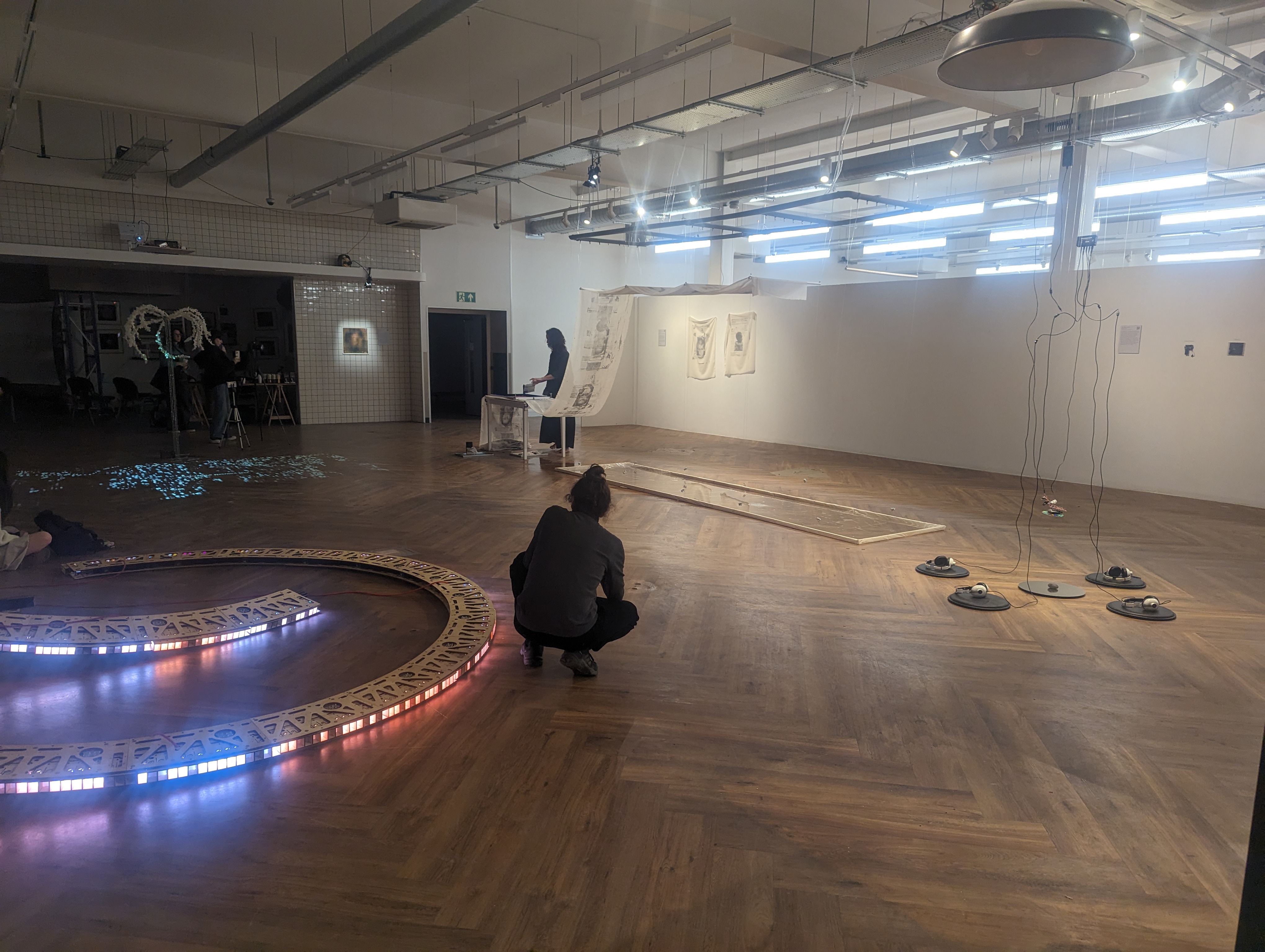
Picking up where I left off 2 years ago, _threadsafe had had our first exhibition at Hypha Studios Stratford. The show was a success in introducing our group to the computational arts community that exists in London, and we already had plans for the next event, to take place only a month or so later.
AGORA
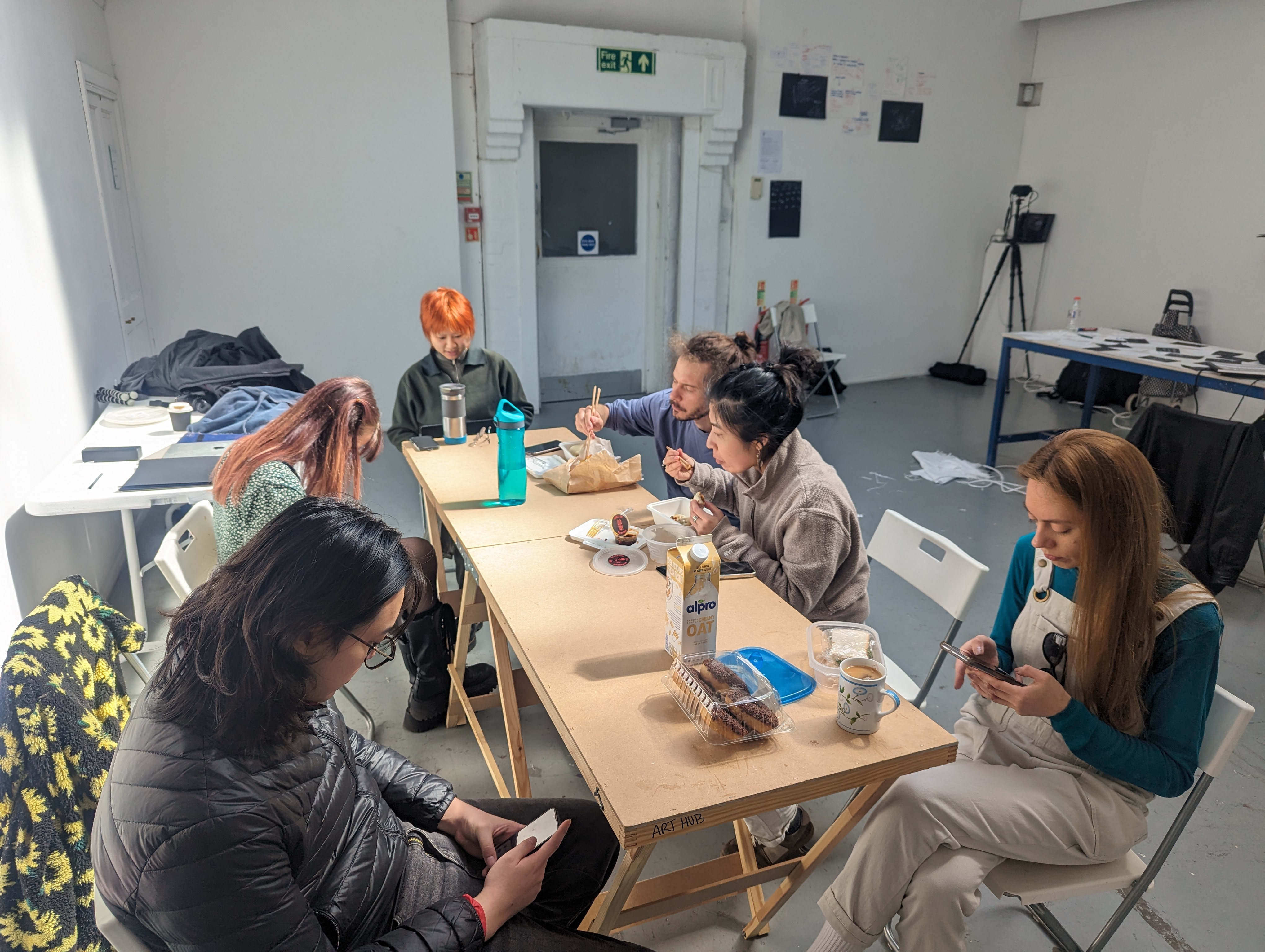
In mid April, we had a mini residency at what was then Arthub Deptford (now Creekside Studios). Entitled AGORA we hoped to run a residency where we would develop a project together as a group in an open studio environment. The hope was for visitors to feel that they could come and engage if they so wished. Further to this was a program of workshops we delivered covering our specialities as a group and individually.
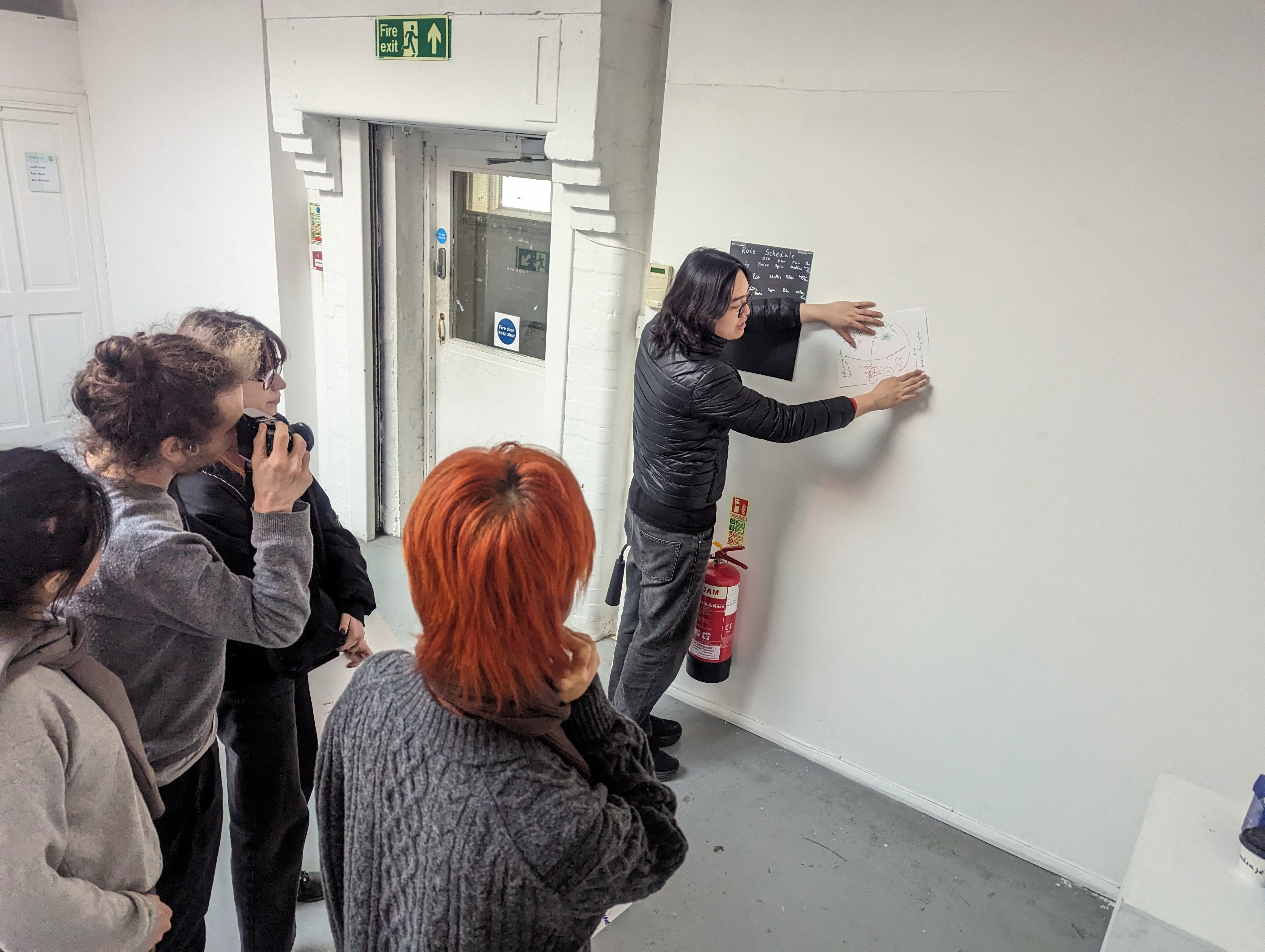
A few of these workshops were internally facing as a skill sharing exercise, with evening and weekend workshops advertised for the public to join. Within the group I ran a workshop on creative and curatorial development of ideas, and for the public Milleon and I held an event covering and introducing generative image AI models.
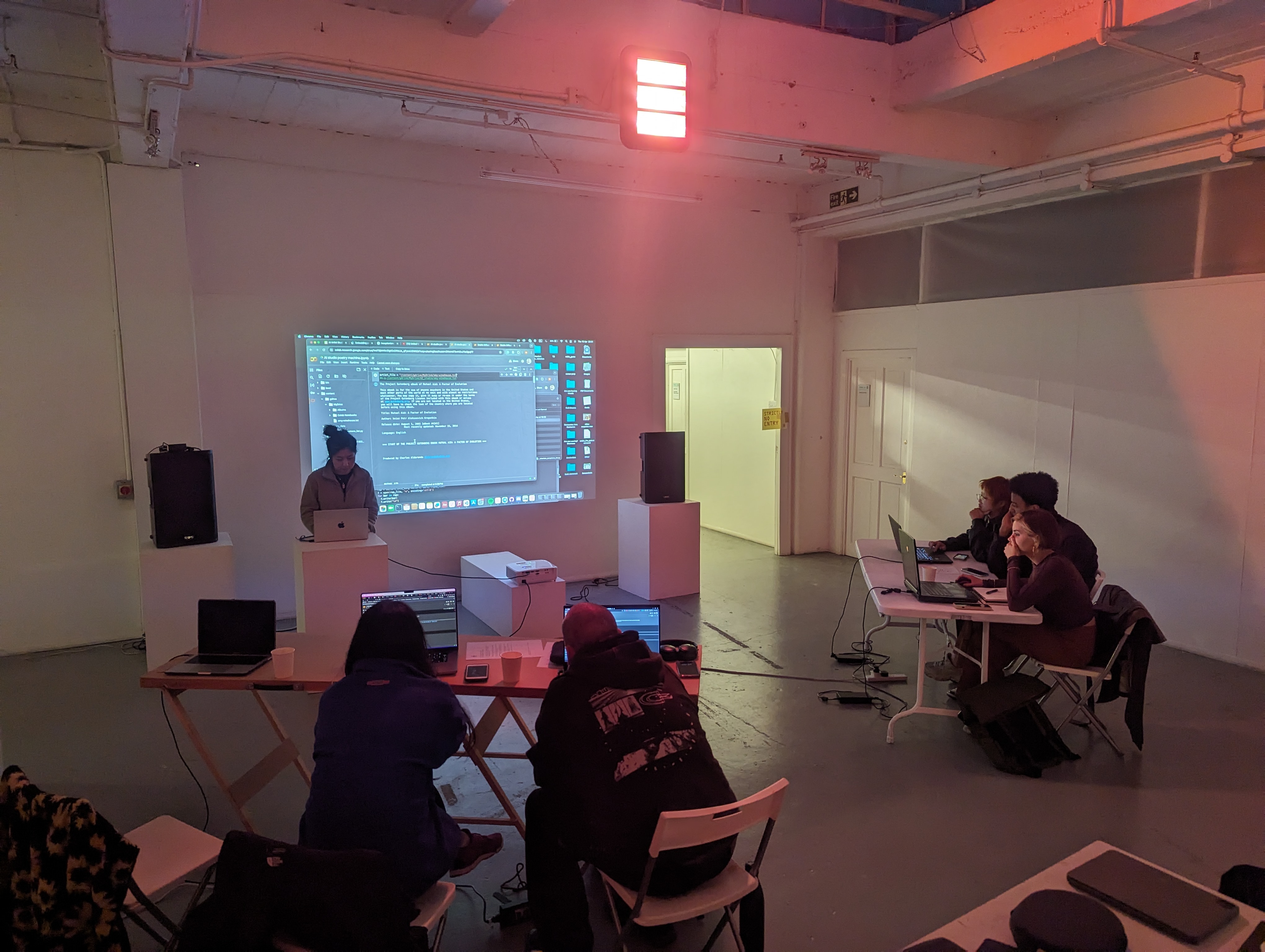
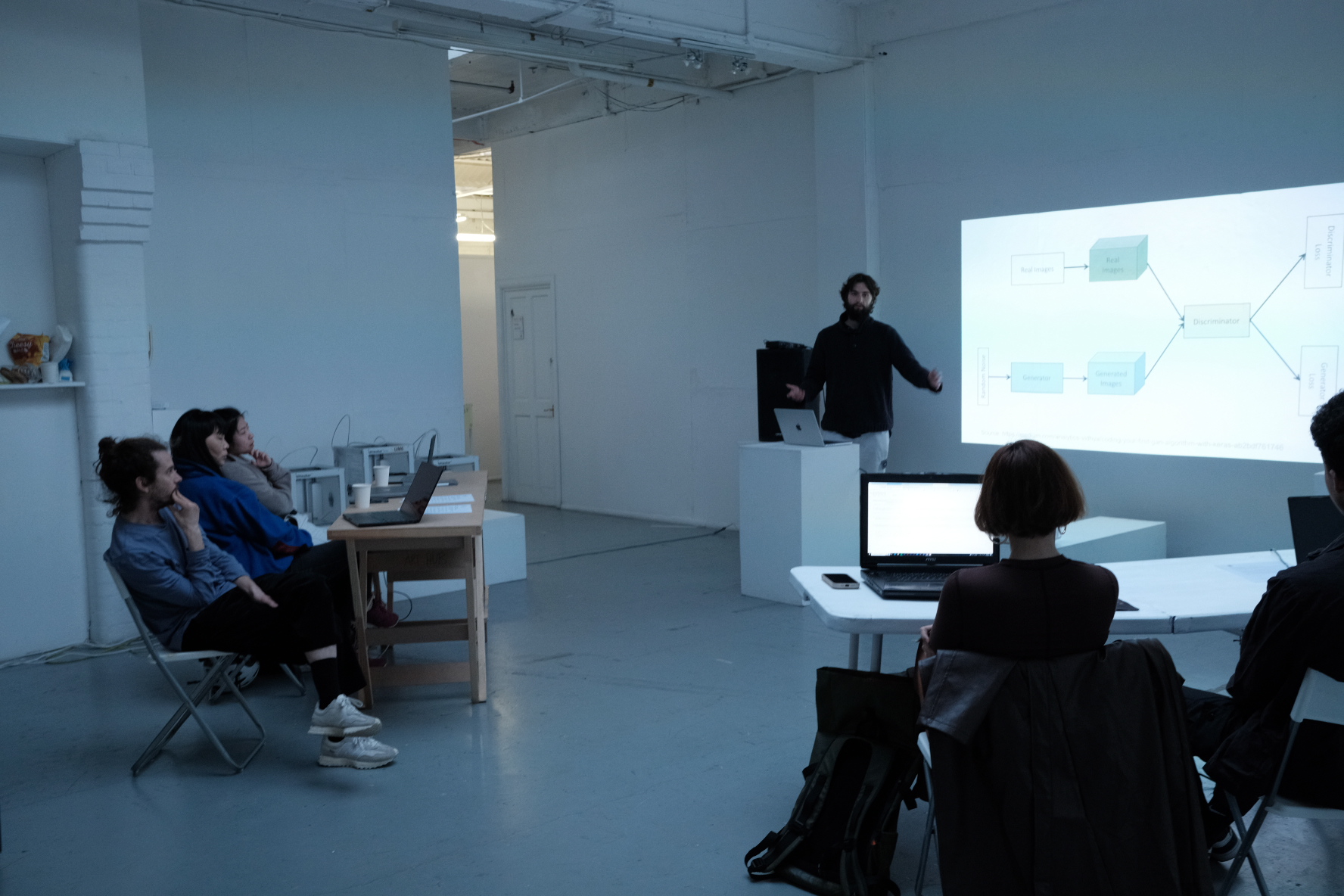
On the Saturday we held a ‘Sound Sprint’, a whole day workshop event introducing physical computers, sensors, and synthesisers together, culminating in a showcase of the participants’ sound works created during the day.
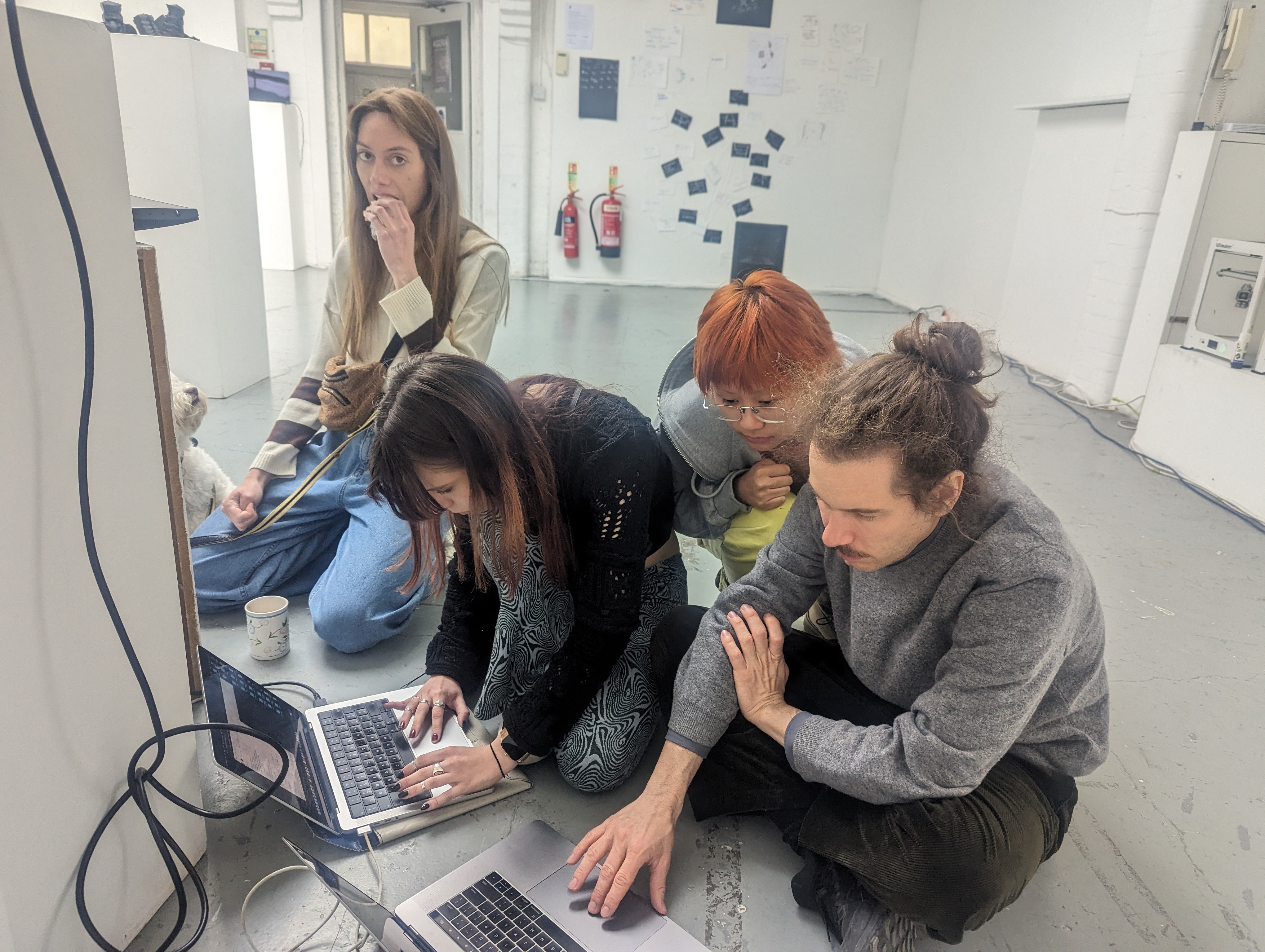
And finally on Sunday we arranged the space as an exhibition to show off the artwork that we had developed together and the evidence of our workshops.
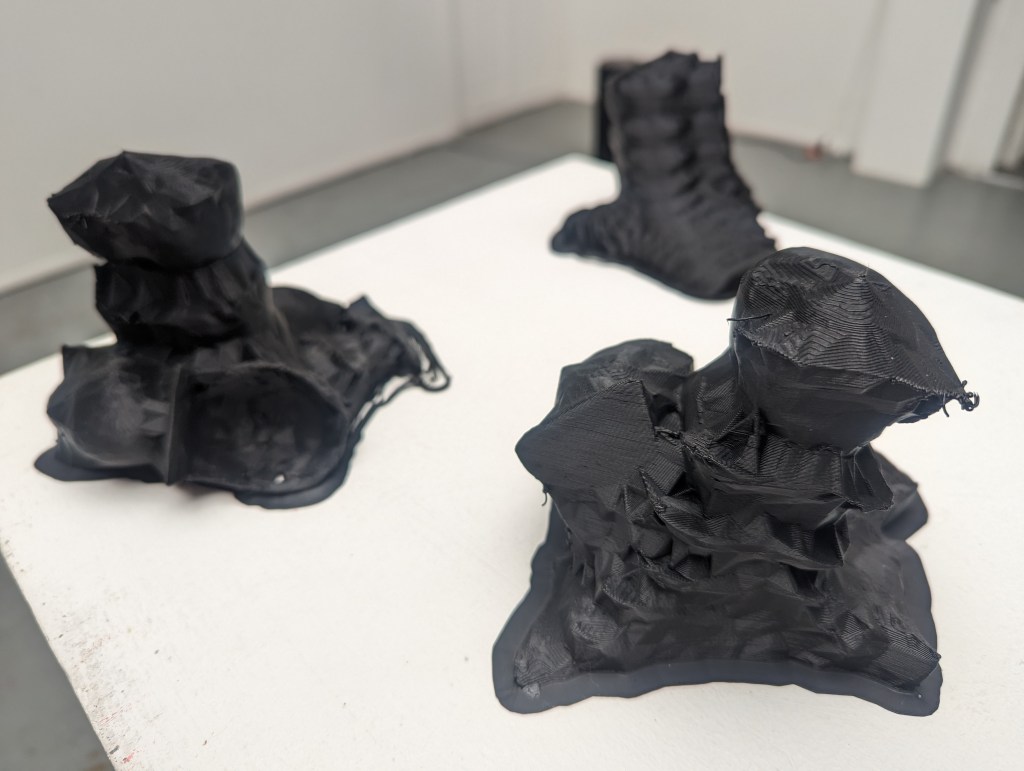
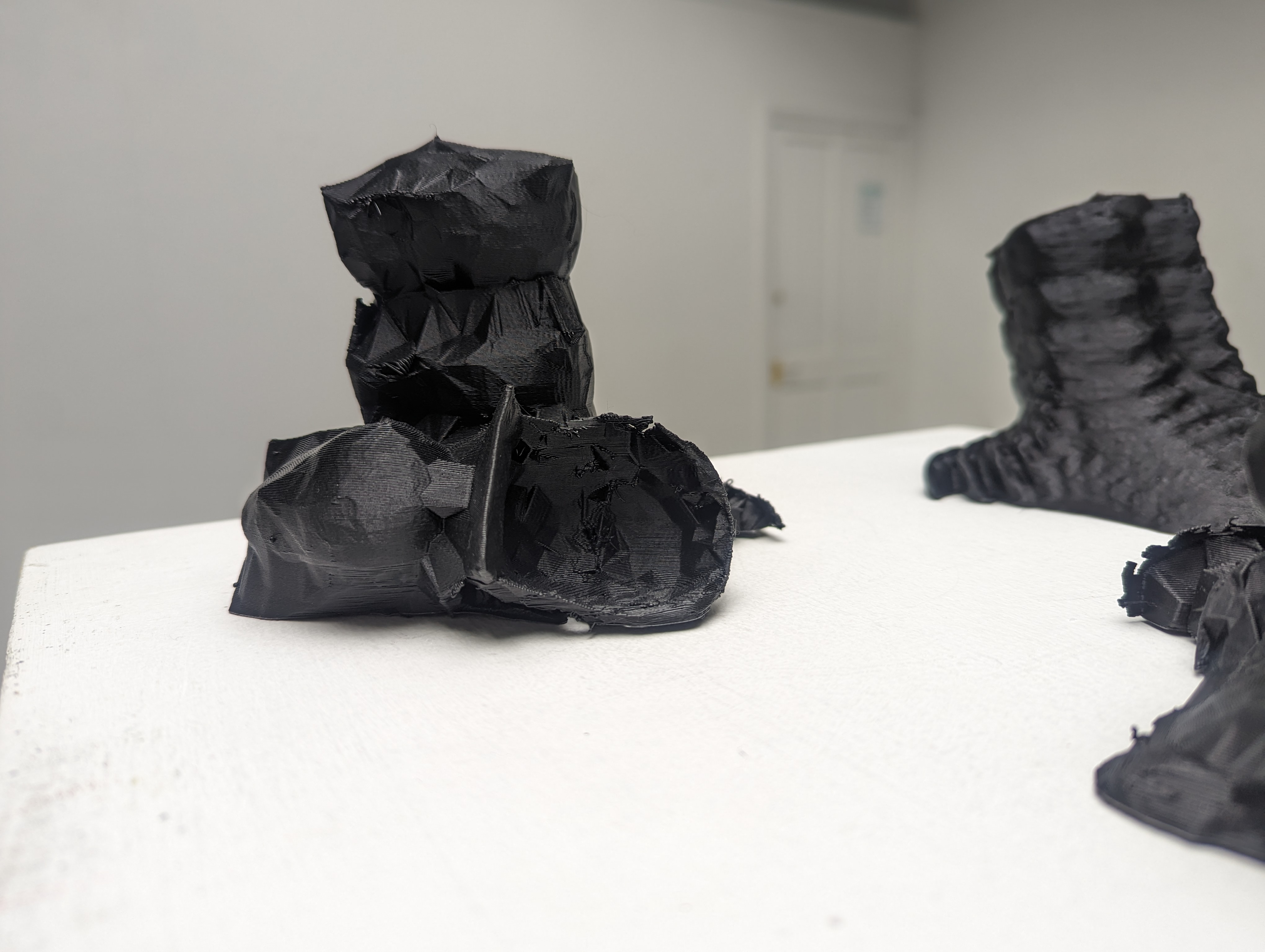
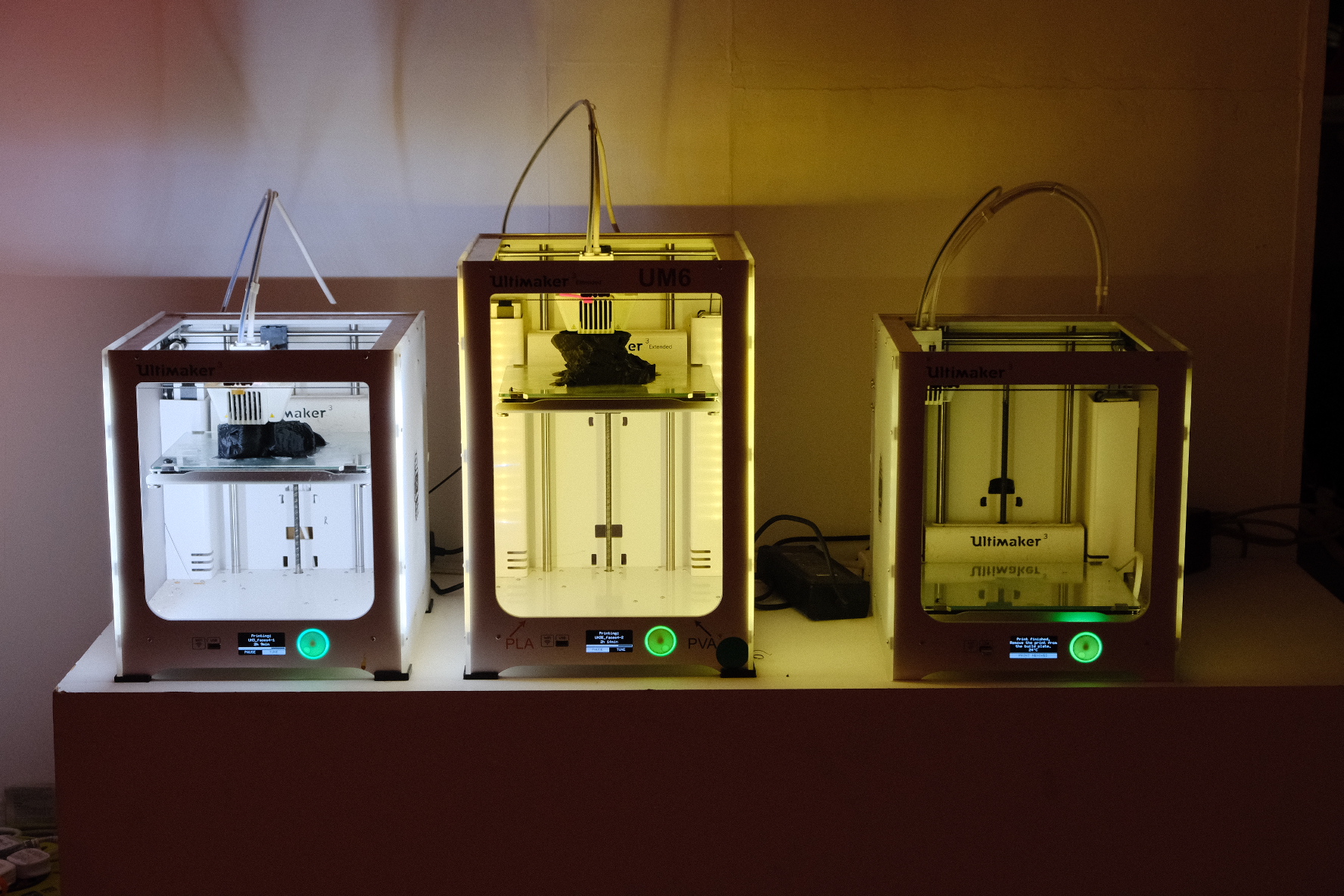
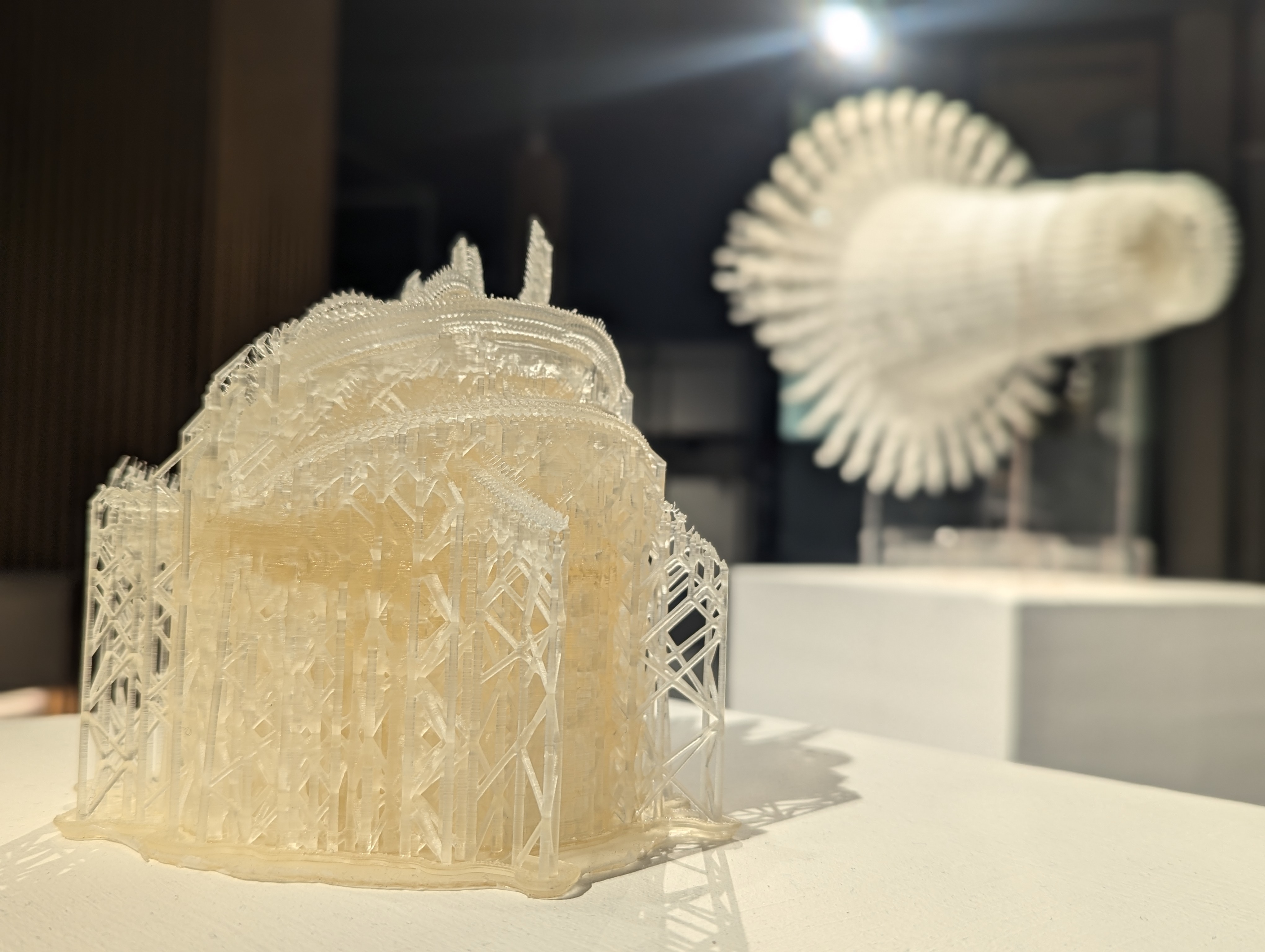
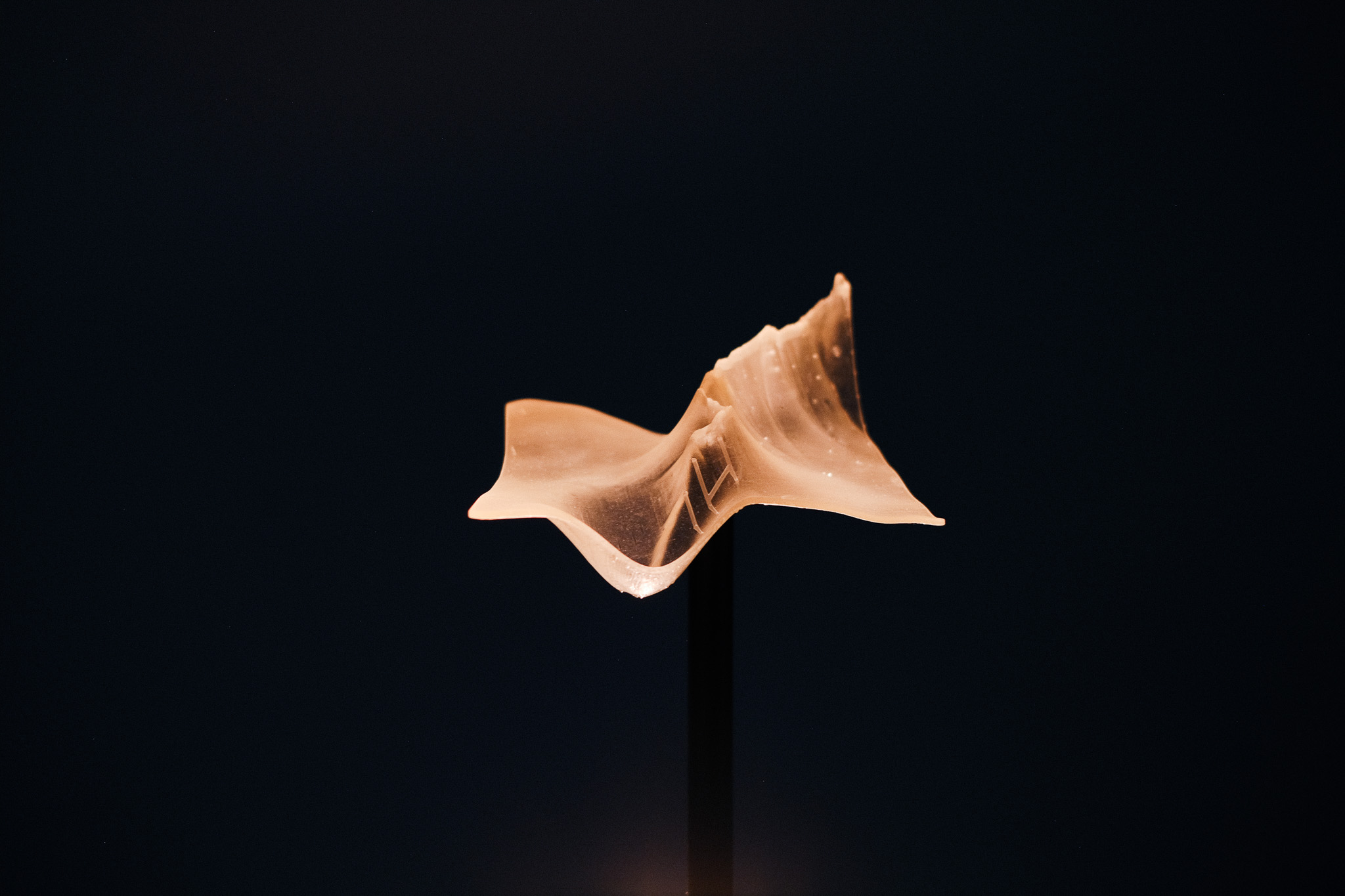
There were 3 pieces created through the residency. Where I took the lead was to create these 3D printed sculptures. They were created to be a depiction of our group identity and the inception point for the work that would eventually become the “A Man is A…” Metamorphosis series. We each had a portrait photo taken by Stathis, which I fed into a facial analysis program, outputting a data representation of the images. This representation was then fed through a T-SNE algorithm to output a relative 3D coordinate for each person’s face. The images were then put through TripoSR, an AI model for generating meshes from images. The resulting meshes were placed at their given coordinates in Blender, and were morphed together from each face to each other face. The resulting printed shape was therefore was a form representative of our hybrid identity as a collective.
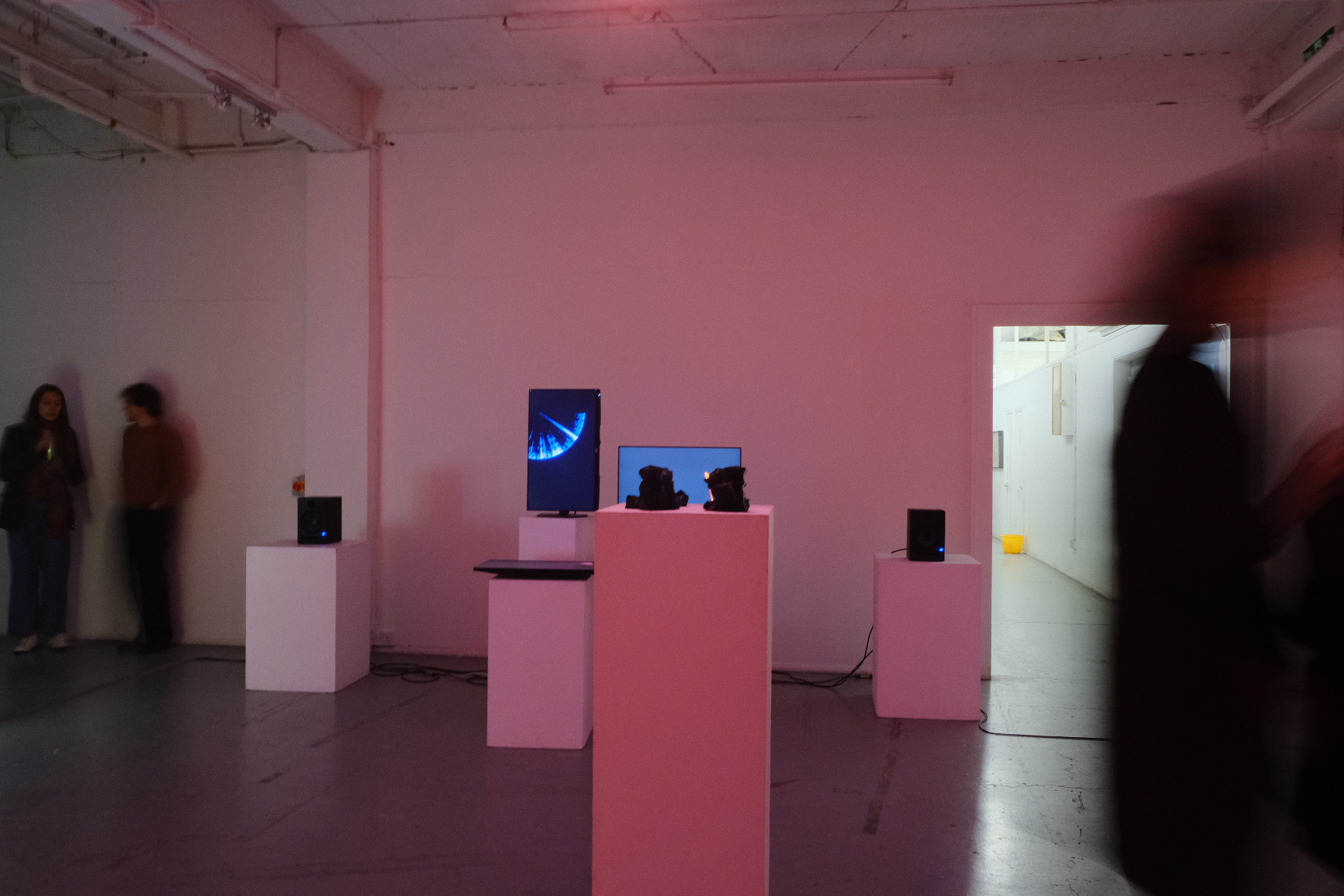
Playing in the space throughout the show was a sound composition derived from a sonification of our journeys to the studio. This was then altered through monitoring people within the space, mapping their positions and movements to a set of parameters in the composition. Finally, a graphical representation of this was displayed on three screens.
The experience was important for us. Tensions formed within the group at times but we worked together to solve them, and find our methods of being together as a group. Learning about shared interests and how they might complement each other gave us a foundation we would later rely on for future projects.
TOPOLOGY
Our next project was a mixture of our previous two shows, beginning with an exhibition of work we had been developing individually, brought together into a framing under the banner TOPOLOGY. Our intention was to conceive of a platform where we might continue to develop our thinking under this theme over a couple of years.
In mathematics, topology is the study of properties of space that remain invariant through continuous deformation. The thinking being that, within a cultural framing, sites that have a form of continuous existence are considered the same identity through time, and that the historical, spatial, and social properties form part of the larger hyper-object which can be observed and investigated.
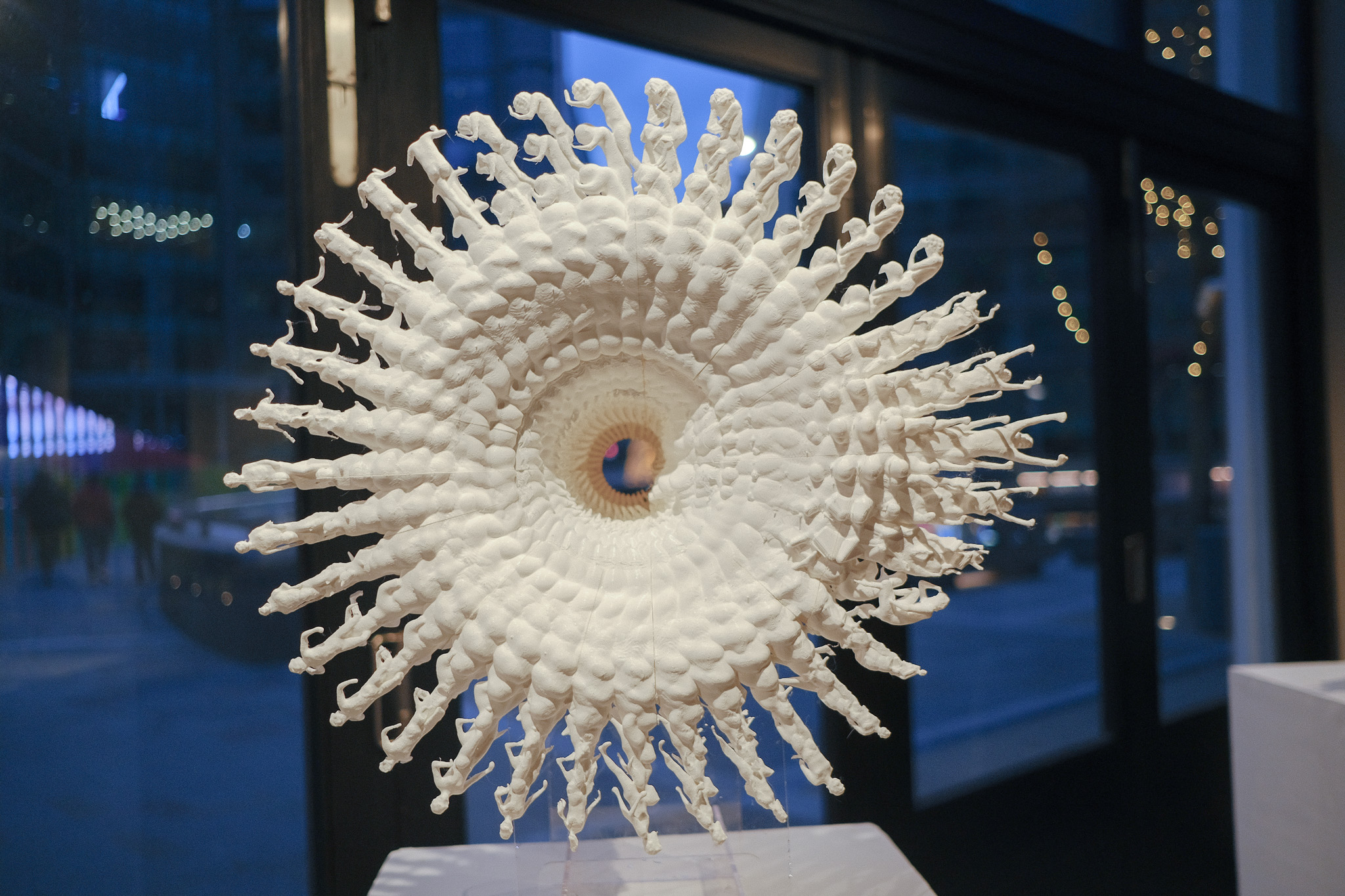
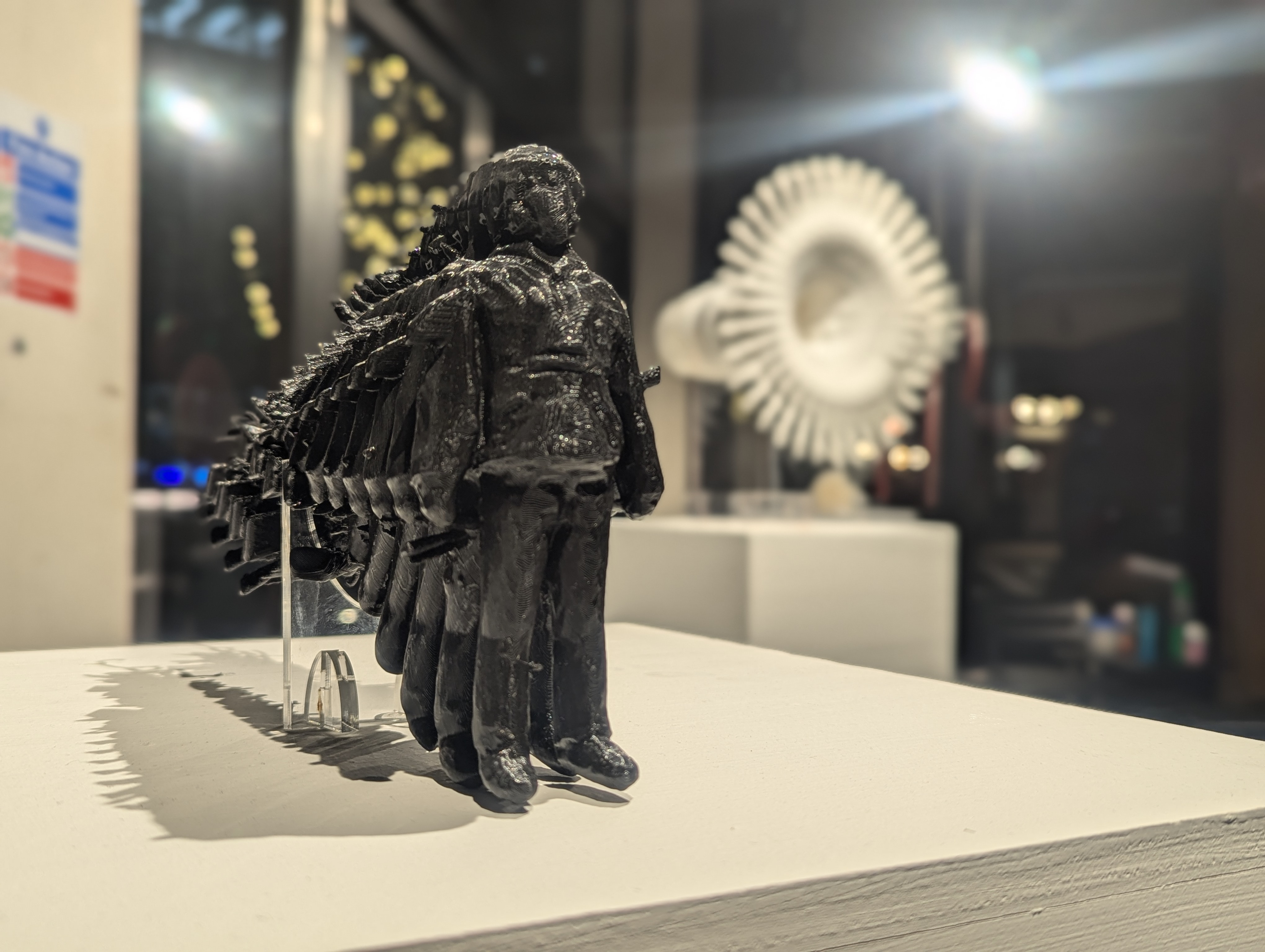
We had secured a space to kick off the project at another new Hypha location, this time in Paddington, in what used to be a gym. It was an interesting space with a bar/cafe area upstairs and changing rooms, a tiered seating area by the lockers, and a large mirrored workout room with its own speaker system.
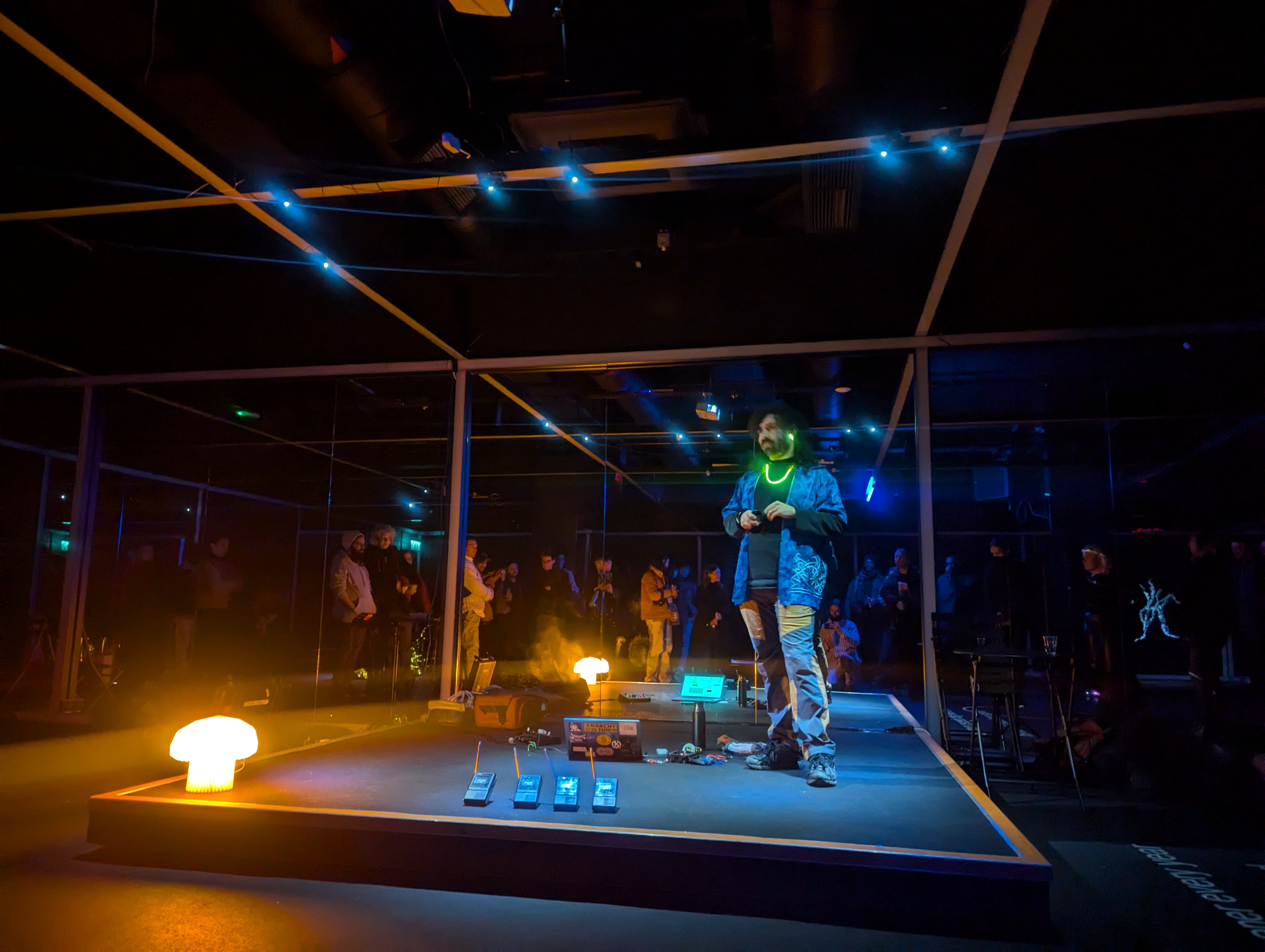
We had the site for a month, but knew we’d be unable to be fully setup for most of it, and so decided on a longer installation period with workshops, an opening midway, and then a closing weekend where we would run event nights to intervene with the space and the works on display, which we named META_MORPHOSIS.
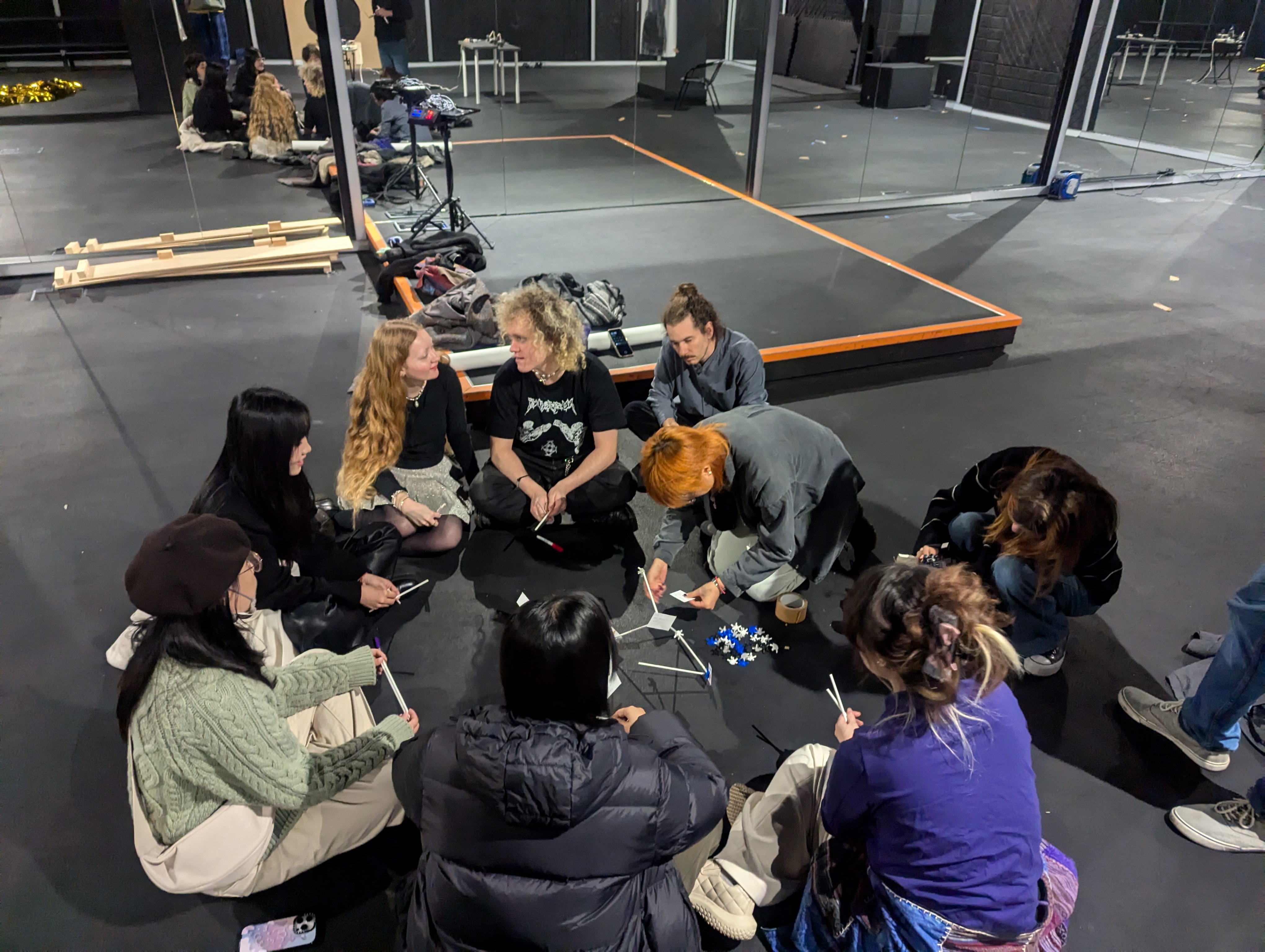
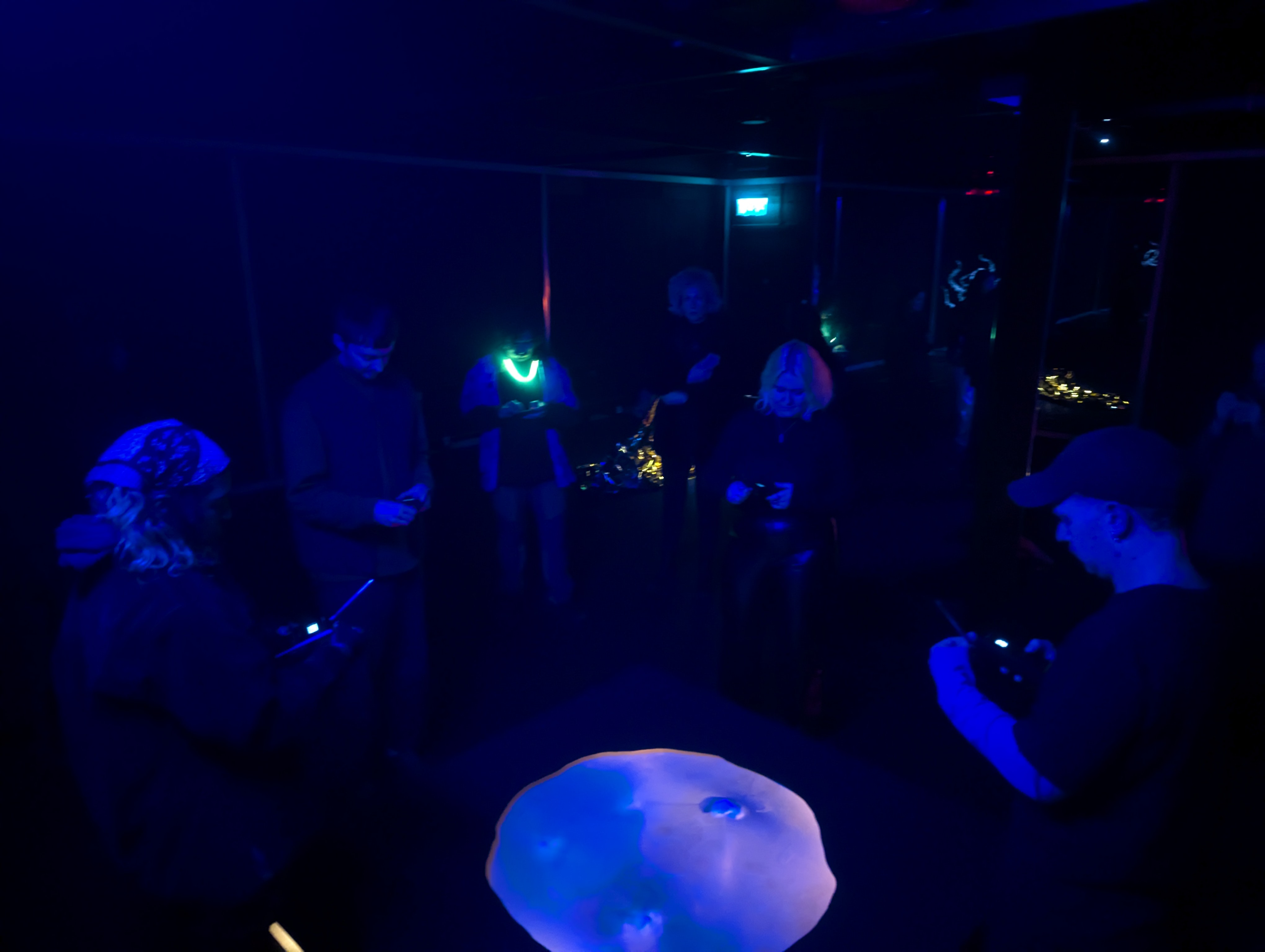
The intention to run workshops during the pre-amble weeks was well meaning, but in the end I was the only one with the free capacity to plan something. My workshop sought to looking at forms of interconnection, finding forms that connect us. Arranged over 3 activities, I hoped to bring the group from being individual free radicals together to construct a single interconnected structure of our collective thoughts.
The first exercise had participants taking on a random number and a colour (red, green, or blue). They would arrange themselves randomly in the room and when the exercise began, the idea was for each participant to walk in a straight line, counting down the number they had chosen with each step unless; reaching a wall in which case bounce off; or seeing a colour that corresponded to their own in which case to walk towards it; seeing a colour that different to their own in which case they walk away; come into contact with another participant in which case hold on; or they had reached zero in which case stop.
I used my laptop screen to display and swap between colours randomly, and was hoping that in the mirrored room, this would cause people to walk towards the apparition in the mirrors, and then when bouncing off others would clump together, eventually bringing the group into one blob. It was semi-successful. Big clumps of people walking in circles as they were unable to get away did form, but I think people were confused during the task. The theme of it was something approaching the actions of free particles in space.
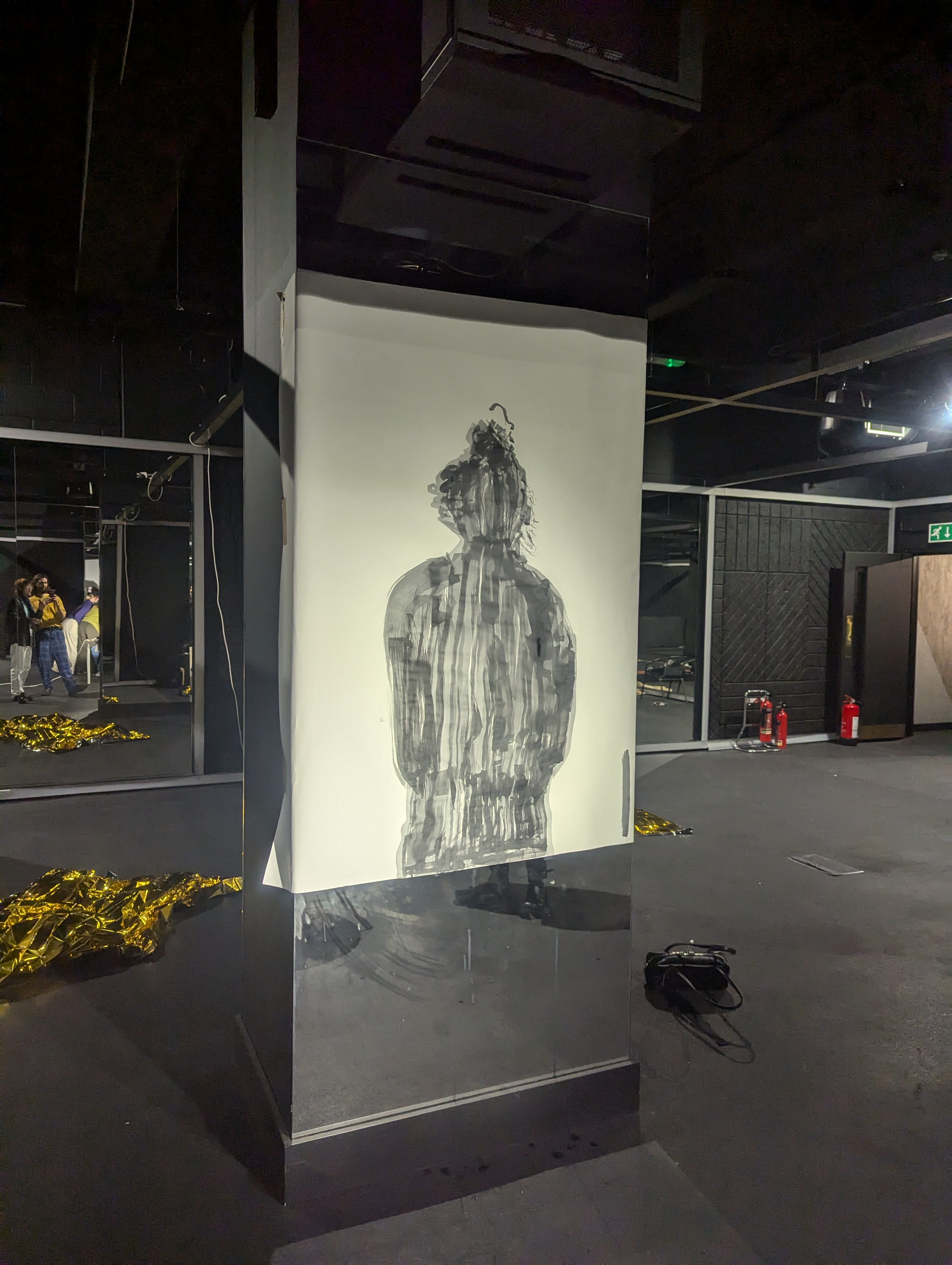
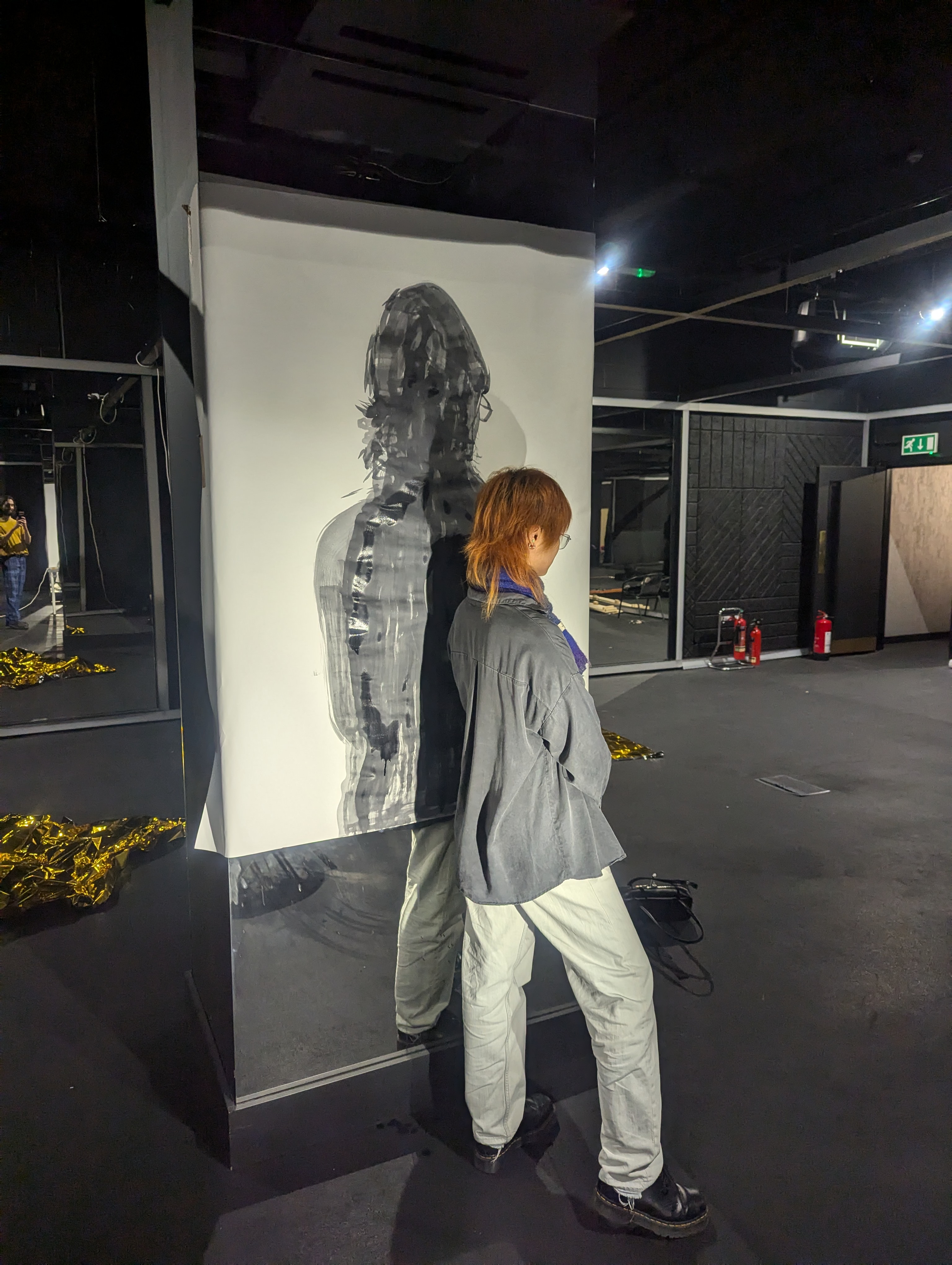
The next task took the two groups that formed and asked them to stand in front of a large sheet of paper, facing in the direction of their home. The rest of the group would then track and fill in their silhouette. This resulted in two paintings of these sort of dissolving bodies representing a shared investigation of home.
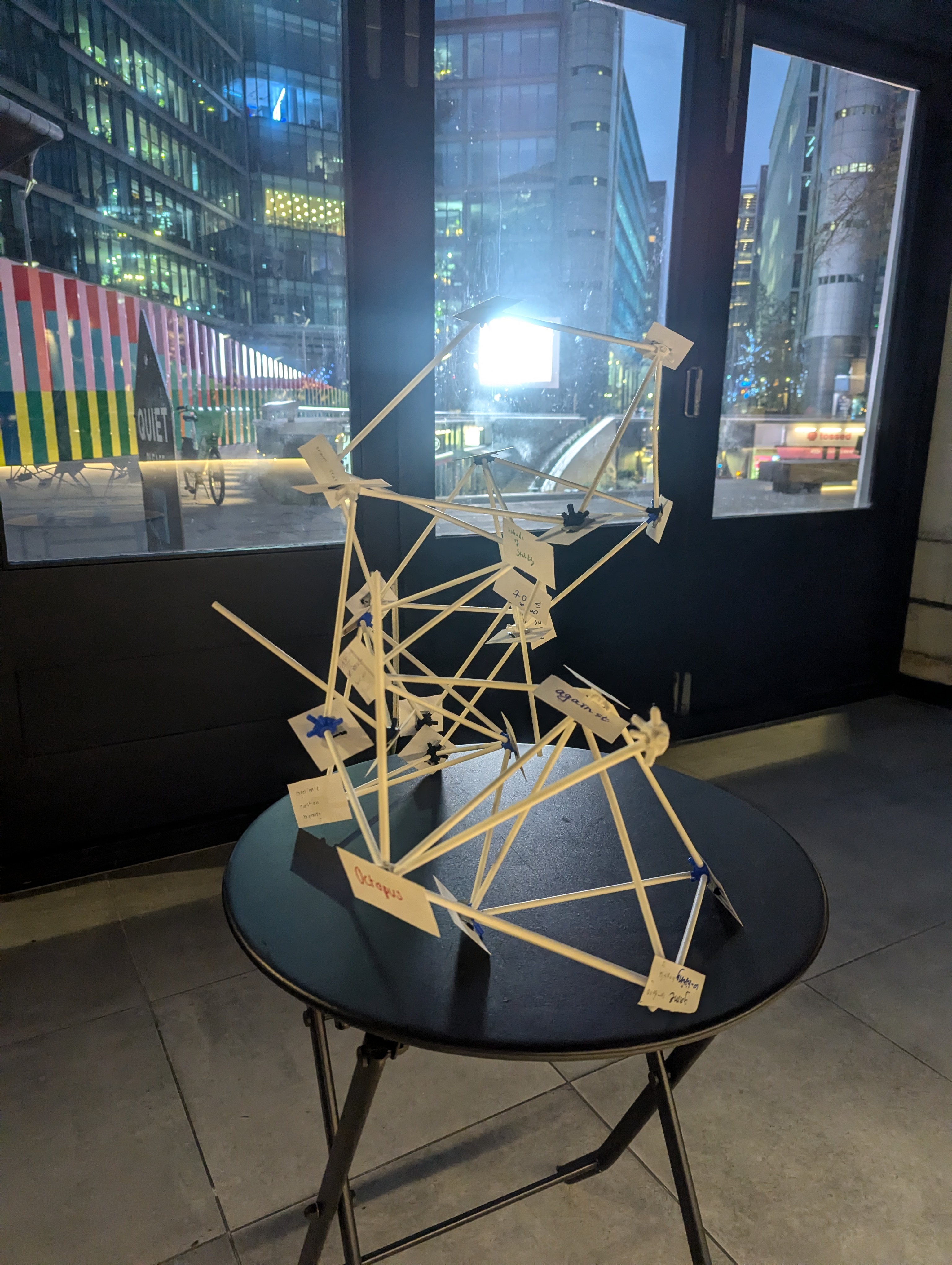
For the third exercise, as a group, we wrote down words and phrases associated with the themes of the exhibition and the workshop so far. Then placed them in the middle and each participant read through, adding more. Finally, we traveled in a circle connecting these thoughts together will little 3D printed connectors I made and paper straws, forming a structure of our collective thoughts.
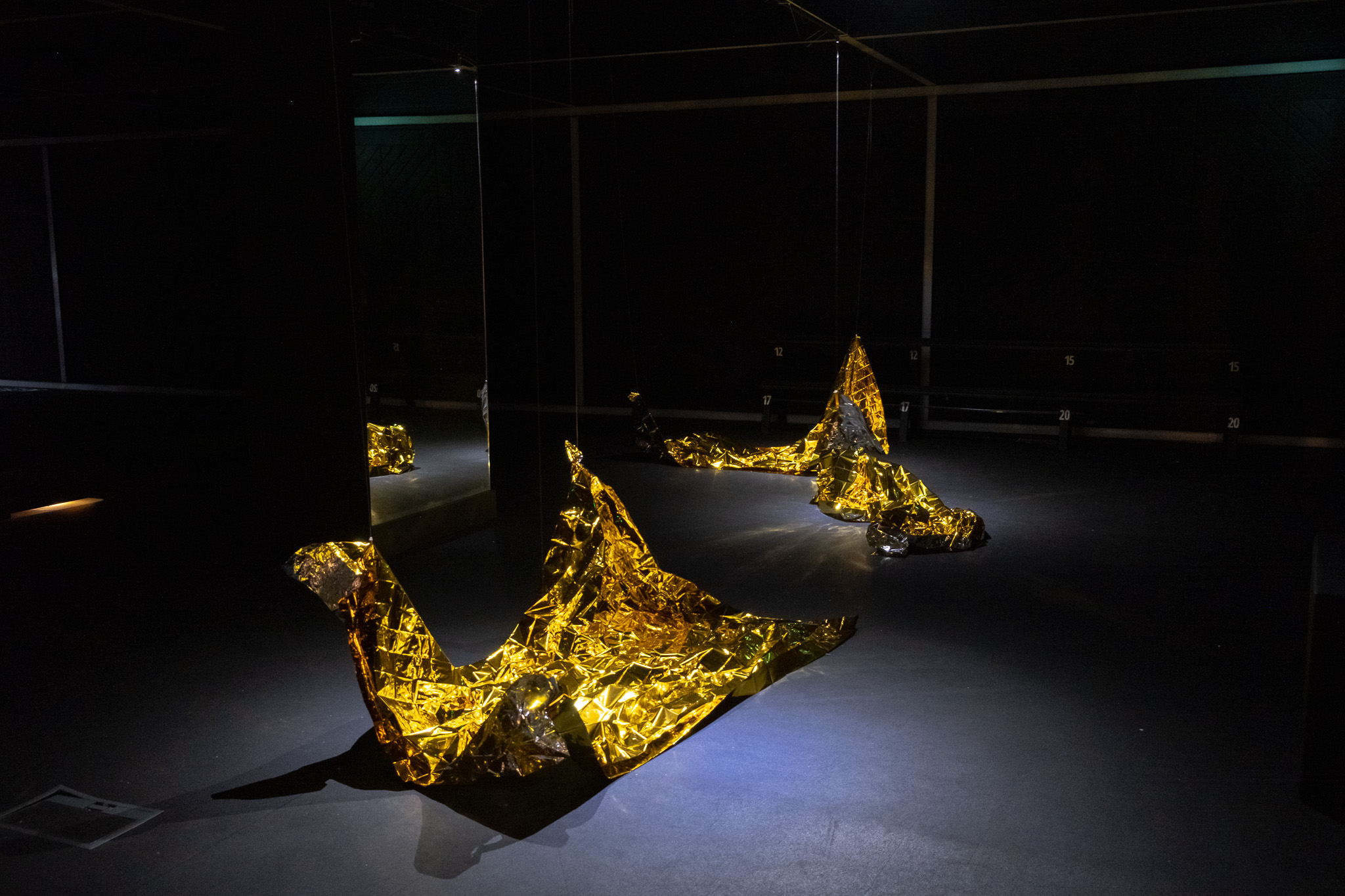
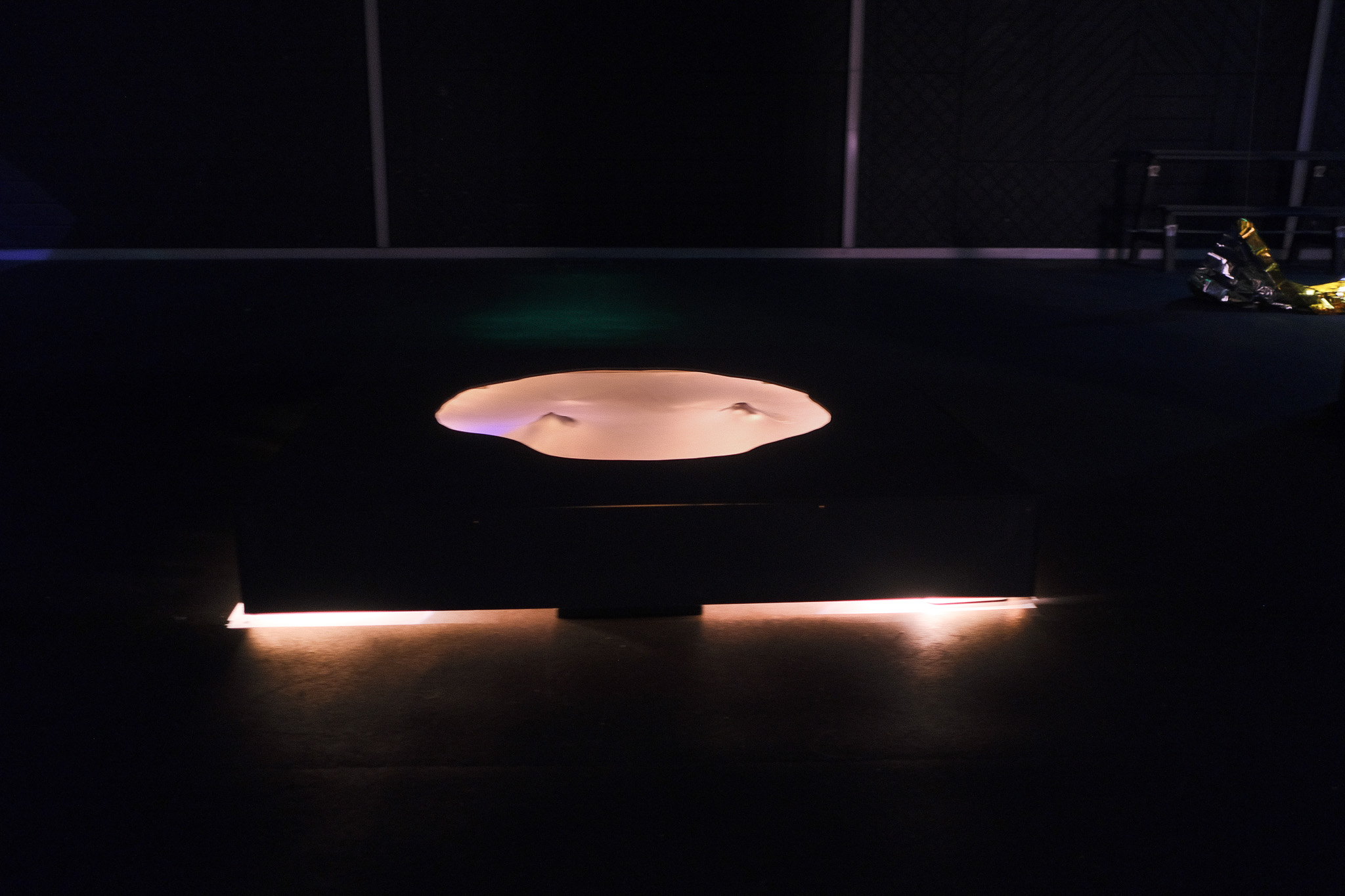
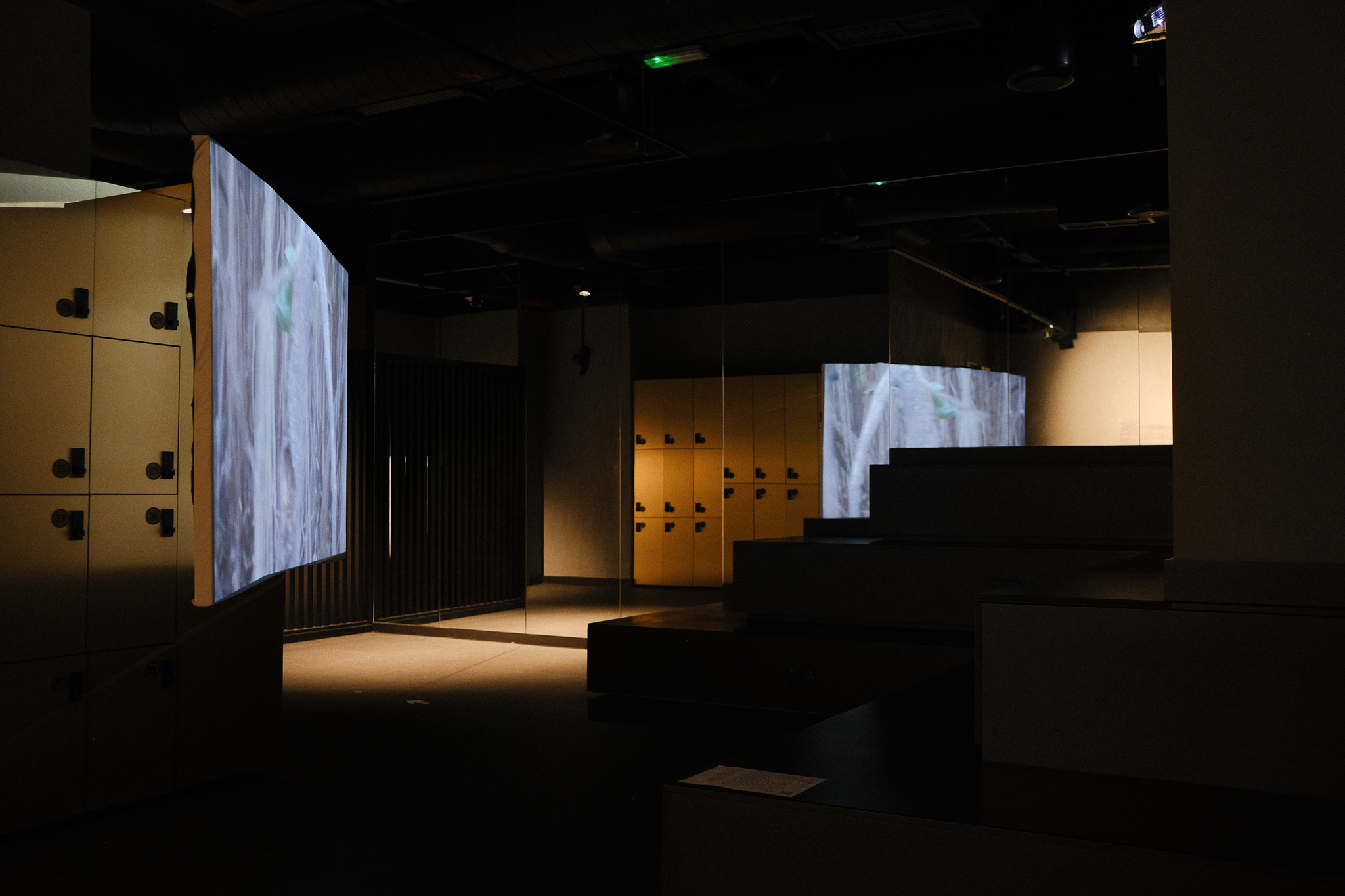
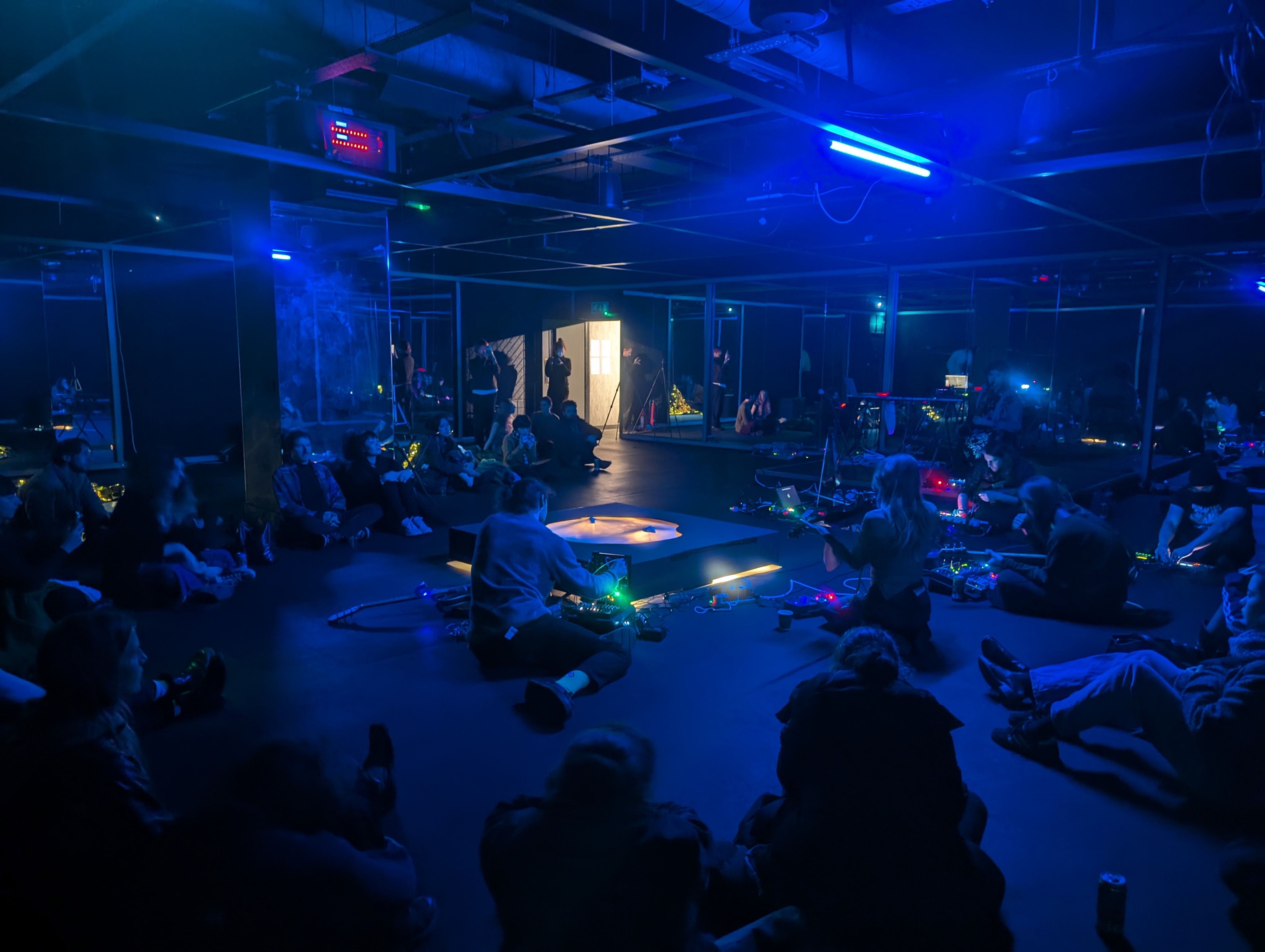
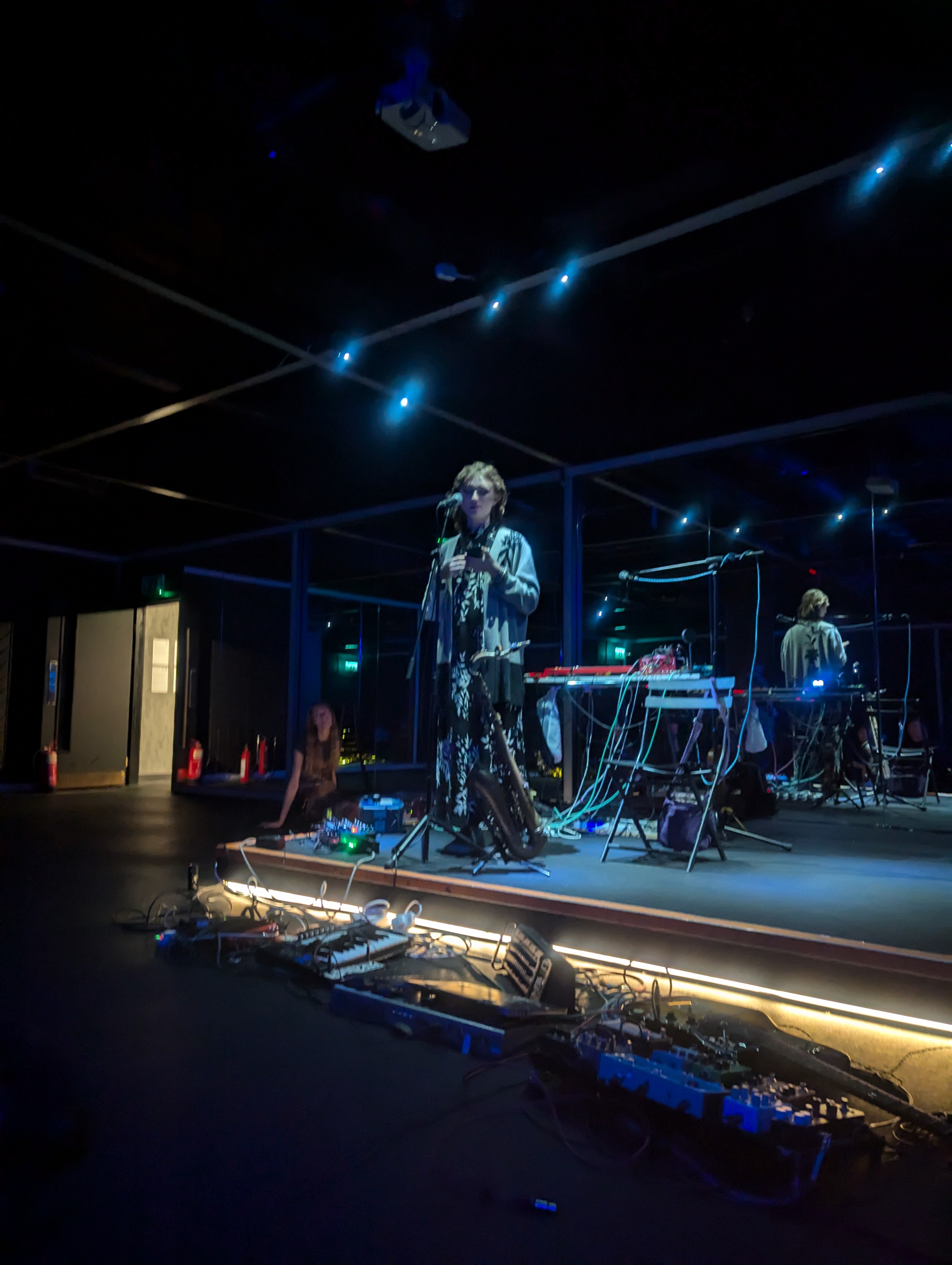
The META_MORPHOSIS event was a huge success. Performances on Friday by ambertone, Subphonics, Softshadow, and Jessica Roch, were followed on Saturday by an algorithmic Walkshop led by Lily Hassioti, a panel talk with members of _threadsafe, In_grid, and Loop Delirium, a screening by Jamie Shilvock, and more immersive listening performances from Alyssa Martin, Laura S, Thomas Rosser, and Irini Kalaitzidi.
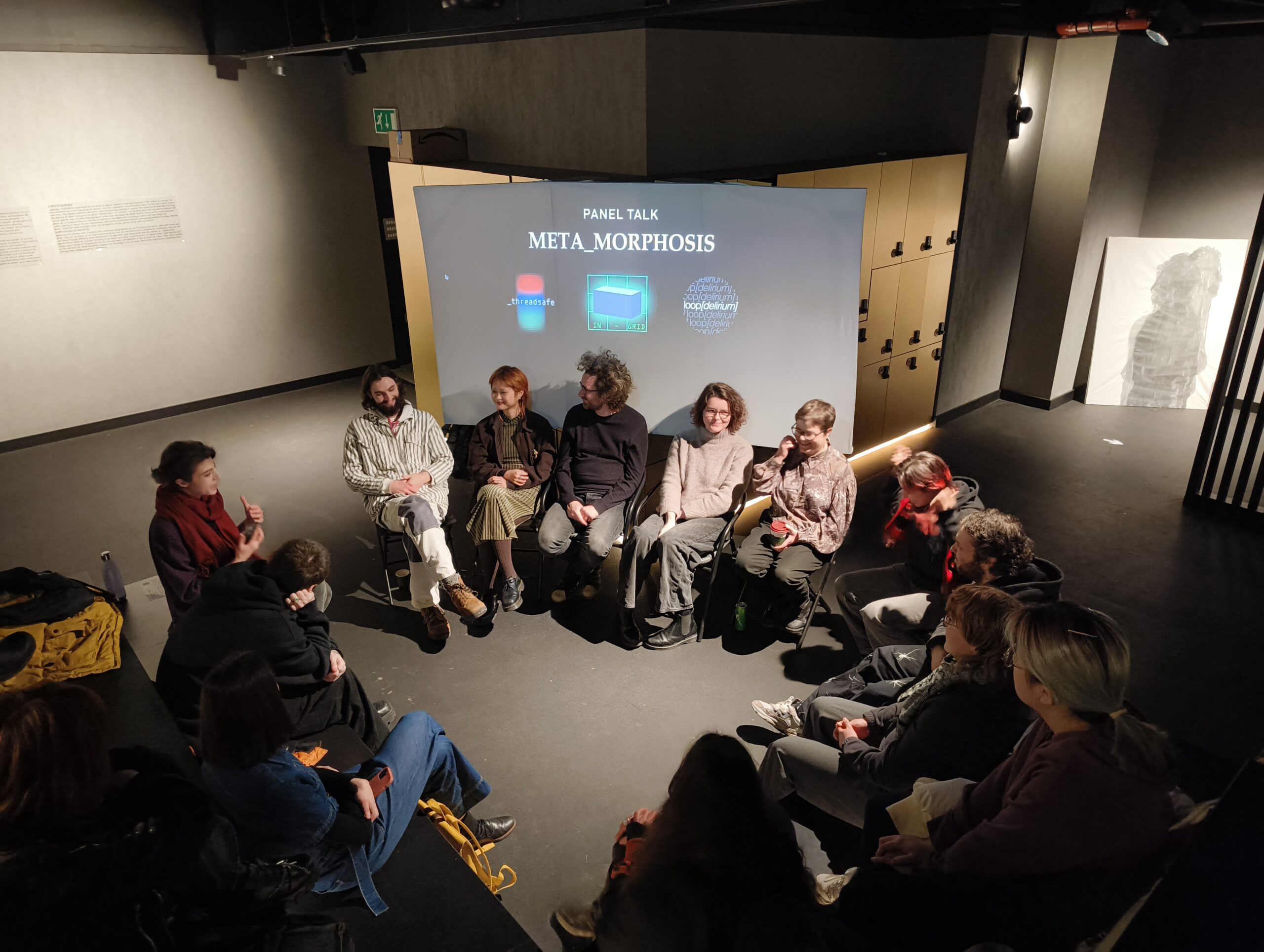
The panel talk was a fun way to bring together three Goldsmiths originated computational arts collectives that spanned over a few generations of the course. The major topic for discussion was the work of collectivising itself. This is a particular focus of In_grid’s practice as a group, and as the elder collective of the three it was fascinating to discuss how they share responsibility and are able to keep each other accountable and equitable in the work they do. The distribution of tasks and feeling equally responsible has been a feature that arose whilst we were working together, and so hearing techniques and ideas such as skill sharing, regularity of meetings
Muralhas e Memória
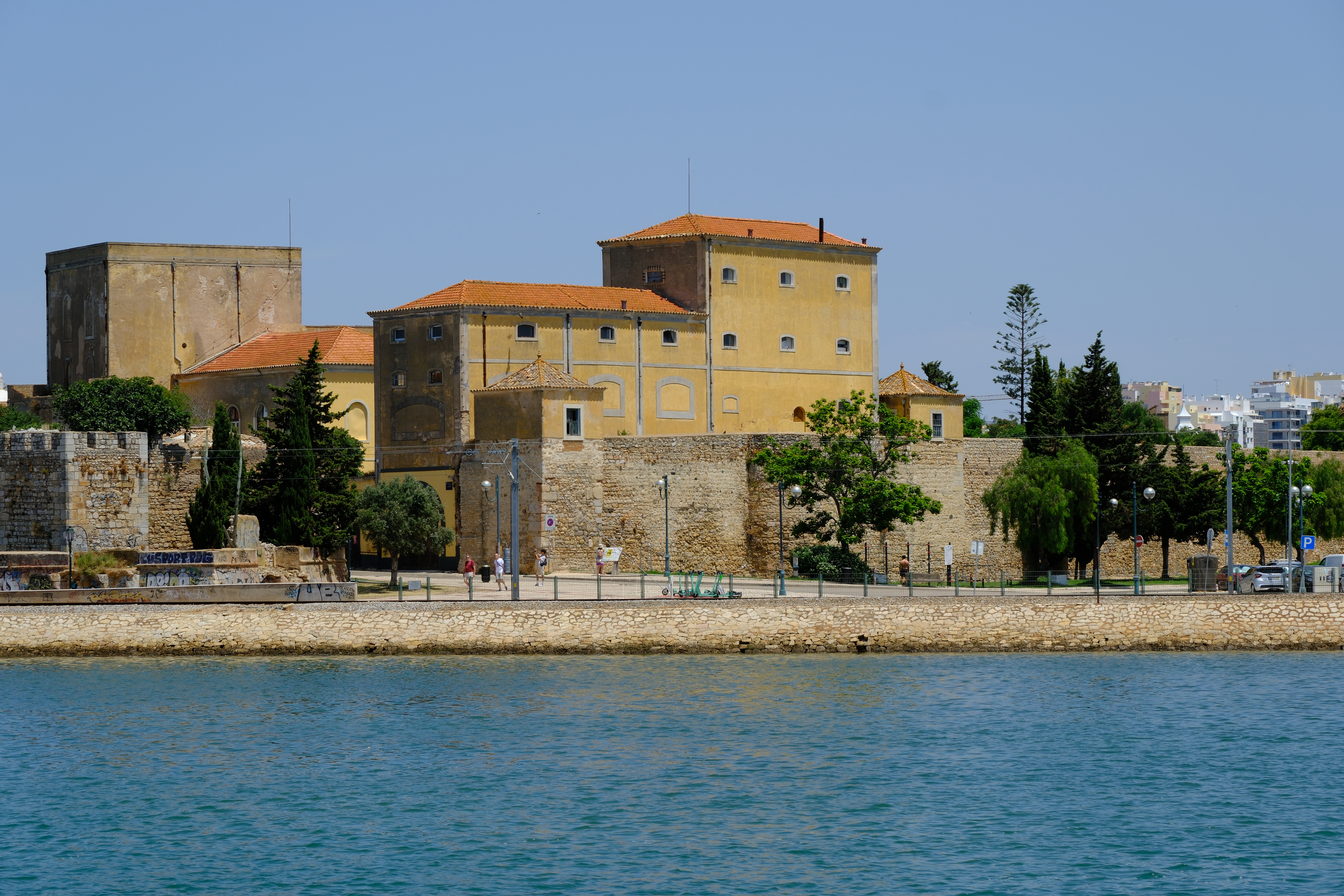
We had known, going into the planning of the TOPOLOGY show, that we intended to do a multi-year research project on this topic. Part of that rested on the connection Sofia has through her family to the city of Faro and a section of the ancient city walls.
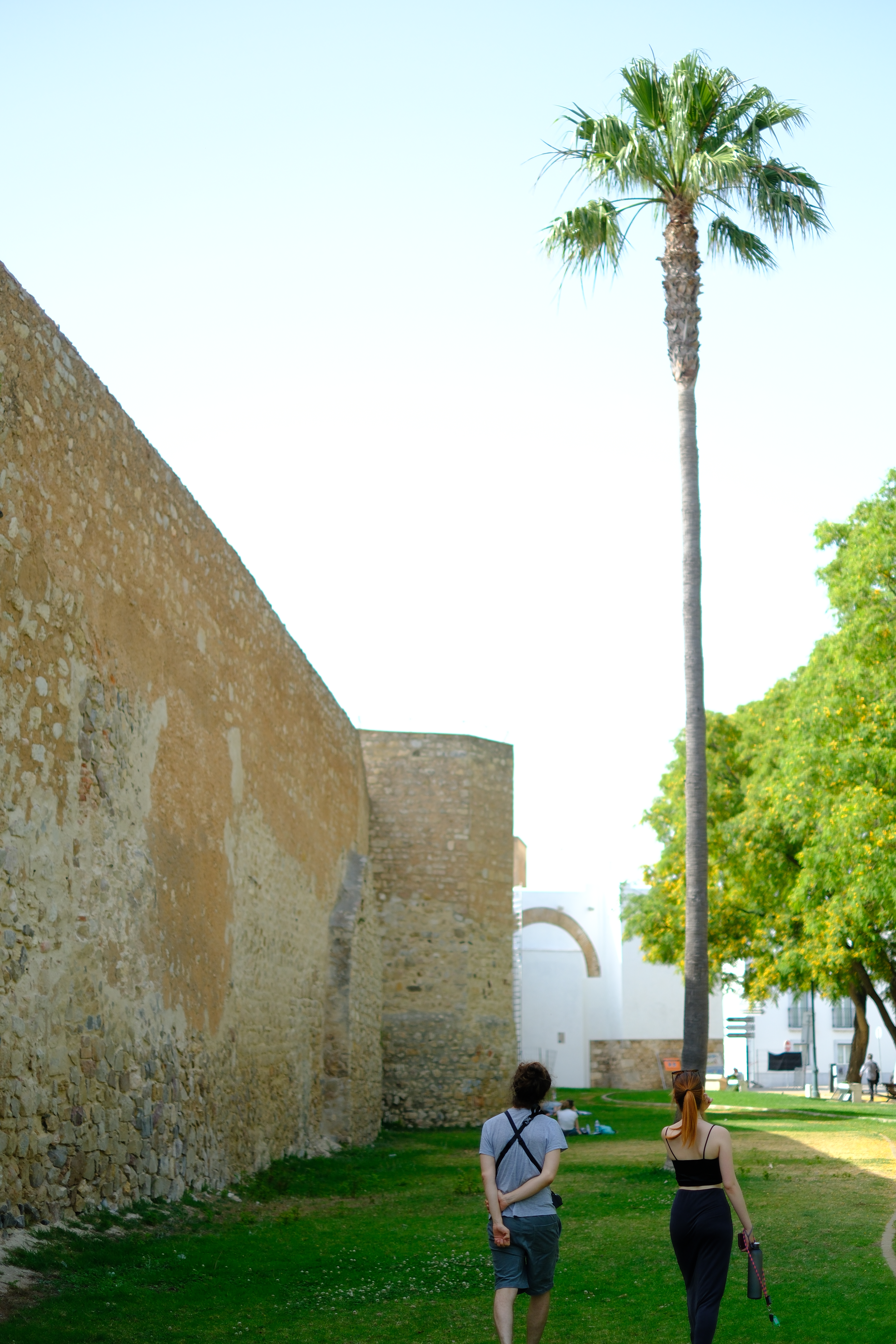
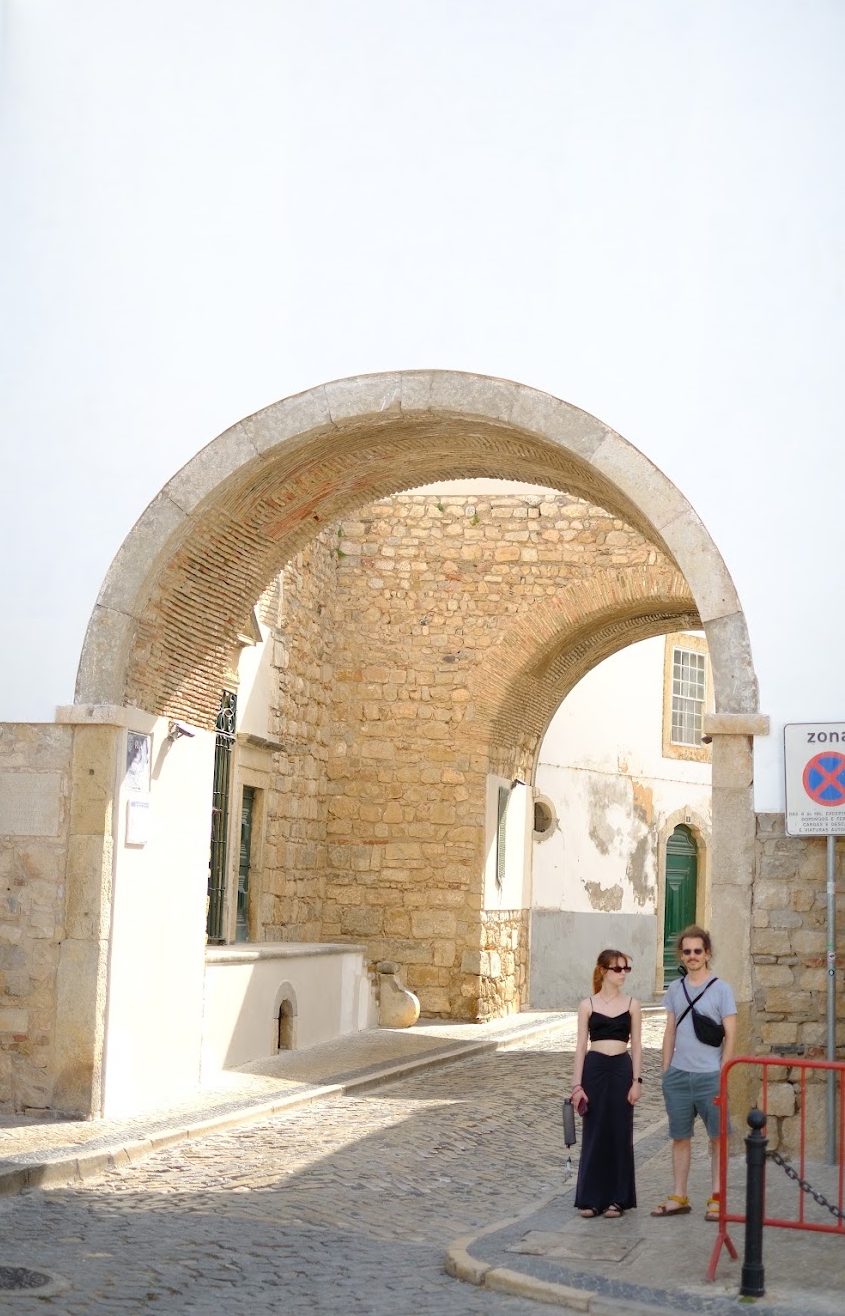
A building adjoining the Arco do Repouso, an approximately 250m stretch of the walls, and a large courtyard belong to the Taipa family and gave us as a collective the possibility of free accommodation, good weather, and most importantly a subject through which to frame and conceive our ideas.
We spent the first few months of 2025 applying for grant funding from DG Artes, a Portuguese funding organisation. Our proposal lacked a cohesive vision, though it thoroughly went into detail what we understood and wanted to explore with this idea of Topology and how we might apply such thinking, as well as our technological skills to a cultural project and this specific ancient architecture.
The city of Faro, and its walls, are implicated in a number of local legends, some of which even specifically reference the Arco do Repuoso where we were staying. A recurring theme is the reconquest of the city by the Portuguese forces from the Moors. It is said that the daughter of the governor of the city used to walk the walls and saw, and fell in love with a Portuguese Christian soldier whom she saw from there. One night she opened the gates of the city to be able to be with him, letting the army in. Other versions of the tale have her given as a gift, or as a sacrifice, that she was a witch and thrown down the well and became a snake, or another where a young boy, supposedly her brother will appear to you in the Arco do Repuoso, show you to a small door wherein lies a chamber full of gold and jewels, you are free to take, but will never be able to return to.
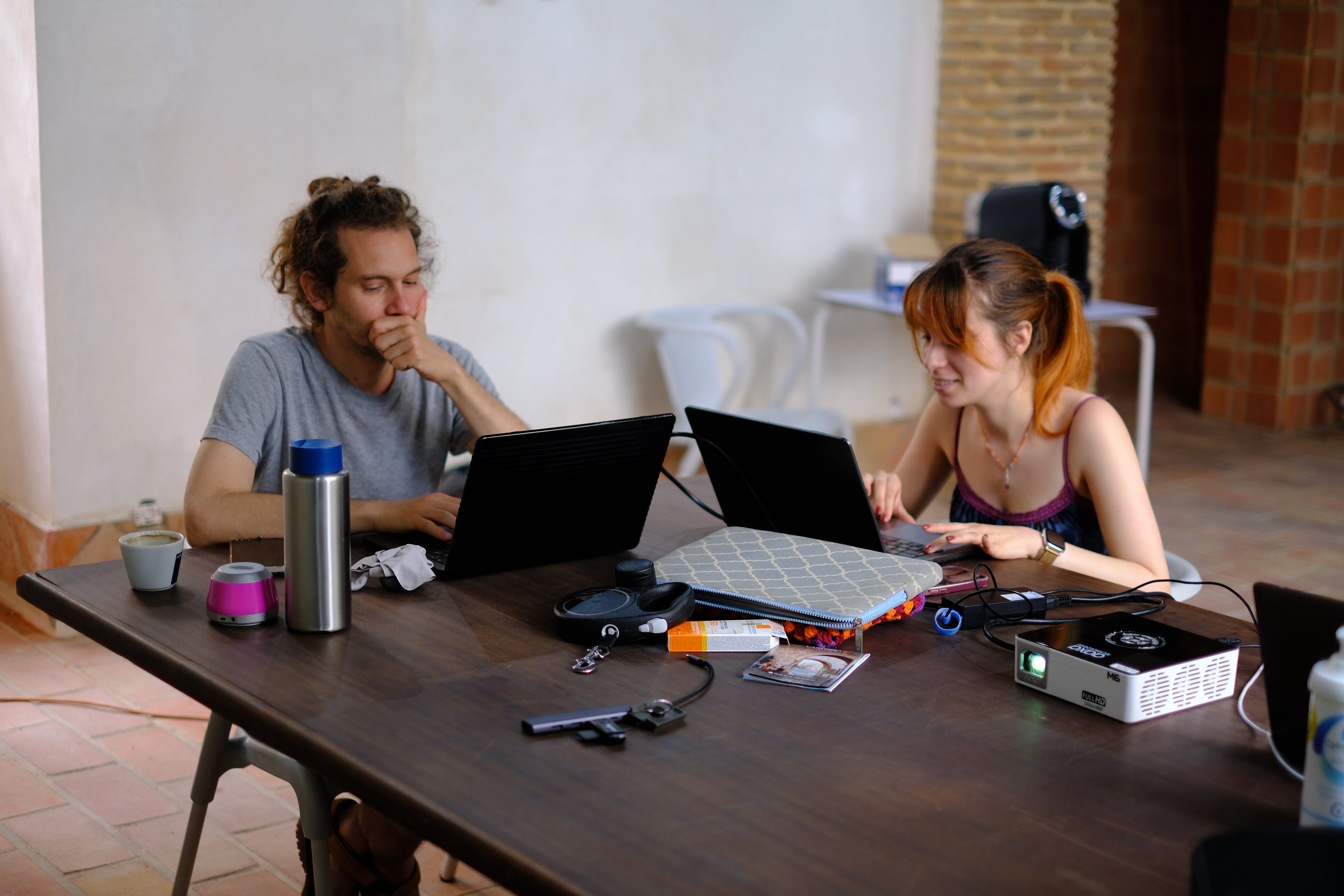
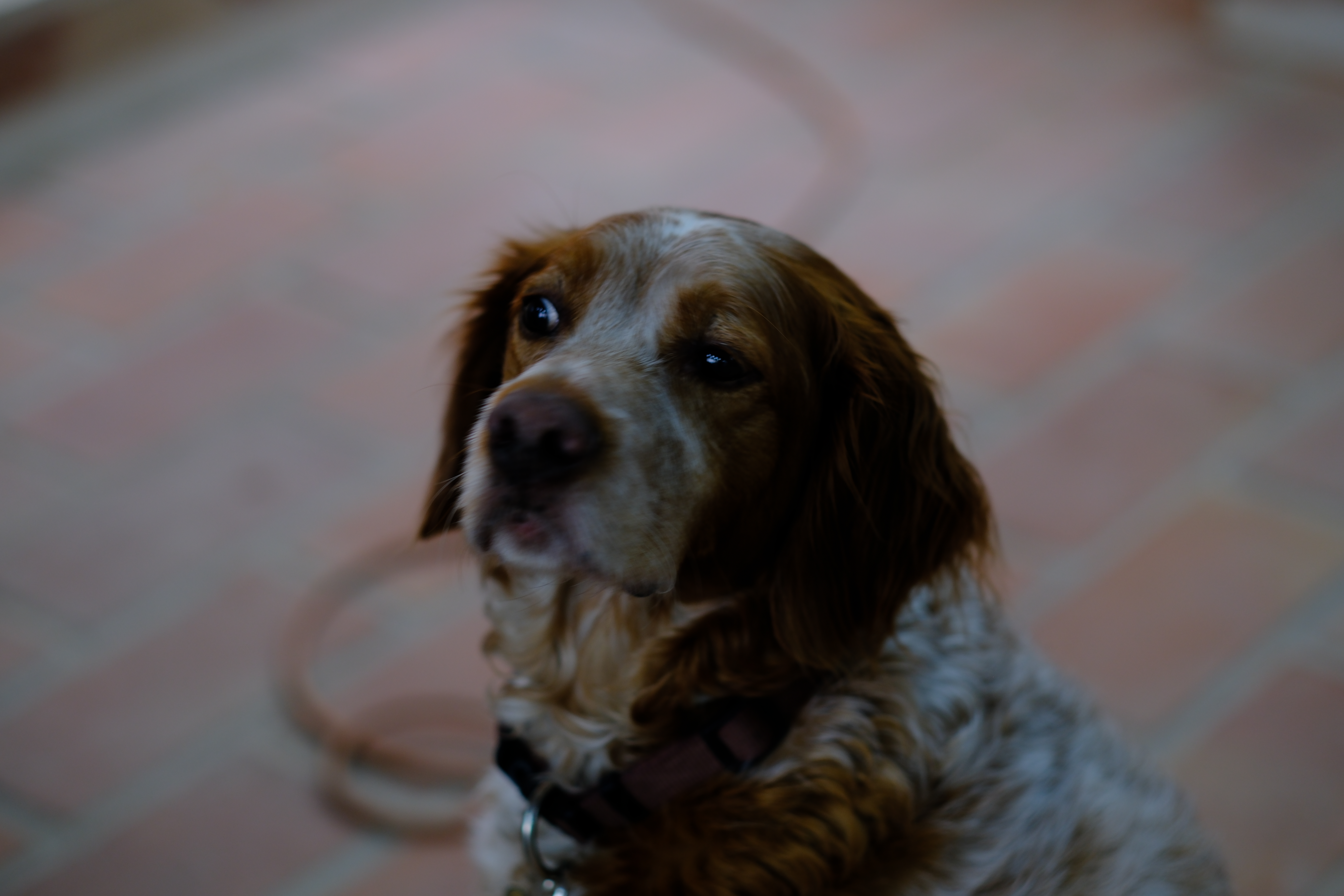
The house in the walls is a strange sort of maze, with rooms and courtyards seemingly distributed at random, street access from three sides, a large wooden gateway to the interior of the courtyard where, during the day, visitors may enter and climb up onto the ramparts. The 5 of us stayed in a dormitory room cobbled together from beds that lie around the place by Sofia’s uncle Joao Pedro had his handyman dig out from other rooms. Directly beneath our sleeping quarters was a tiled room where we could work, and in our first days we set about scavenging chairs, finding a tabletop and placing it on top of two beer branded cafe tables as our main working space. Joao Pedro gave us a coffee machine to use in the room which was a godsend throughout the residency, and as time went on we added more cafe tables to the room as our various projects piled up.
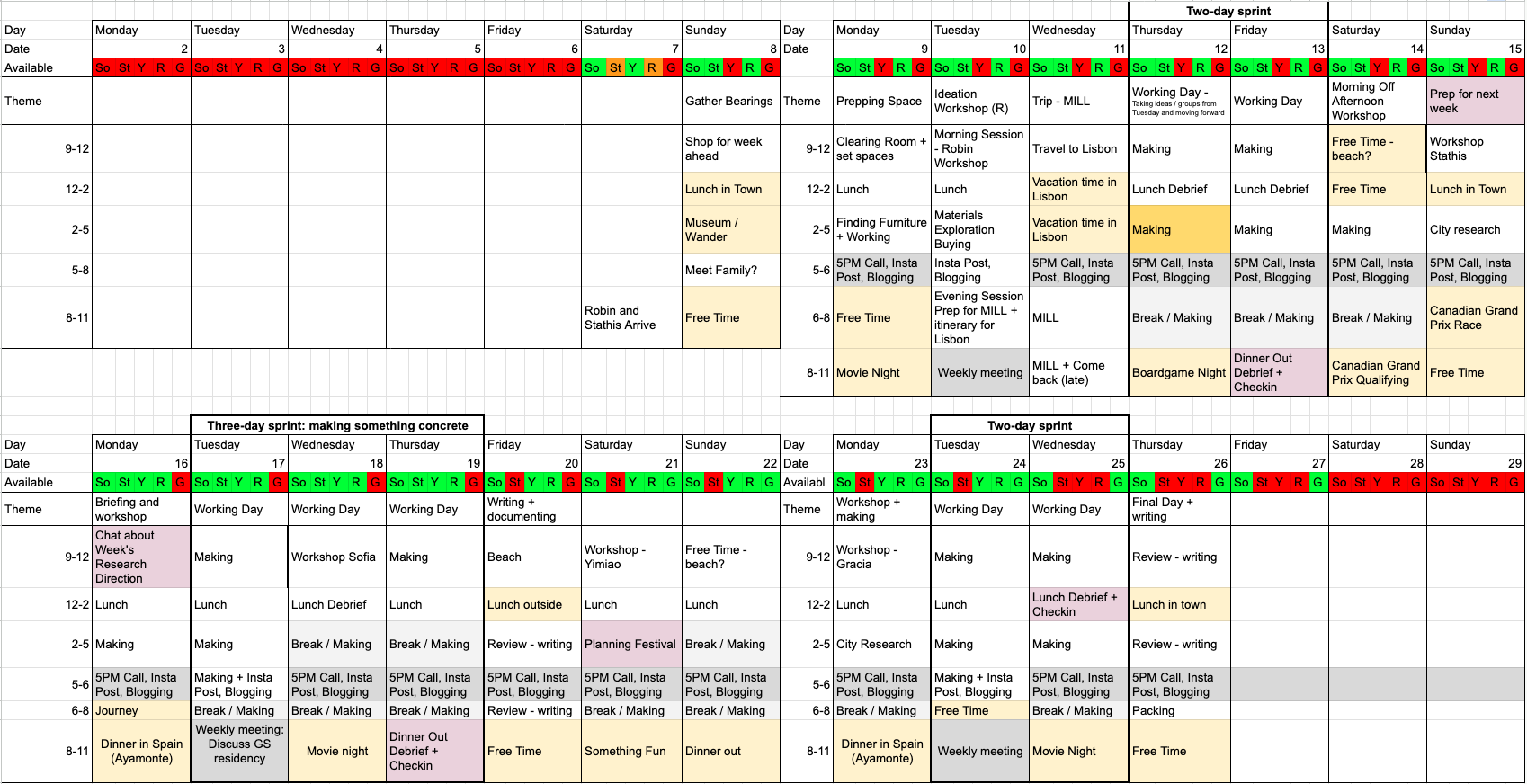
Prior to setting out we had developed an itinerary intended to give us time to relax but keep out focus on the task at hand so as not to waste the opportunity. It was successful as a means of managing the differing needs of a group of people, ensuring no one person was overworked with time left to relax or step away if needed. Being the only Portuguese speaker, Sofia was required to be present for many of the tasks, and so this blended and relaxed way of approaching a research project allowed the flexibility for her to take time off when necessary. One of the more successful aspects of this plan, due to the complicated distribution of days when each member would be on site in Faro, was an audio round-up of the day’s events, a “threadcast”.
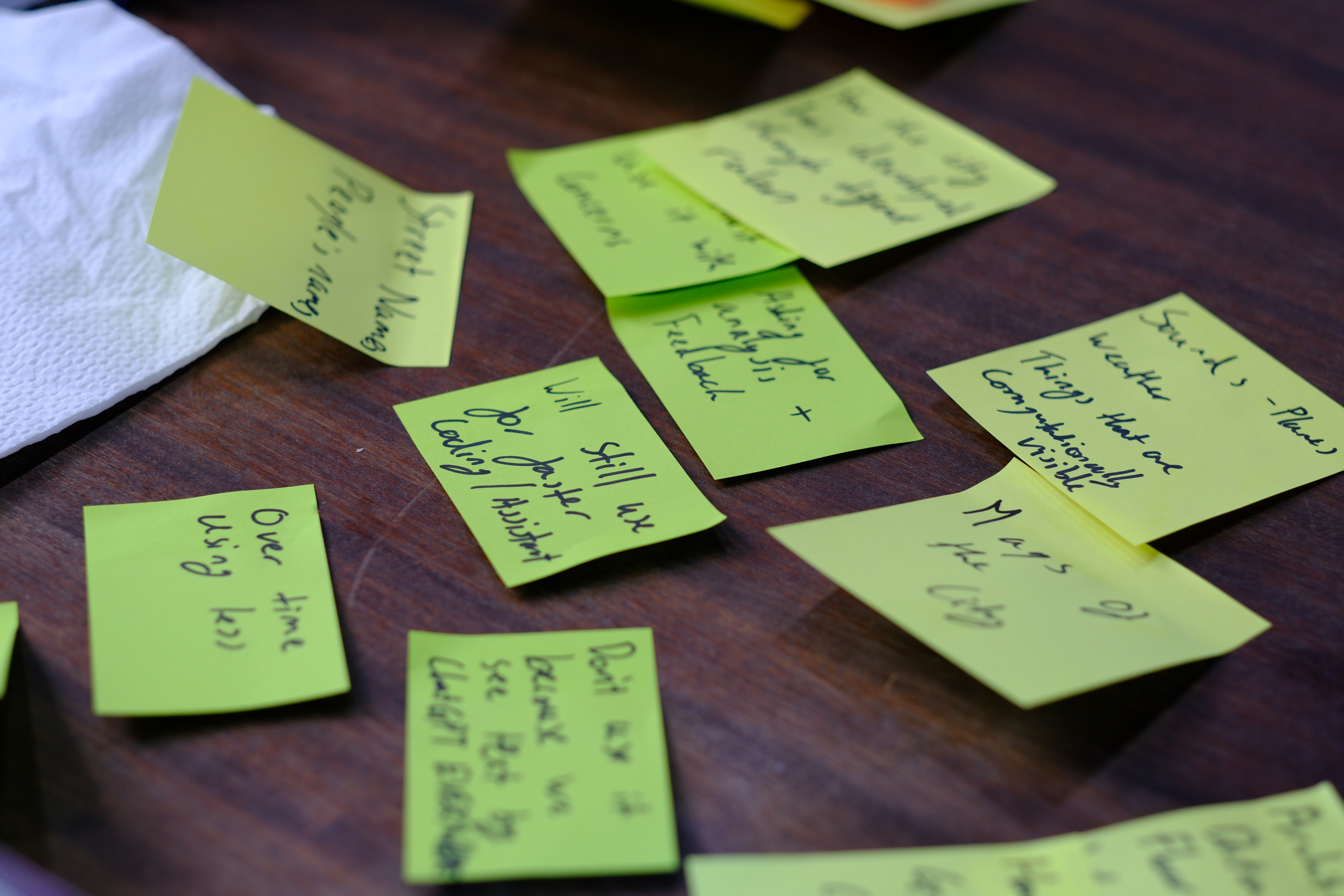
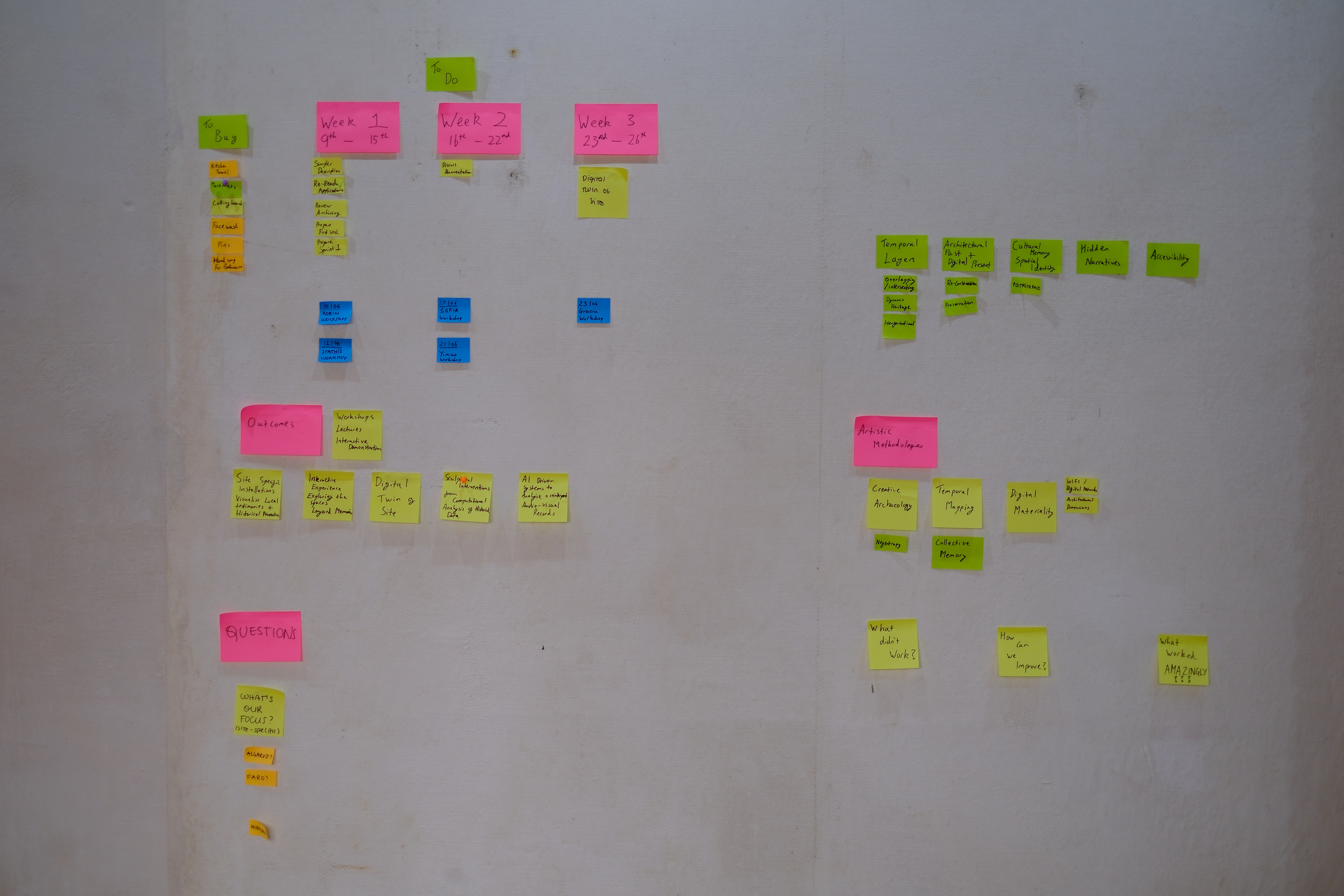
The first days took the form of planning our approach to finding activities and what constituted a topological investigation, what sorts of features would we consider as representative of this hyper-object or demand further investigation. More to this was looking for what sorts of data might we be able to capture, or that would be useful to find, and what could we achieve with it.
Something I noticed early on were these stacks of decorative tiles. They were piled up in a section of house that is able to open up into the street and occasionally acts as a gallery. These were not in gallery condition when we found them however. They were covered in dust and grime from years being stowed out of the way as the house maintained its balance between falling apart and being restored.
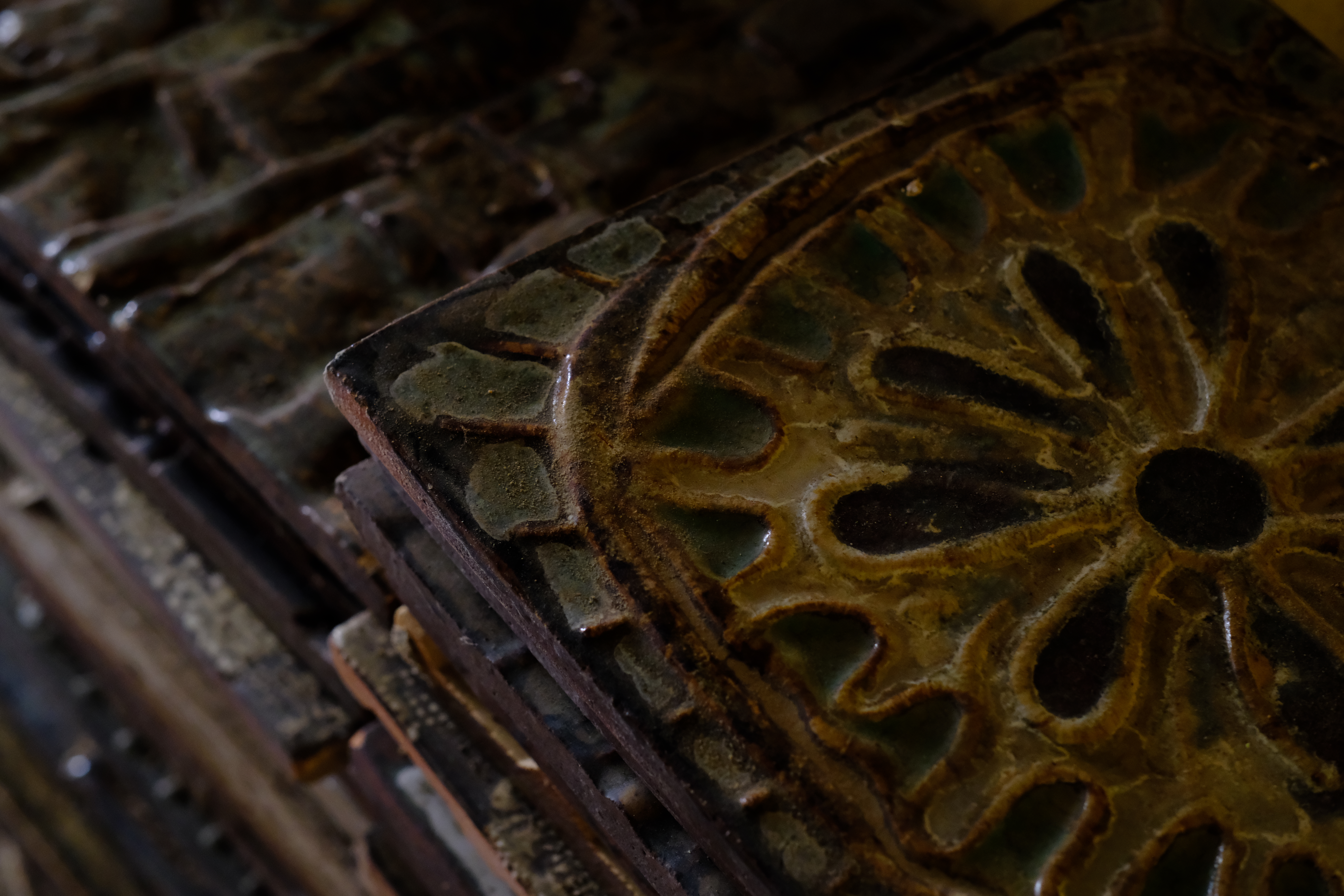
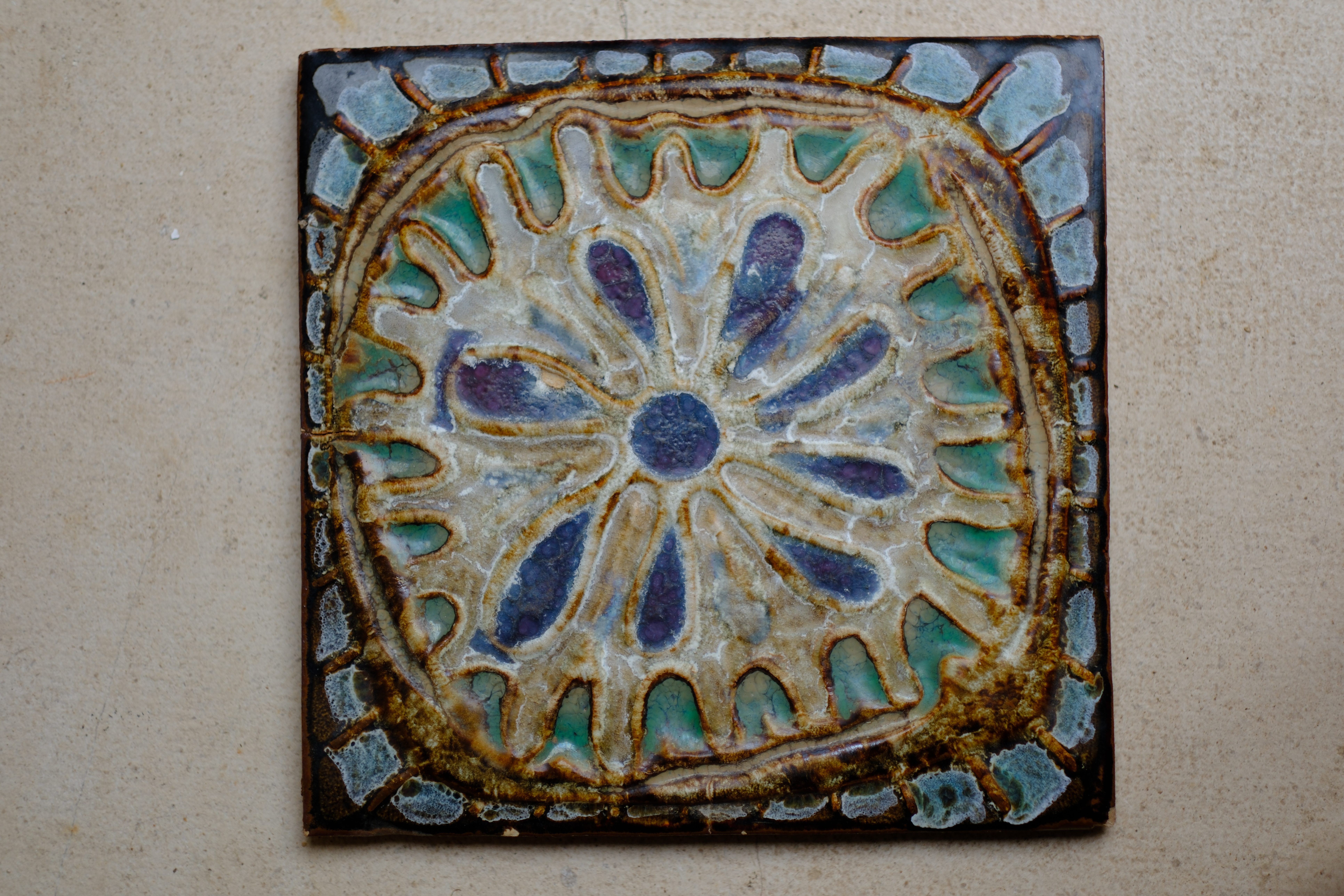
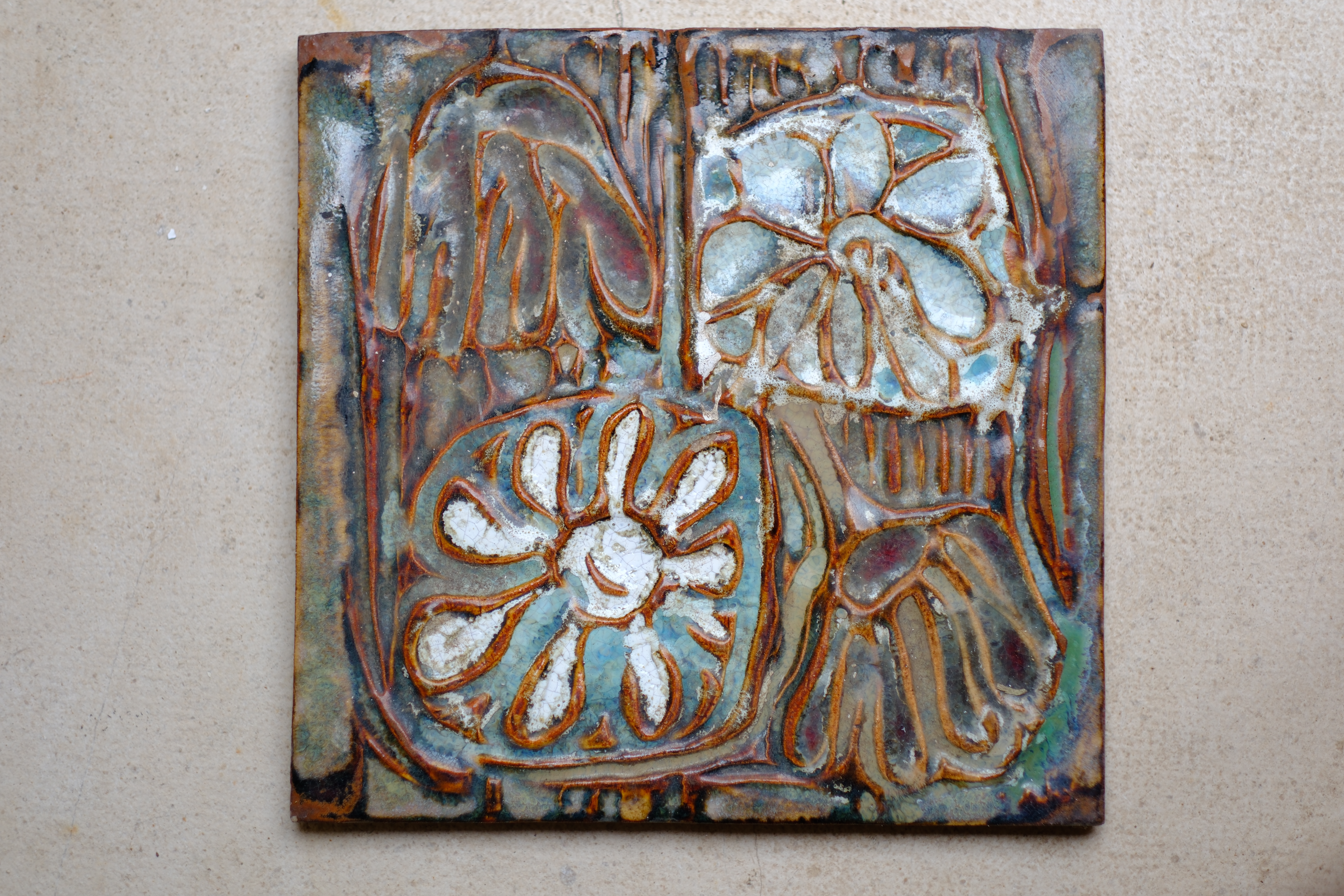
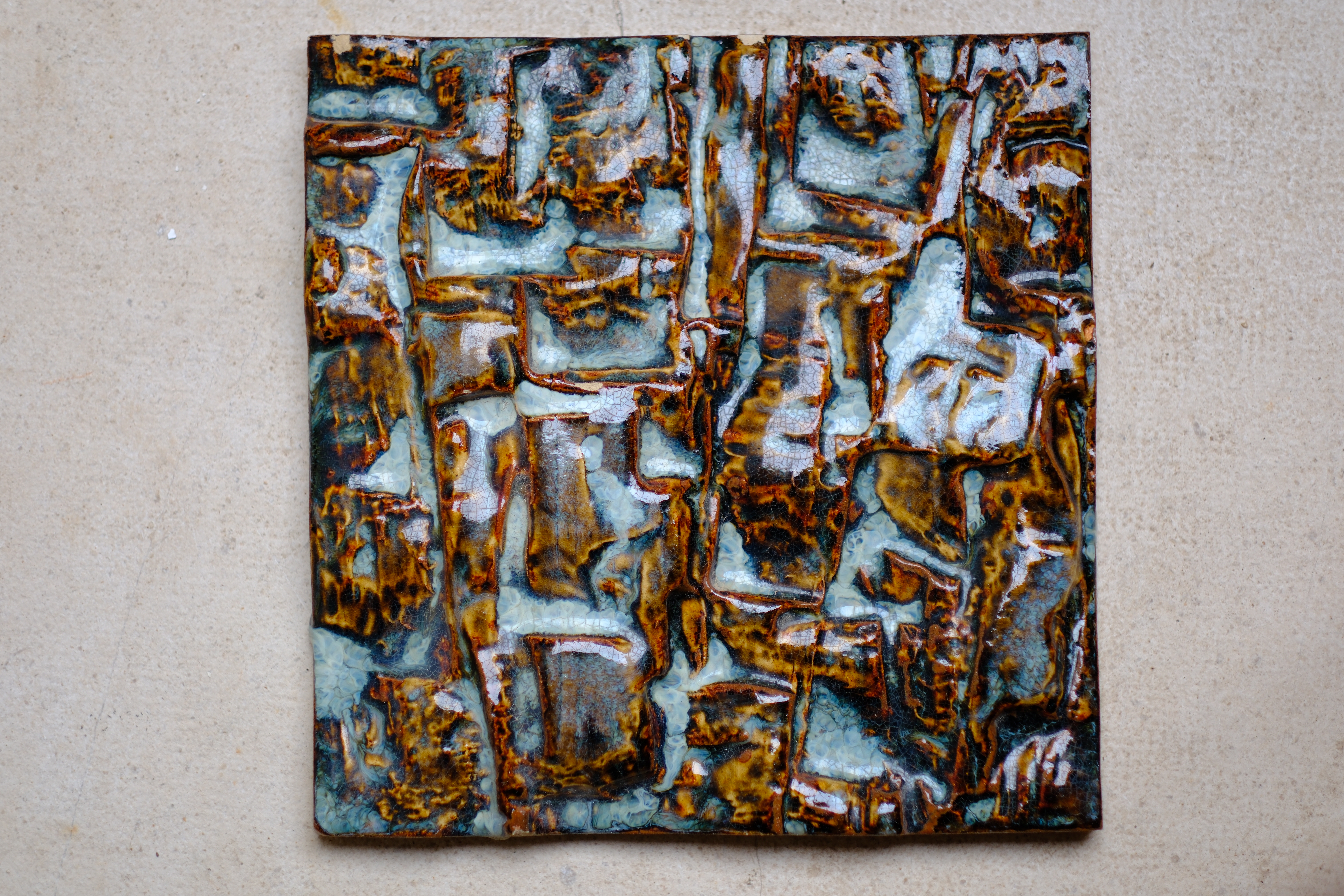
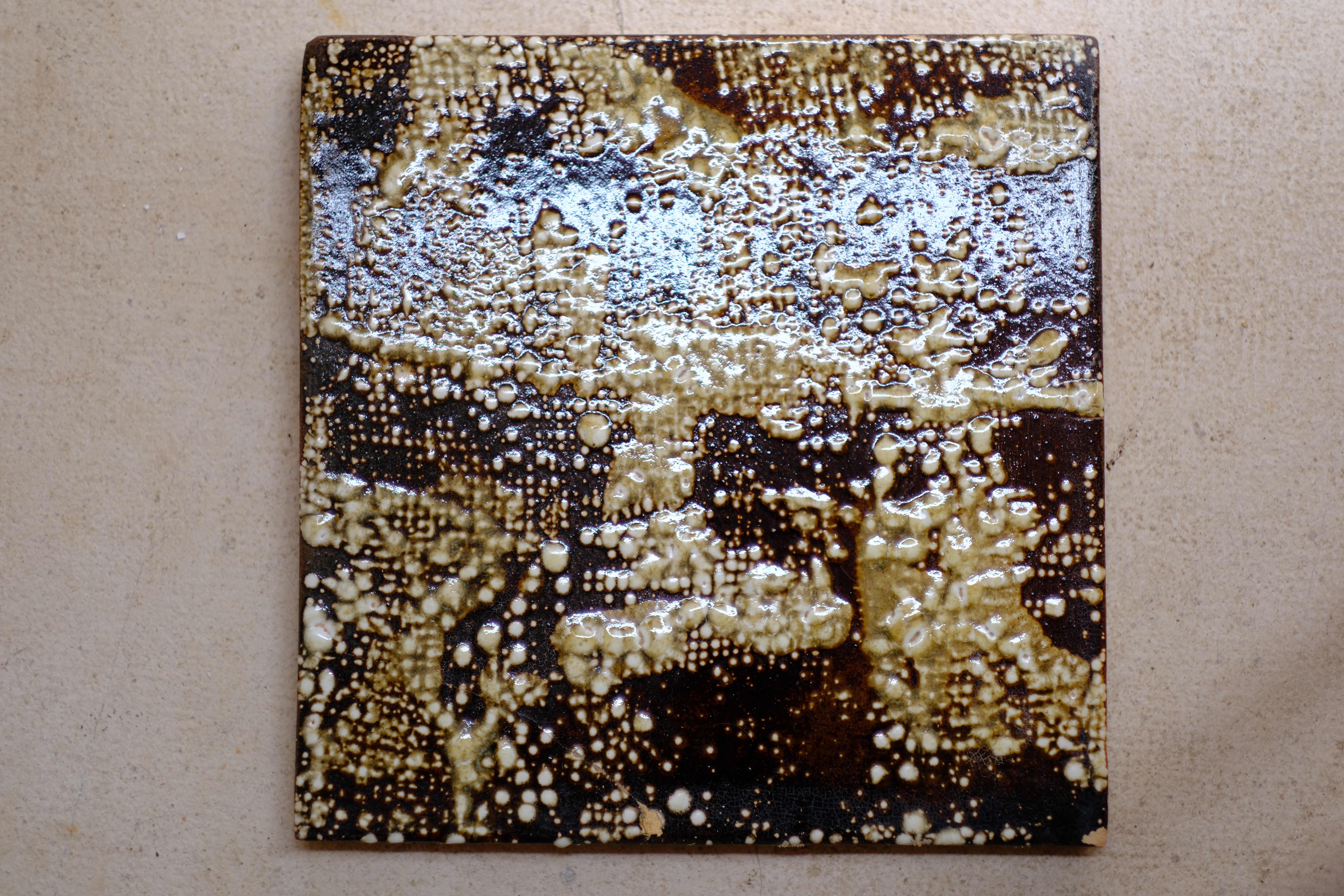
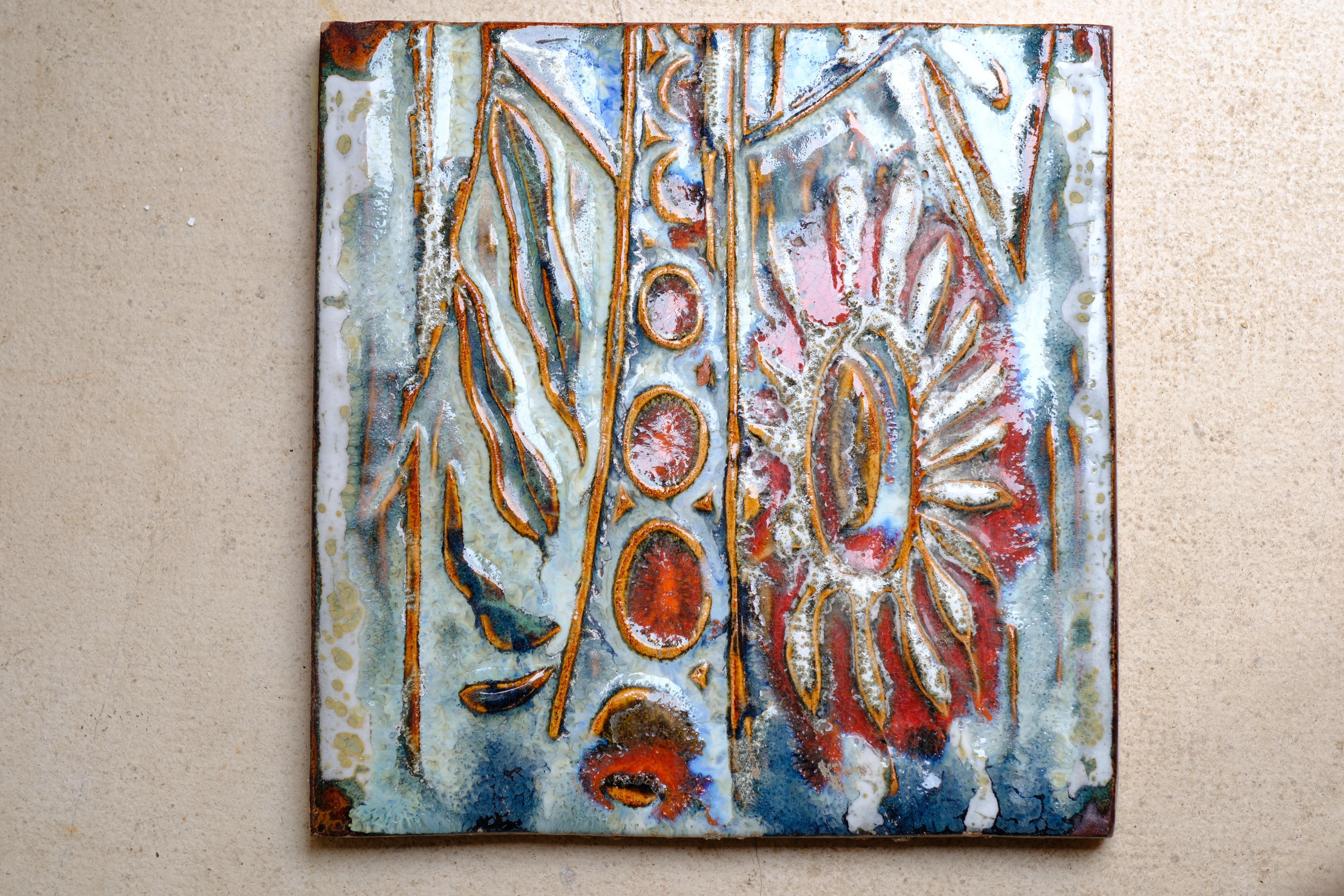
We looked through them all, cleaning them up and photographing them to capture a dataset of these tiles. Lighting conditions were not ideal as there was a degree of glare to contend with coming off their glazed surfaces. We chose a neutral area of the lintel between the courtyard and our work room as this was out of direct sunlight and so would reduce glare and provide a plain background for the tiles.
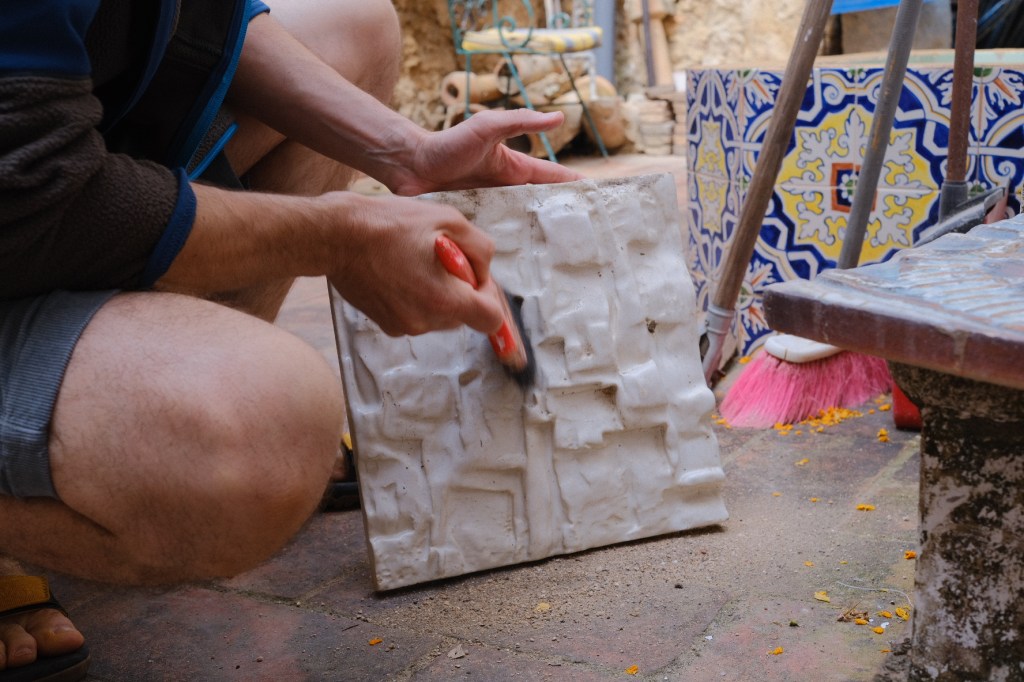
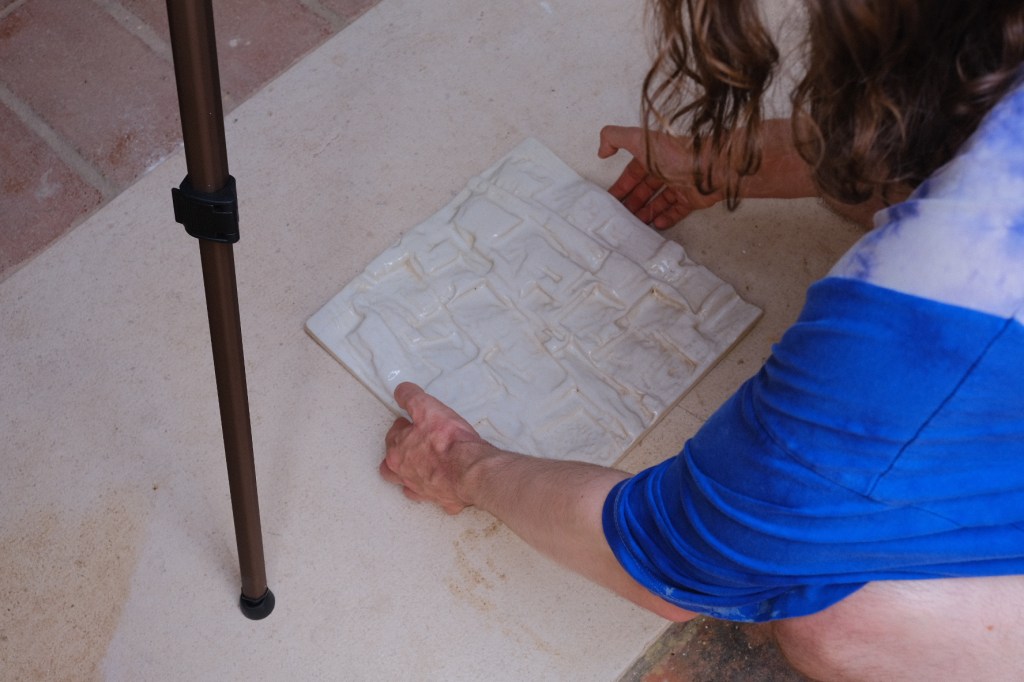
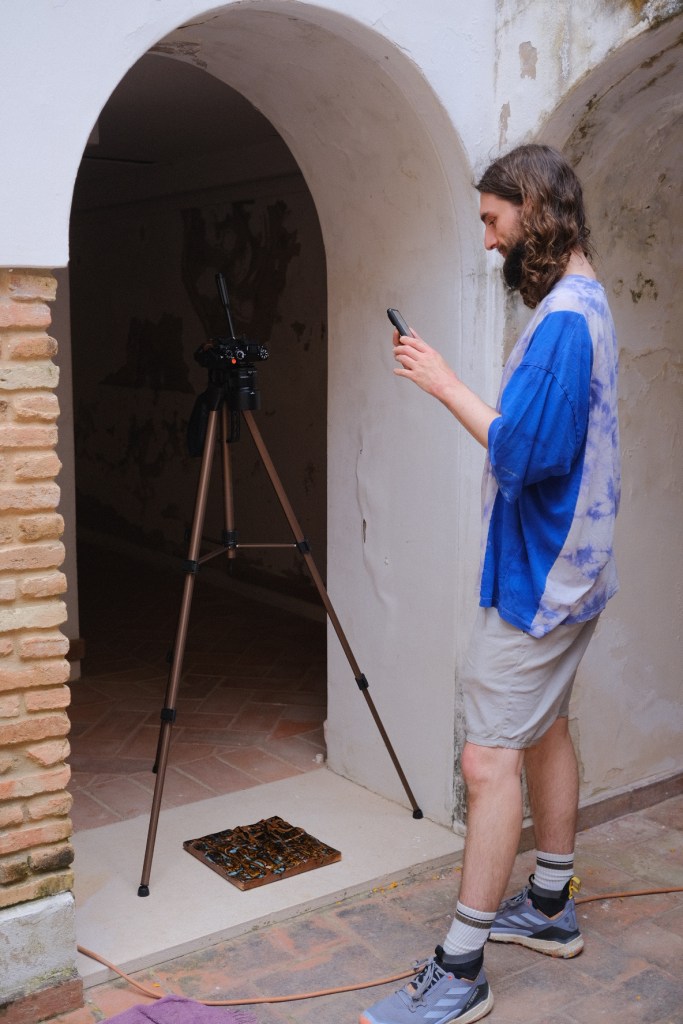
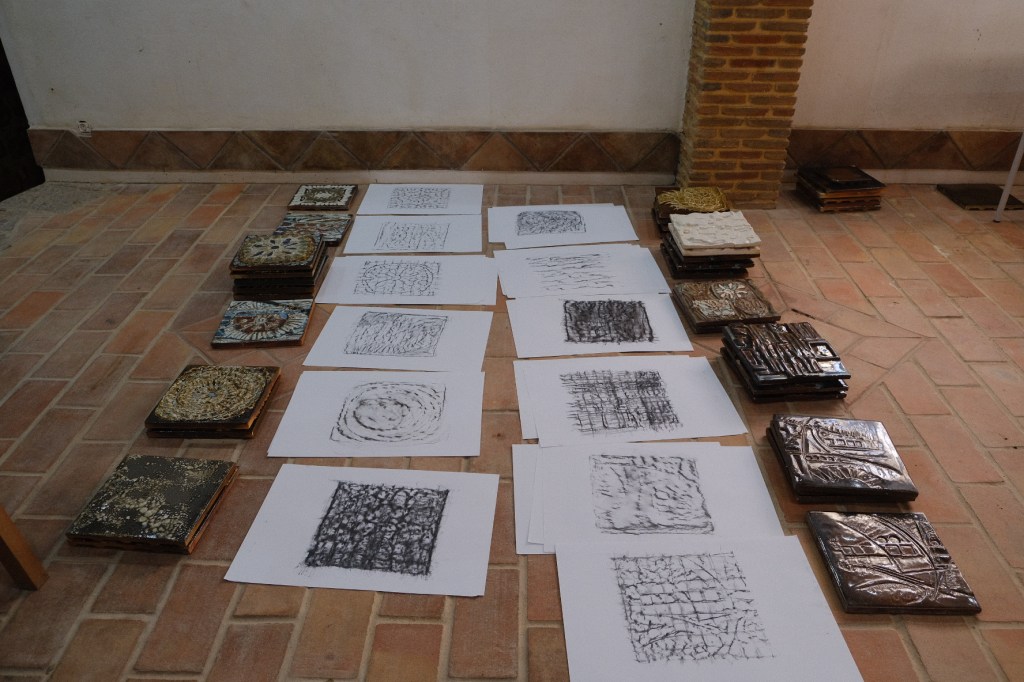
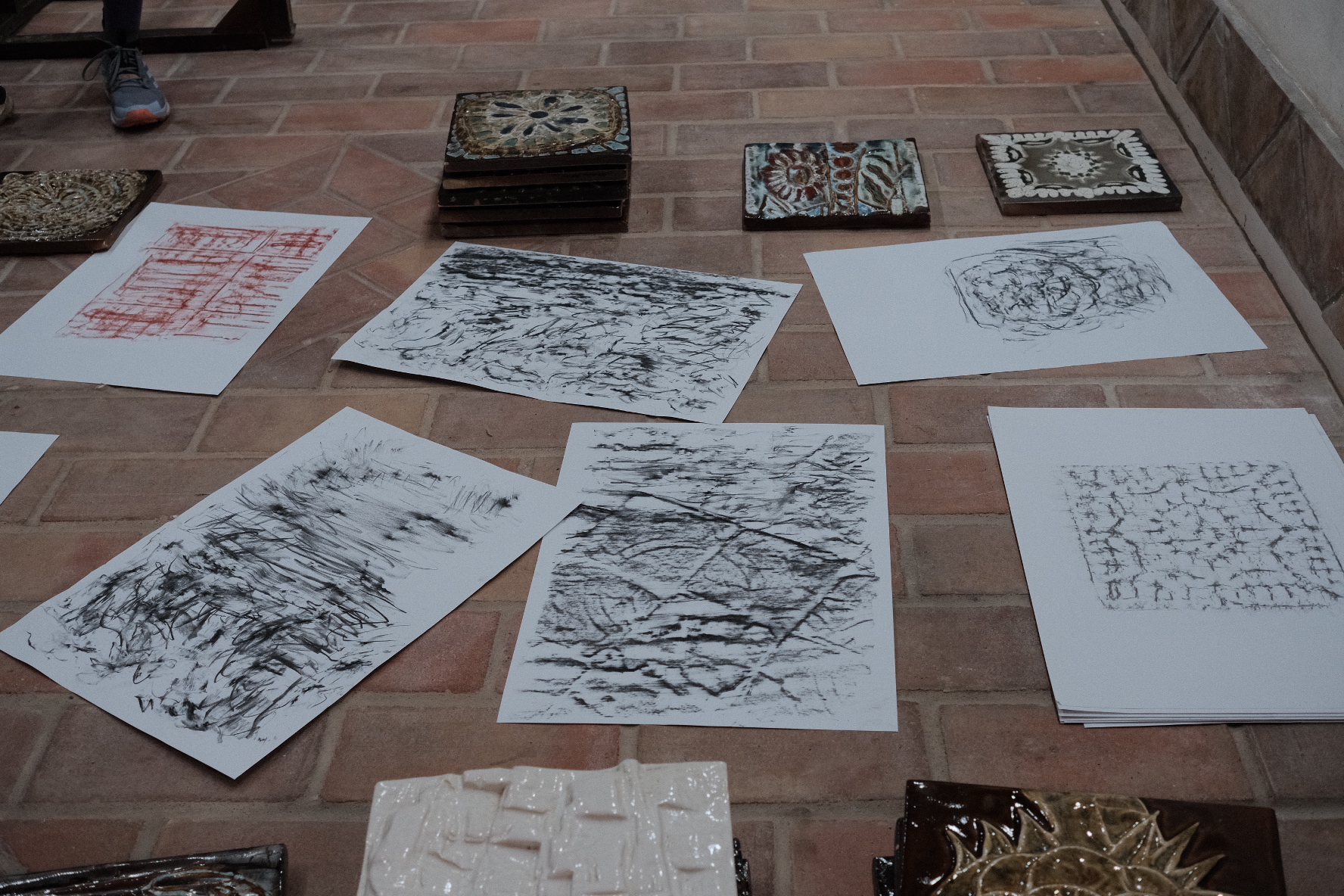
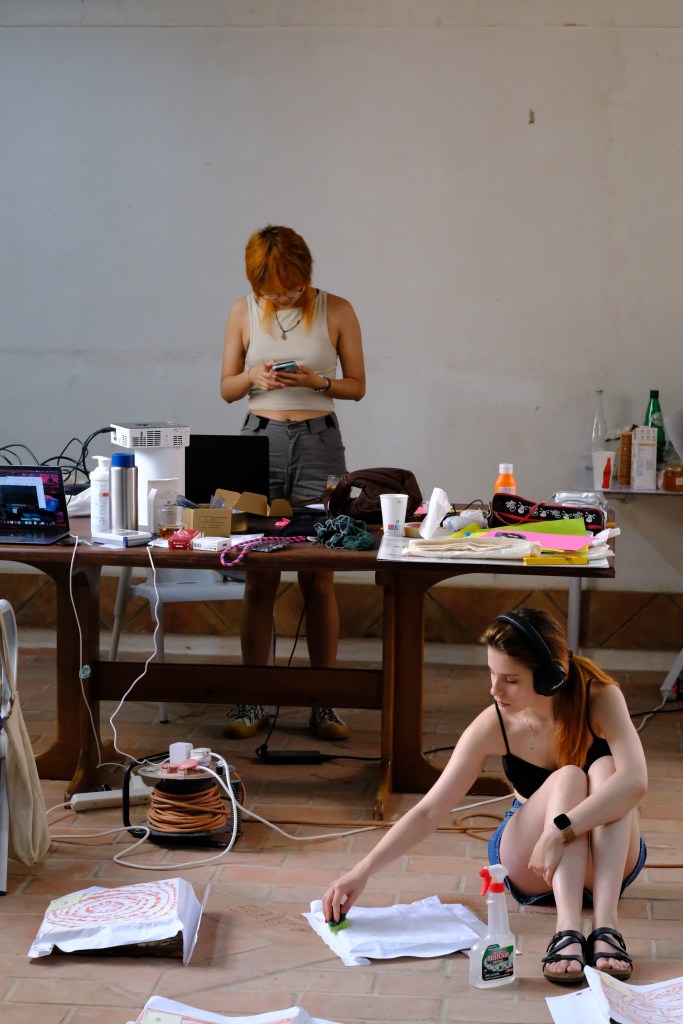
What followed this was a process of discovery. I had the thought that we could try to take relief rubbings of the tiles. The process was very material oriented, getting our hands dirty with charcoal initially as we attempted this alternate form of capture.
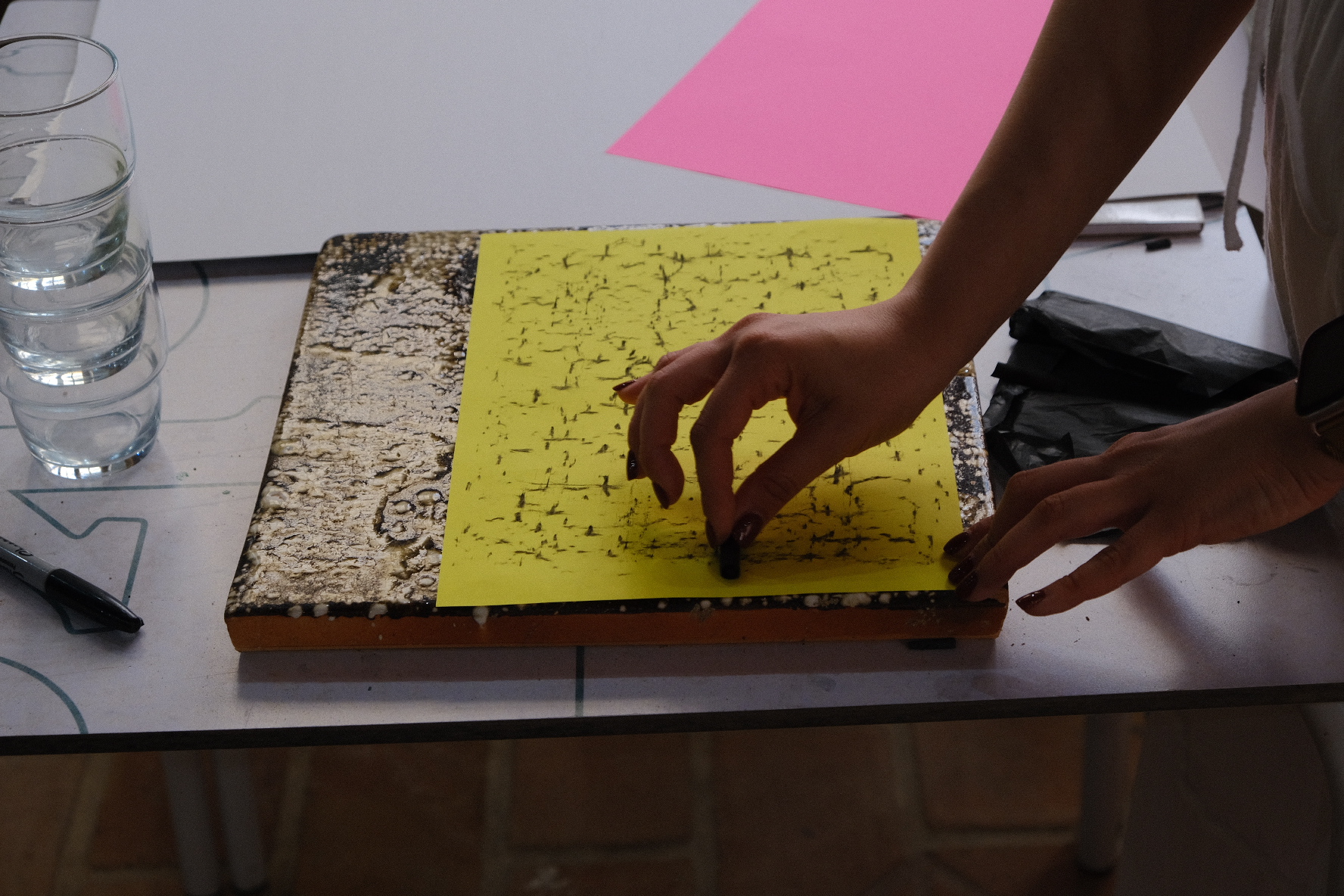
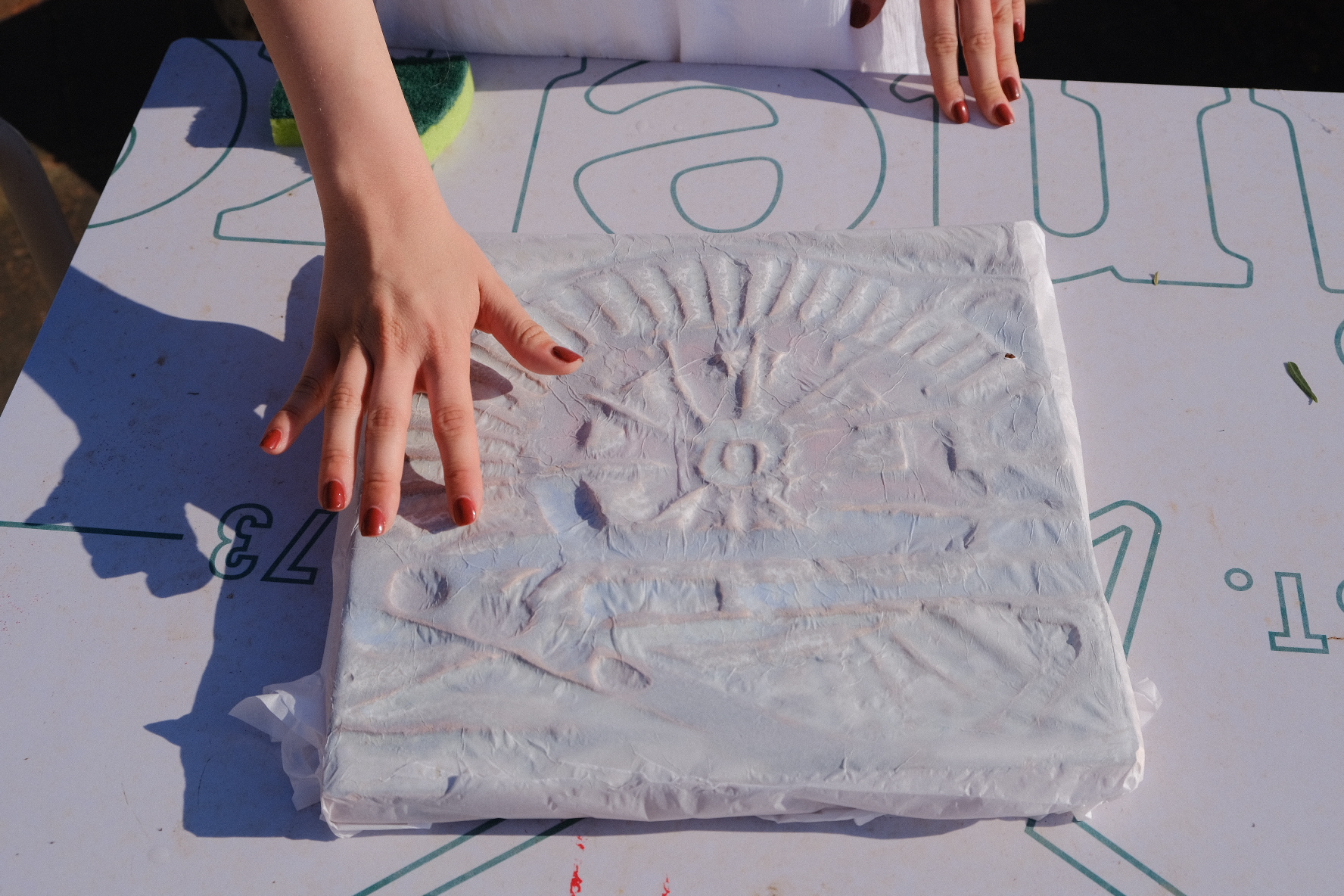
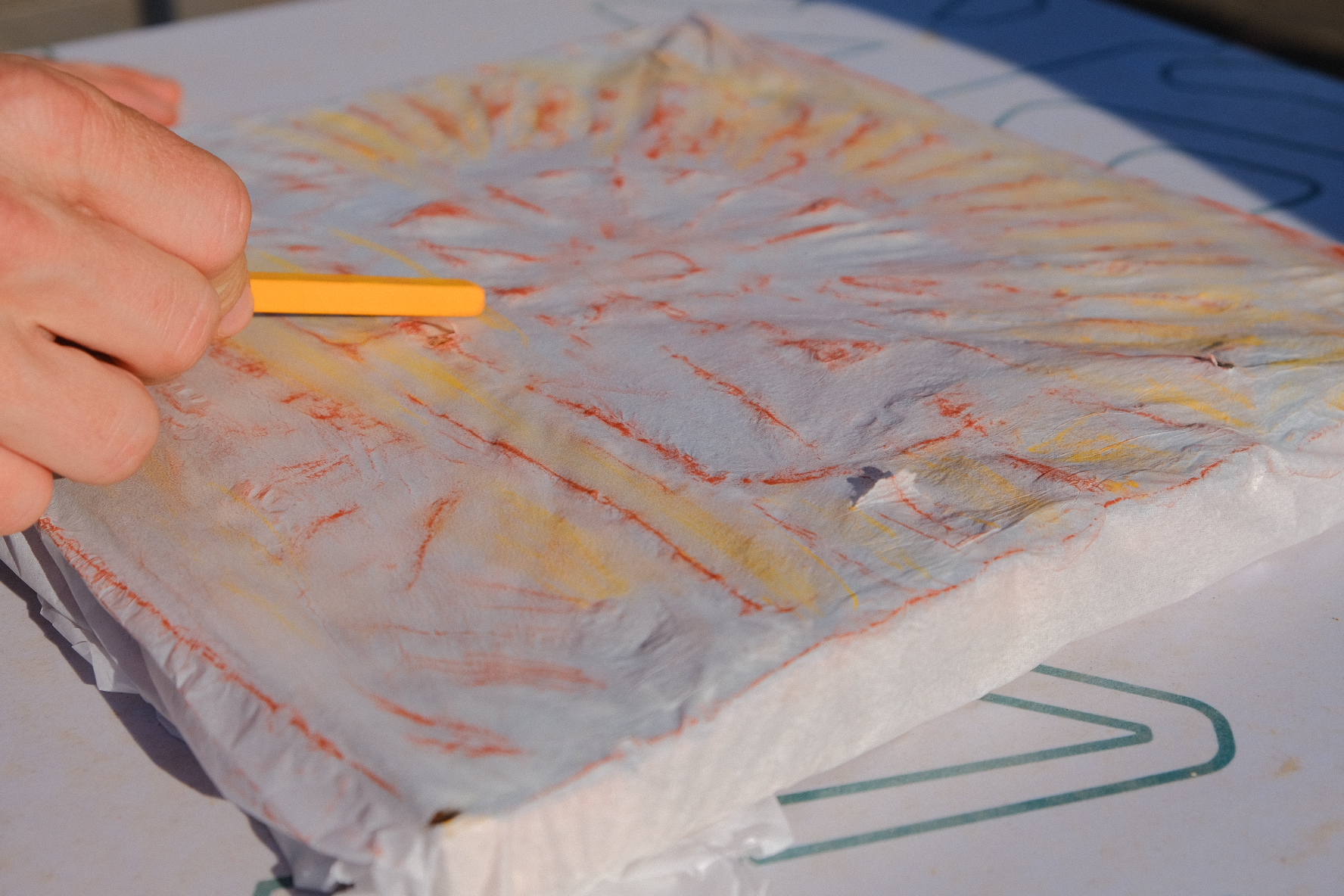
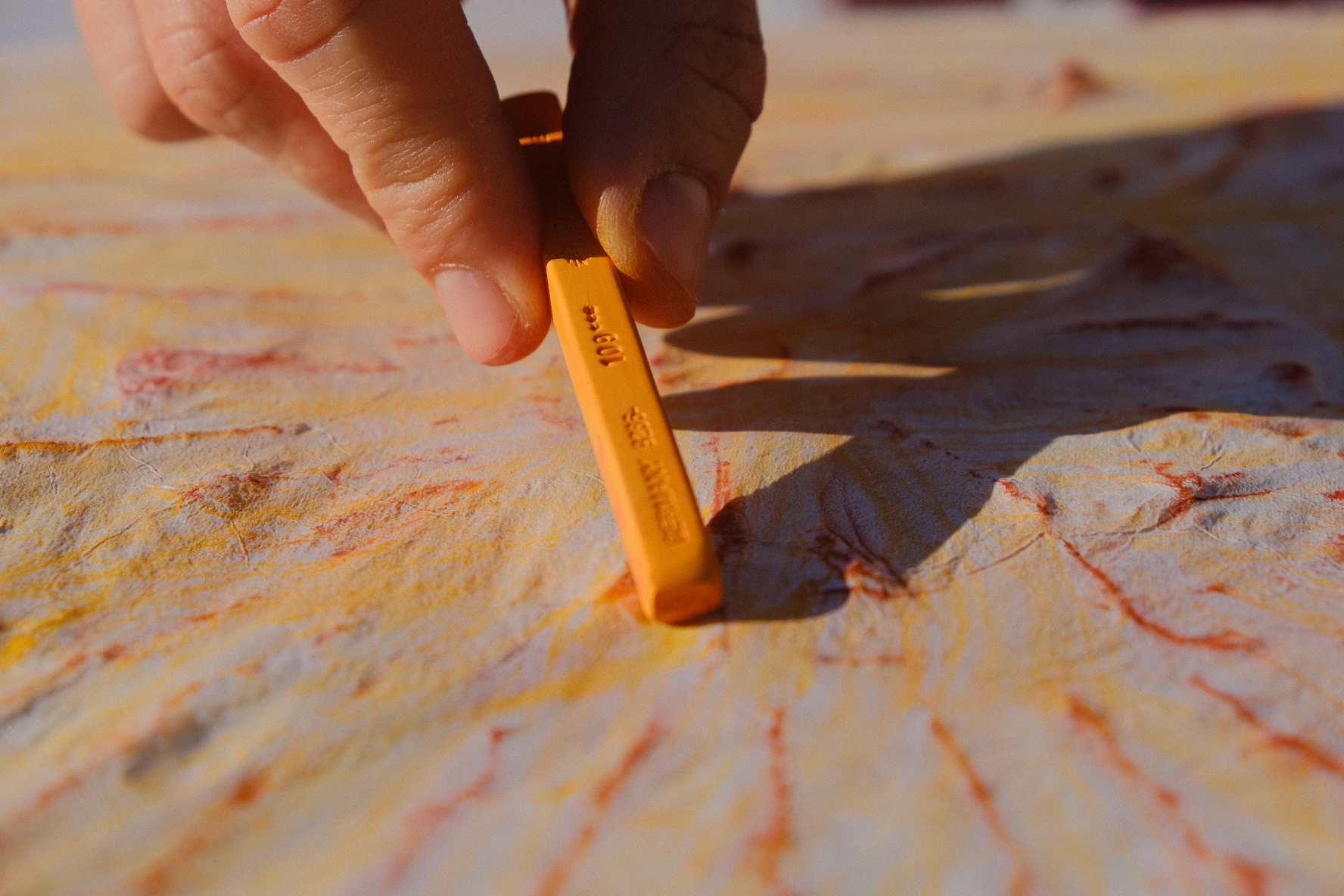
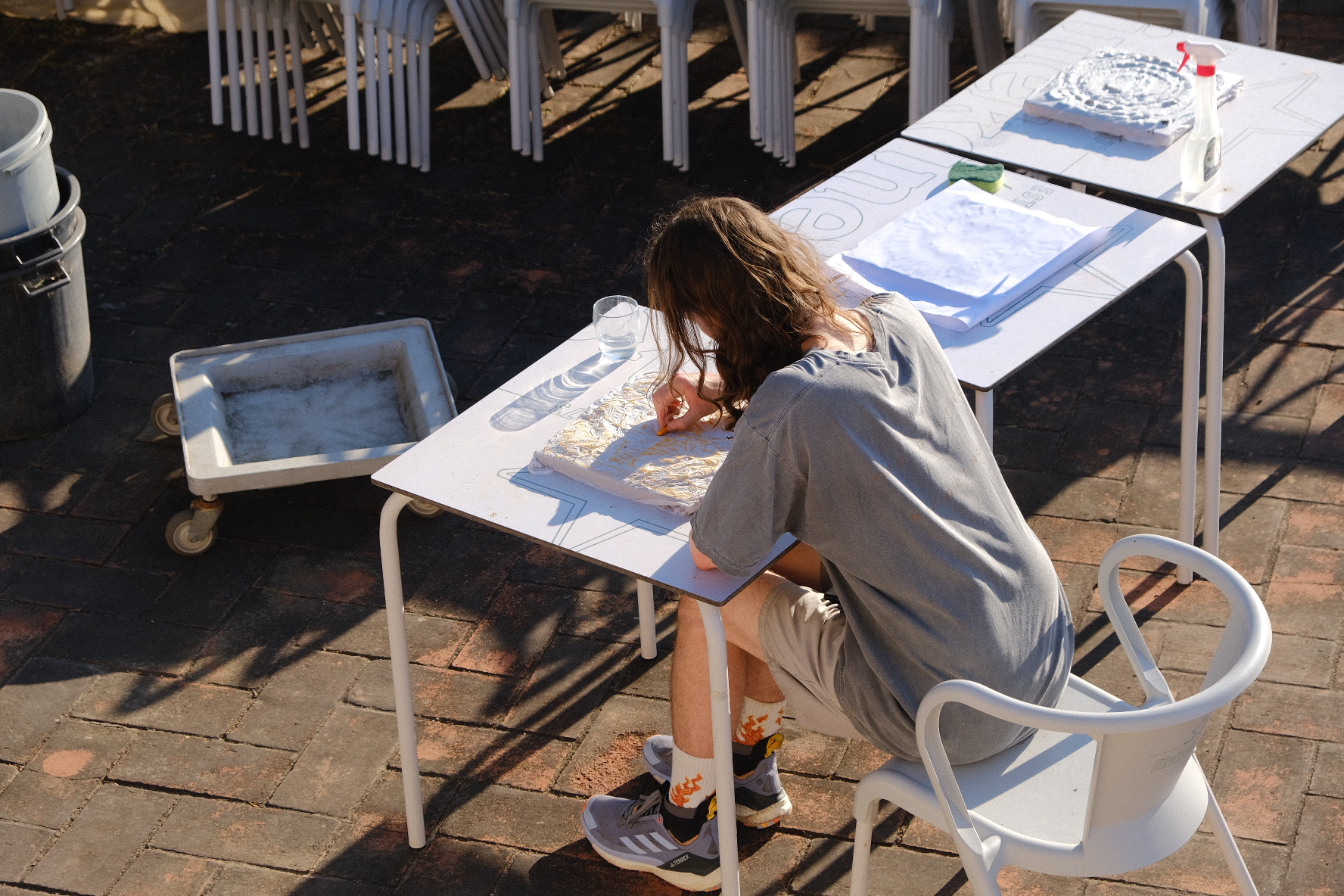
We iterated on the process, heading to the art supply shop in town to purchase crayons and paper that might give better or more interesting results. We tried wetting tissue paper such that it would take on the shape of the tiles and then attempting rubbing from there. This was semi-successful, we ended up with incredibly delicate renderings of the tile surfaces, but unfortunately not ones that maintained the shape of the tile after their removal.
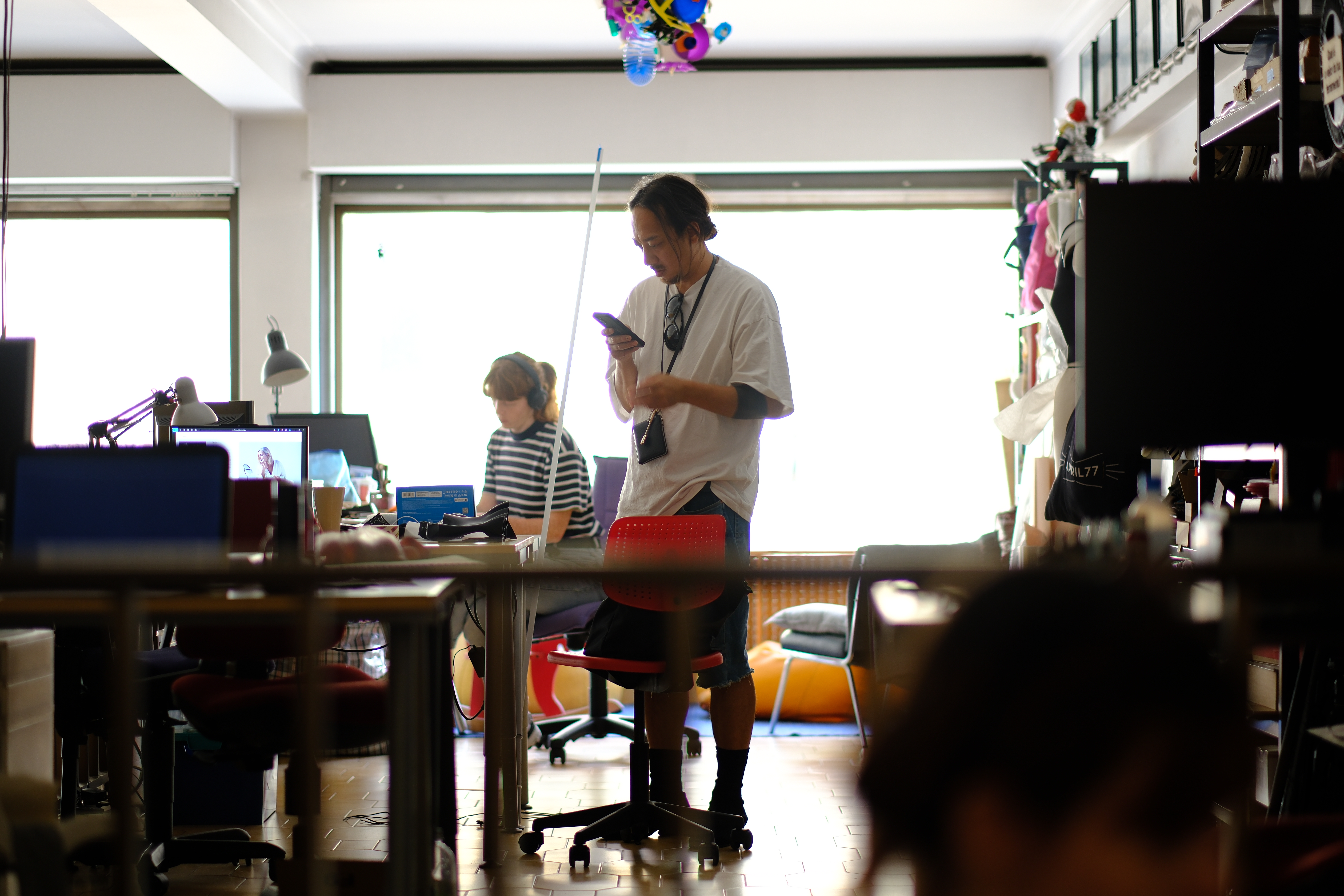
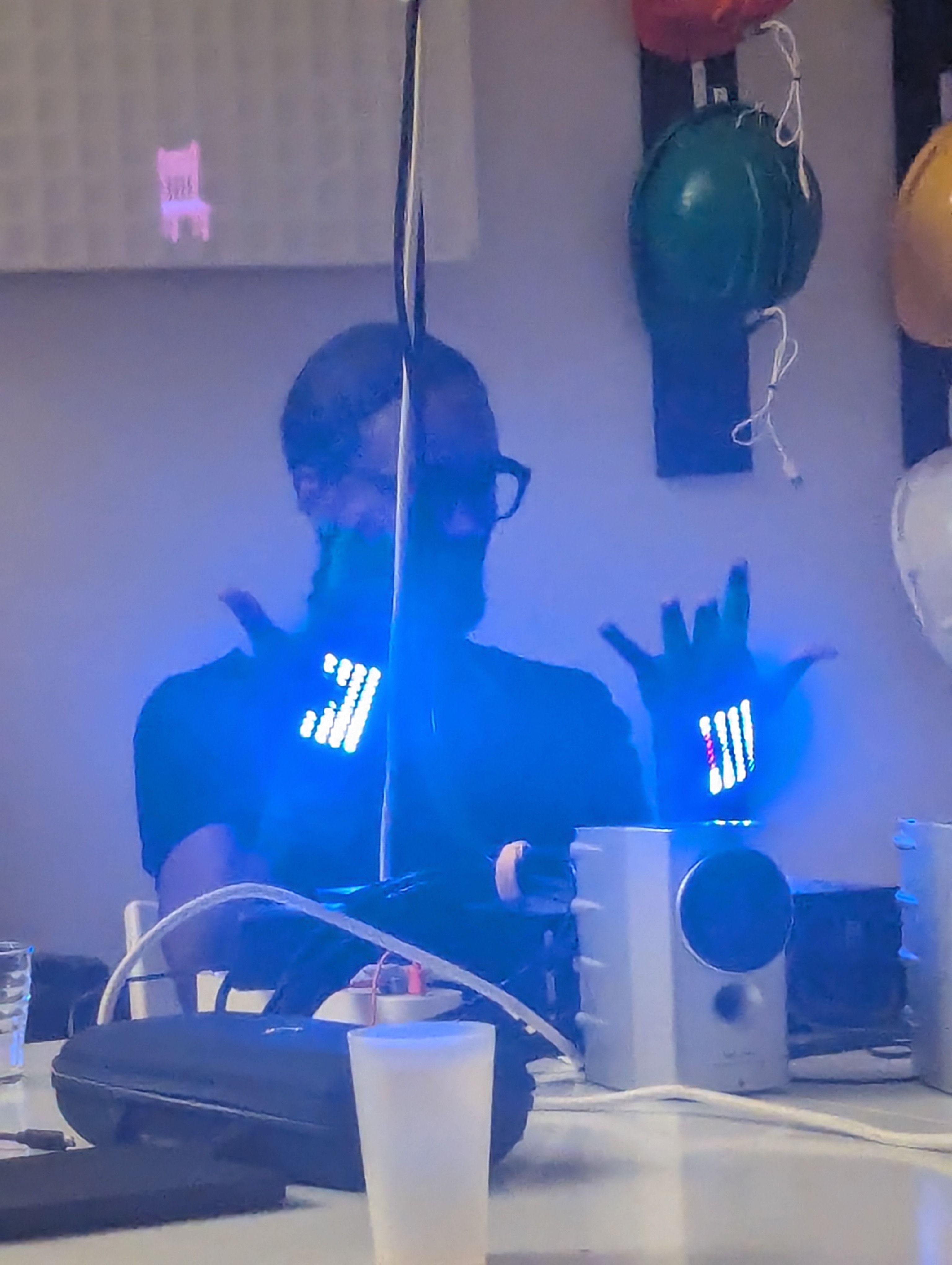
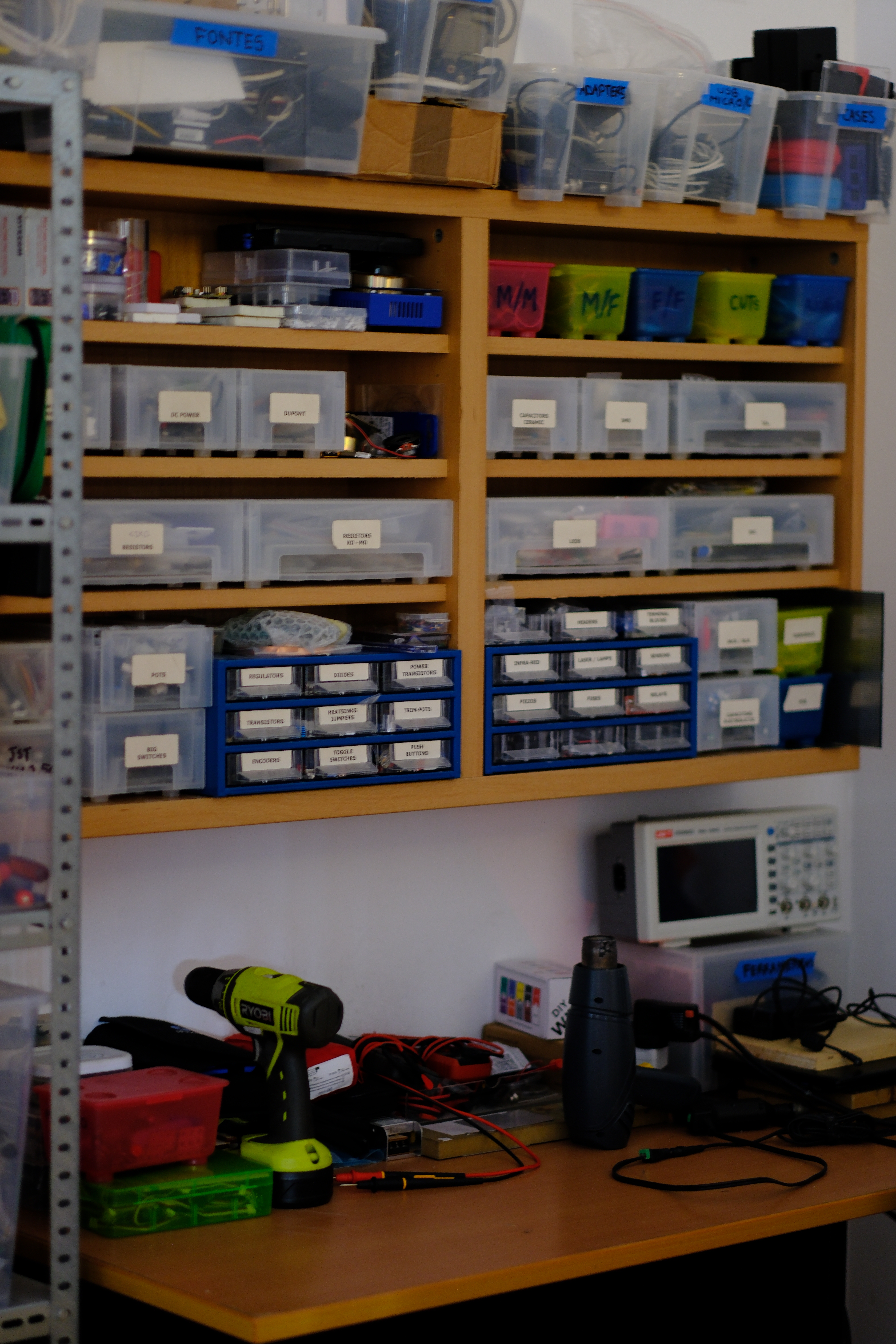
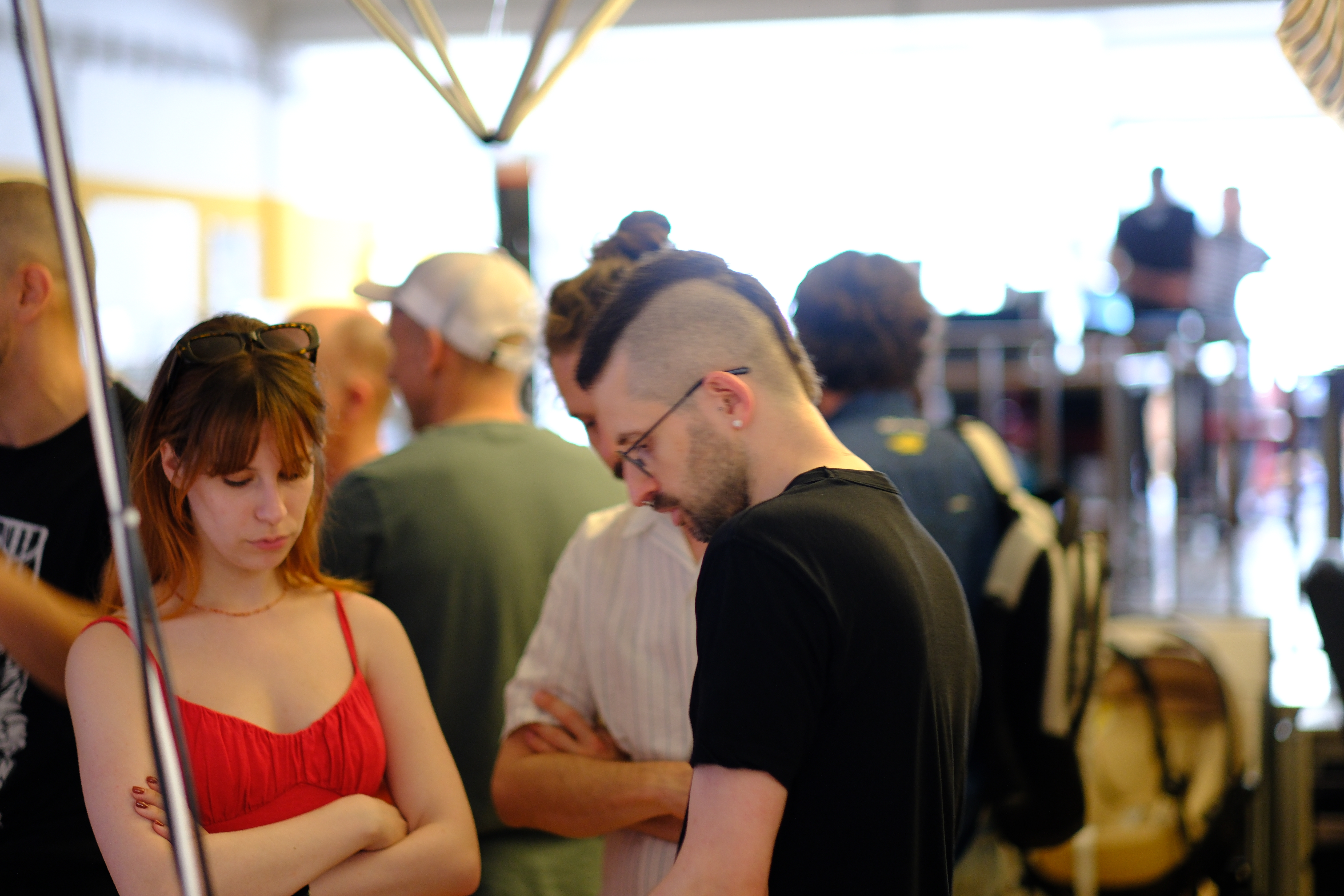
Sofia, Stathis, and I travelled to Lisbon on the fourth day since our arrival. Sofia had discovered a group called Makers of Little Lisbon (MILL) who had a makerspace in the city. This maker community holds a monthly meetup where members could share projects they had been working on, and we had intentionally timed and structured our residency such that we would be able to attend and present our work up until this point and outline the project we were currently embarking on. It felt like a great success and was a pleasure to be able to meet the (mostly English) community at the hackspace, and see their projects from physical computing glove controllers, to 8-bit photography projects, and soon to be released video games.
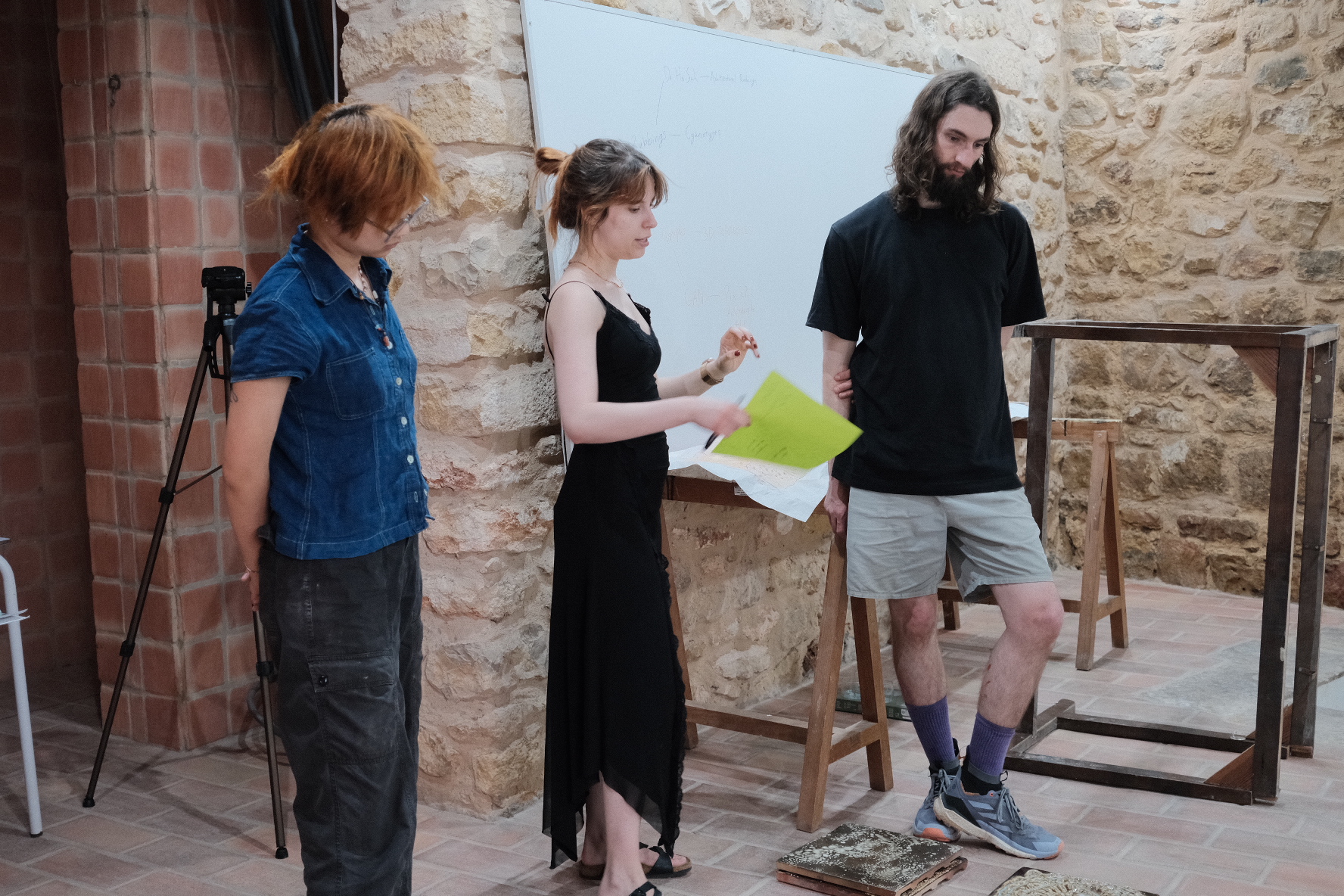
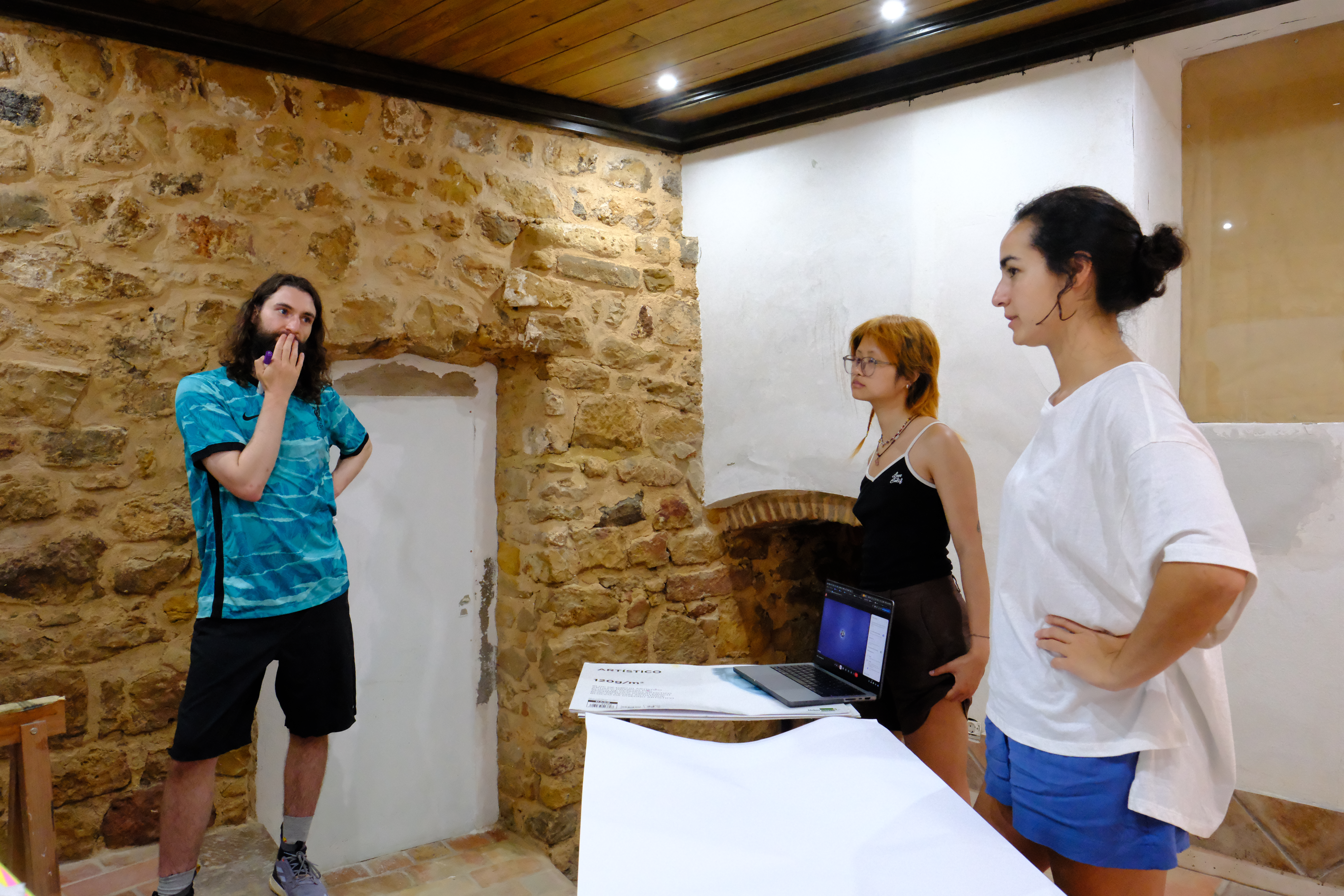
Soon enough after our return we were joined by Yimiao and, buoyed by the Lisbon trip, set about looking around our holiday castle for more ancient artefacts to peruse and make computational.
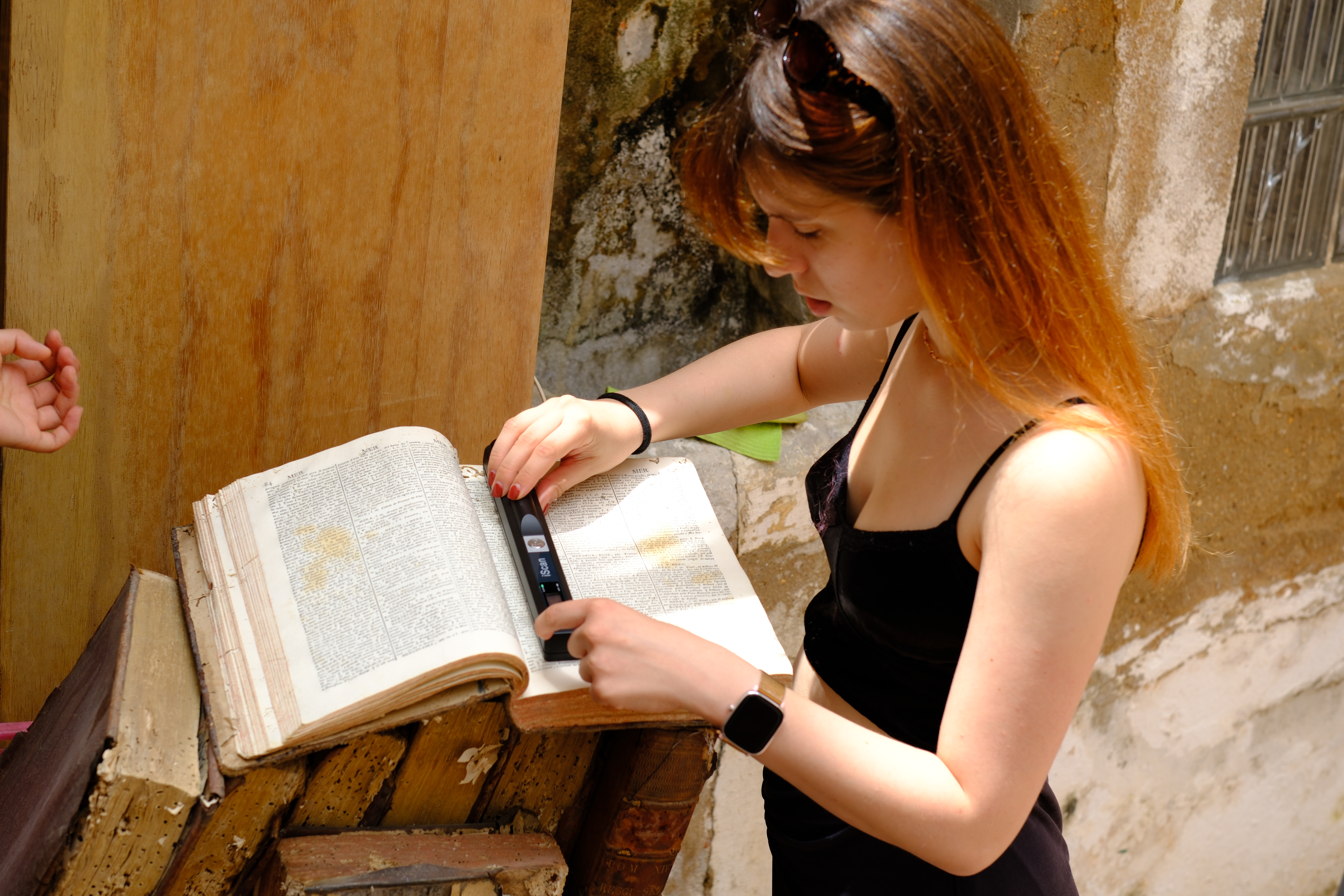
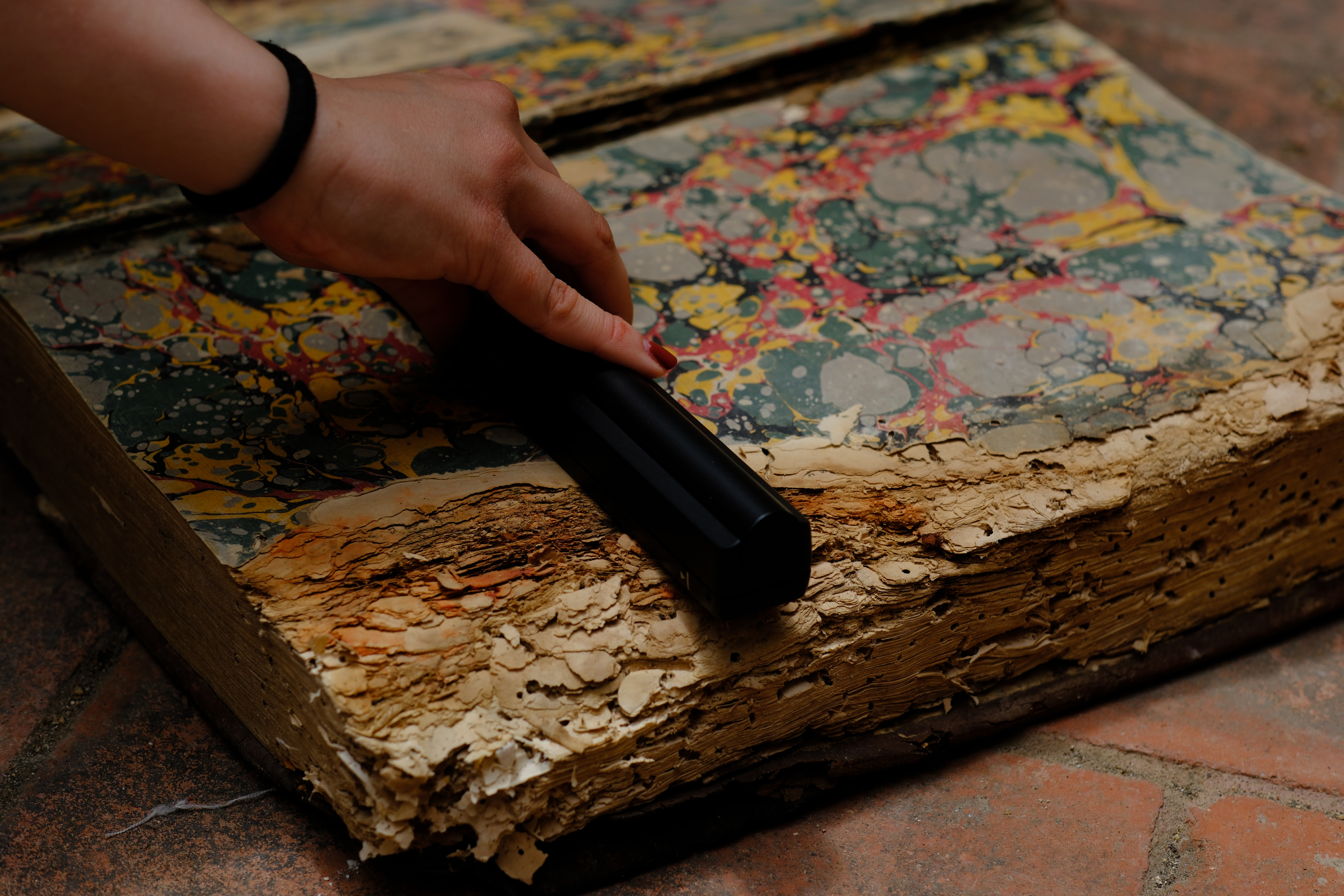
A piece of magic befell us when Sofia’s uncle revealed this old tomes! Dictionaries that were over 100 years old and thoroughly chewed up by bookworms and father time. Our activities with these involved 3D scanning them with a photogrammetry app, and scanning some pages and textures with a handheld scanner Sofia had brought to experiment with. We also scanned various surfaces around the site to collect a larger set of textures that might provide some interest.
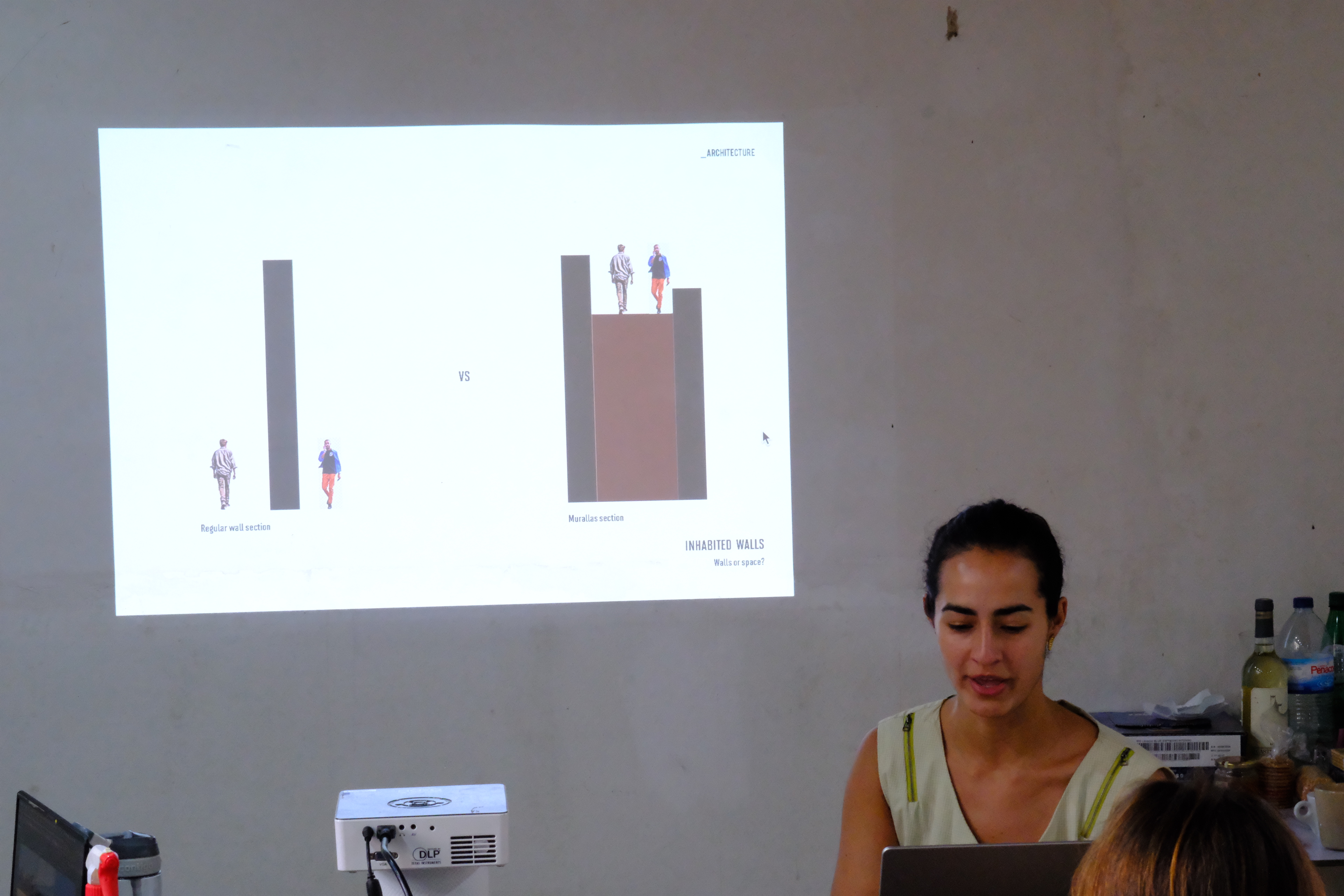
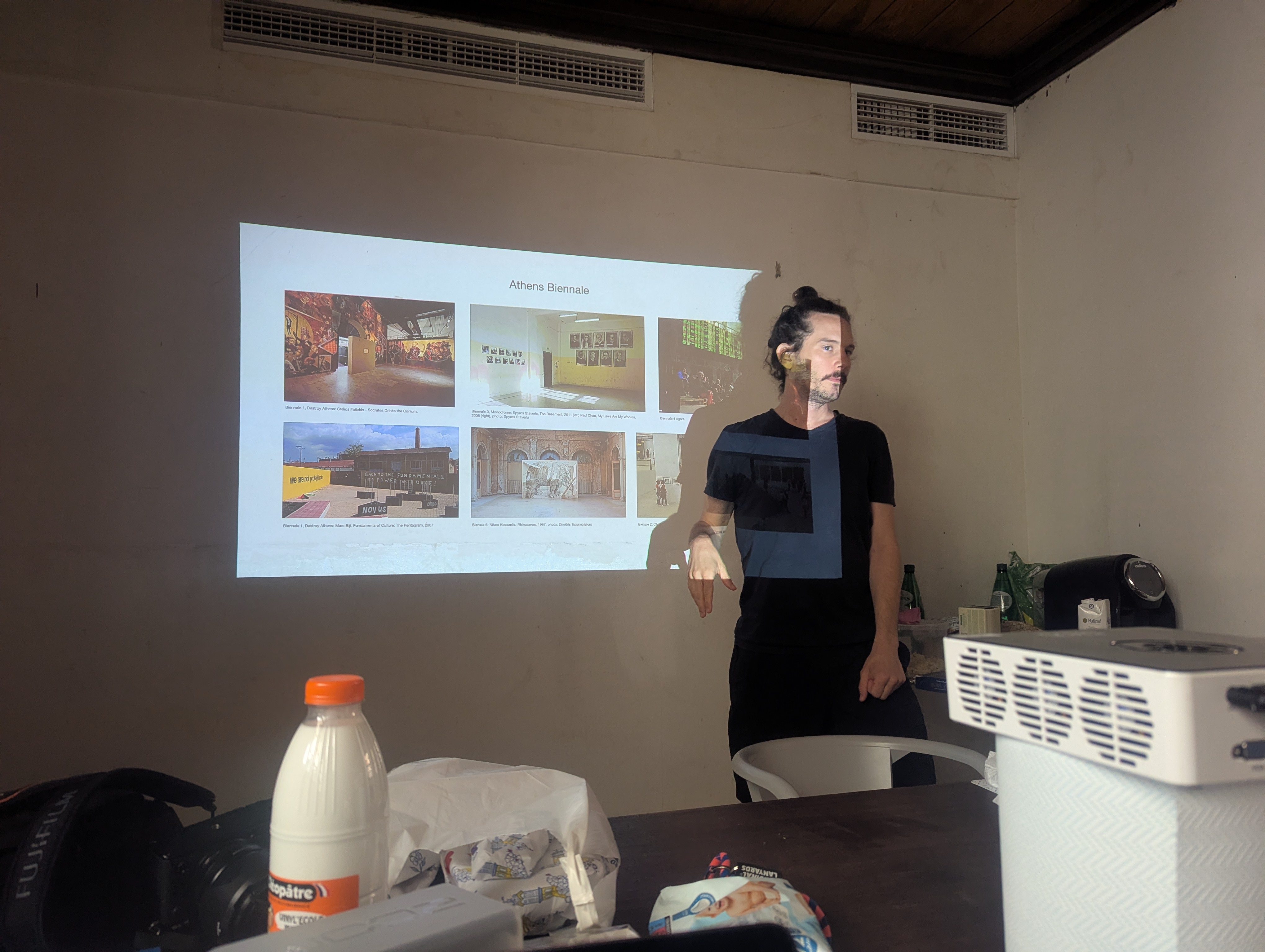
As the residency continued, Gracia joined us for the final stretch, and as a group we continued our plan of delivering workshops for each other, with Stathis discussing curation and museology, Yimiao having us spread around the house and grounds finding our own typographical alphabets out in the wild, and Gracia led us through ideas of the meaning of walls architecturally and then through a second photography workshop that took place at a beach in Portimao.
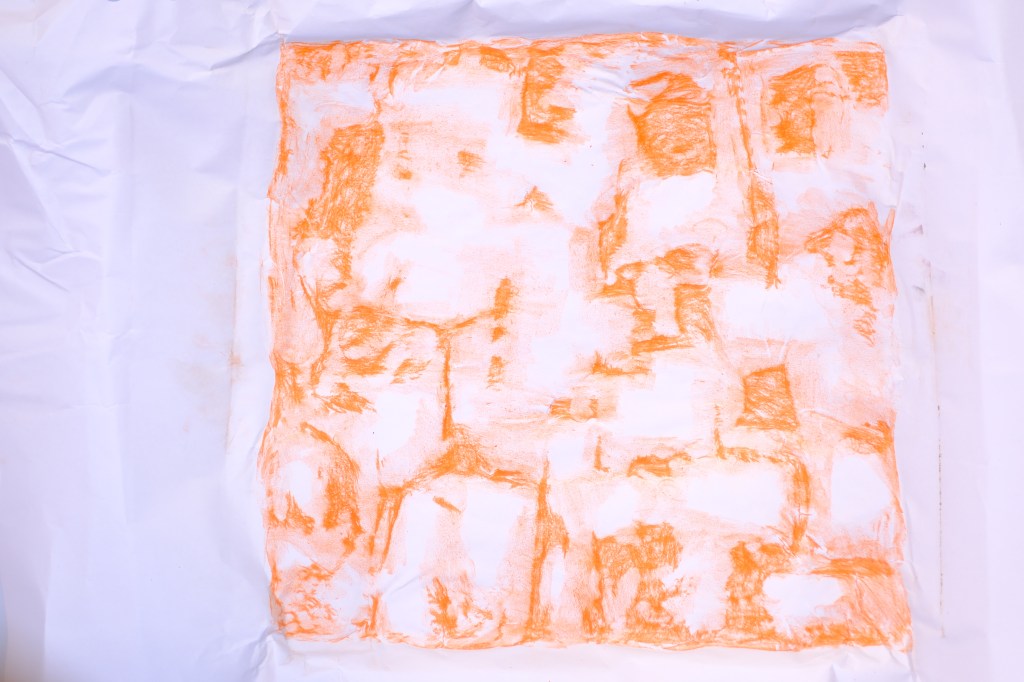
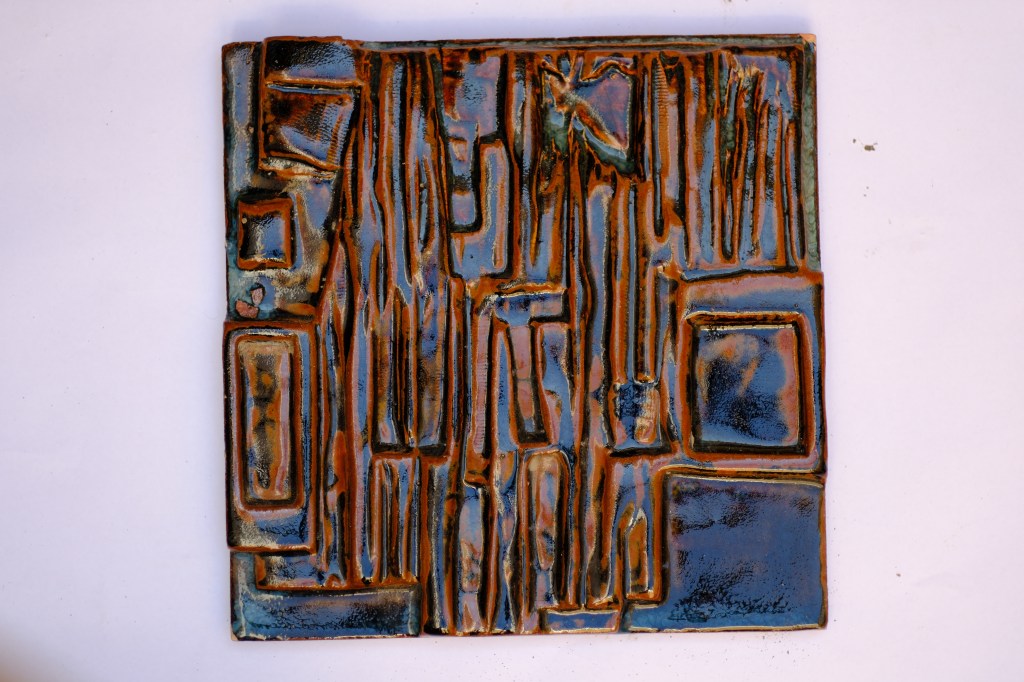
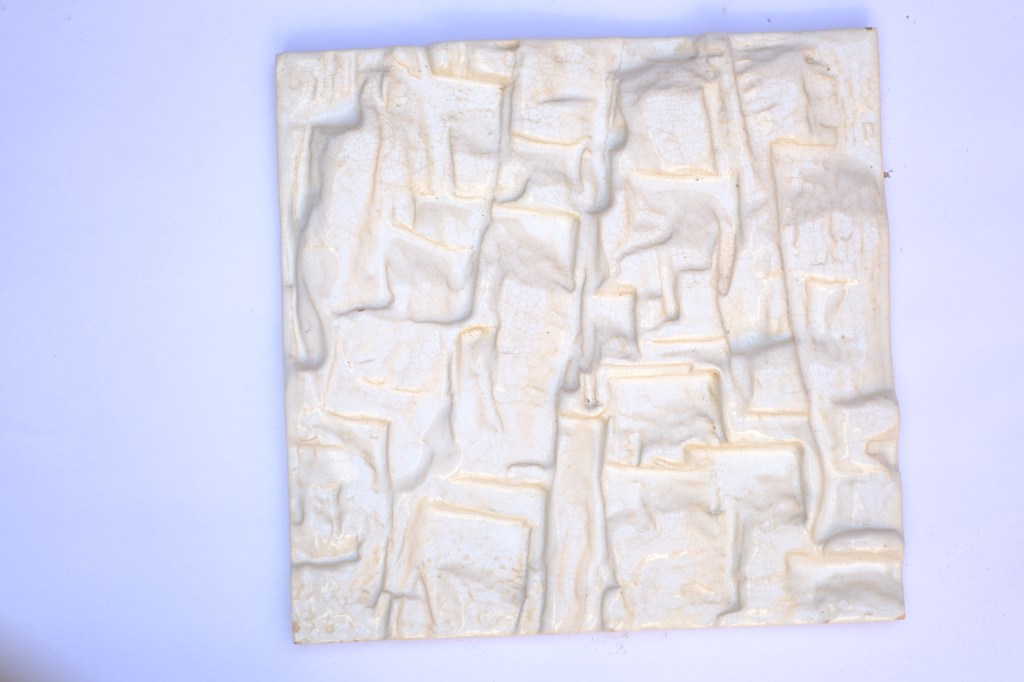
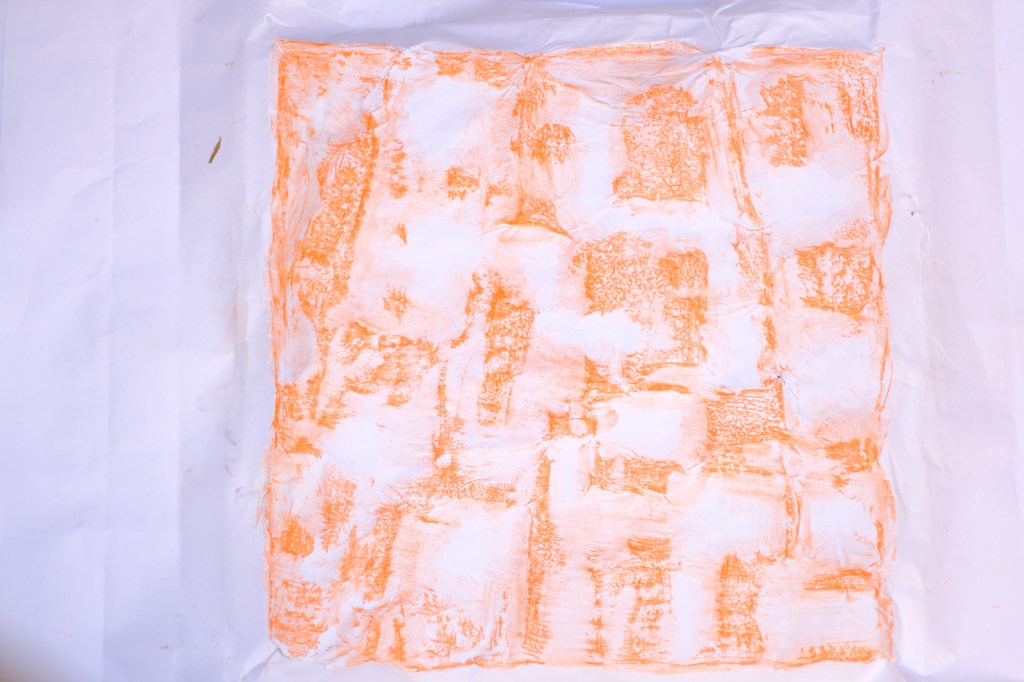
Returning to the rubbings, Sofia had developed a much stronger technique for creating outcomes that felt more representative of their respective tiles. She had developed this by watching videos of Do Ho Suh and his studio assistants. How it contrasted to the previous manner of frottage was in how it seemed to also be a form of drawing. Rather than scratching a crayon randomly across the page, allowing textures to emerge from noise, here one followed the contours, got into the crevices and felt their way around the tile with the crayon and the paper. We also determined here that wax crayons likely gave the best results.
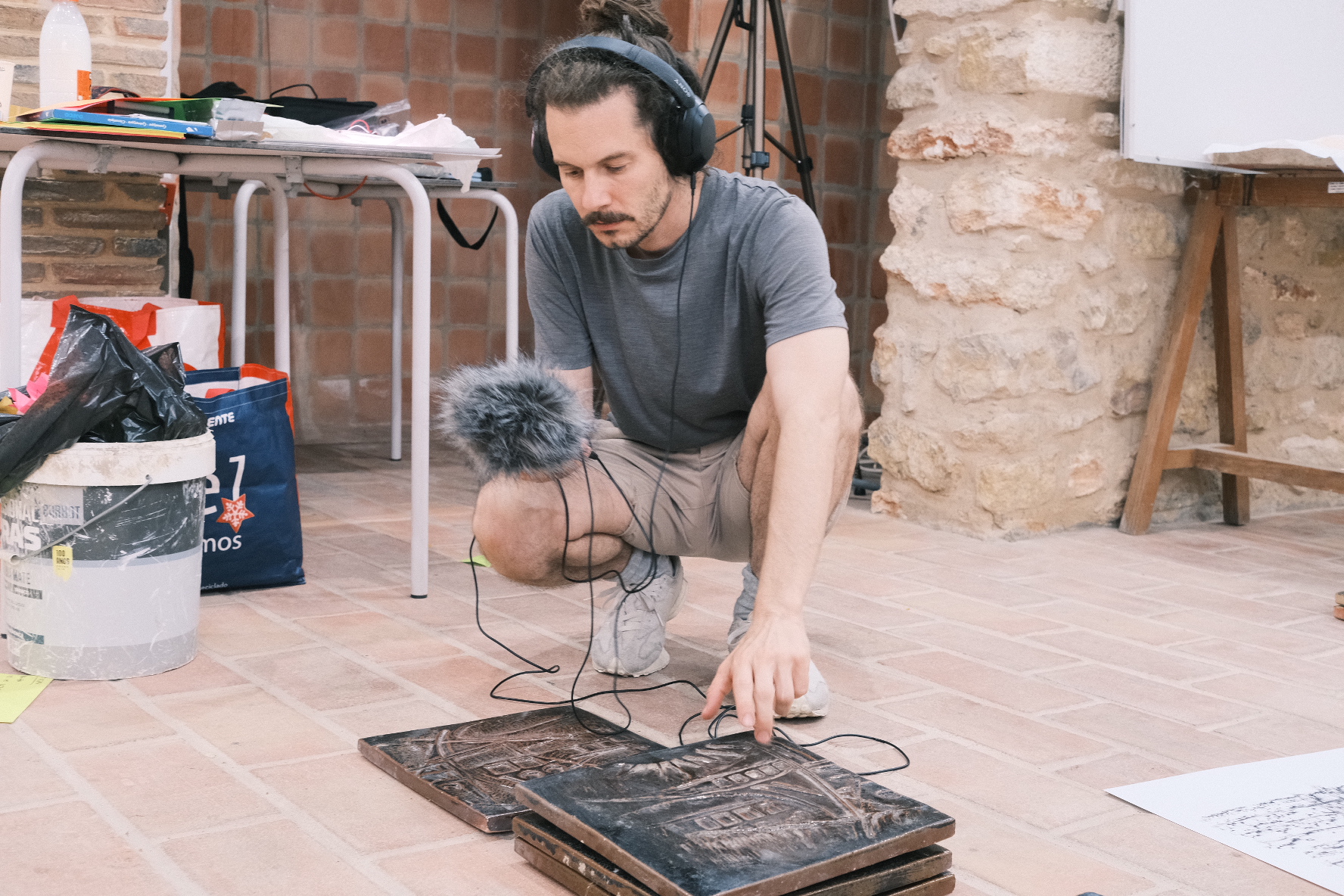
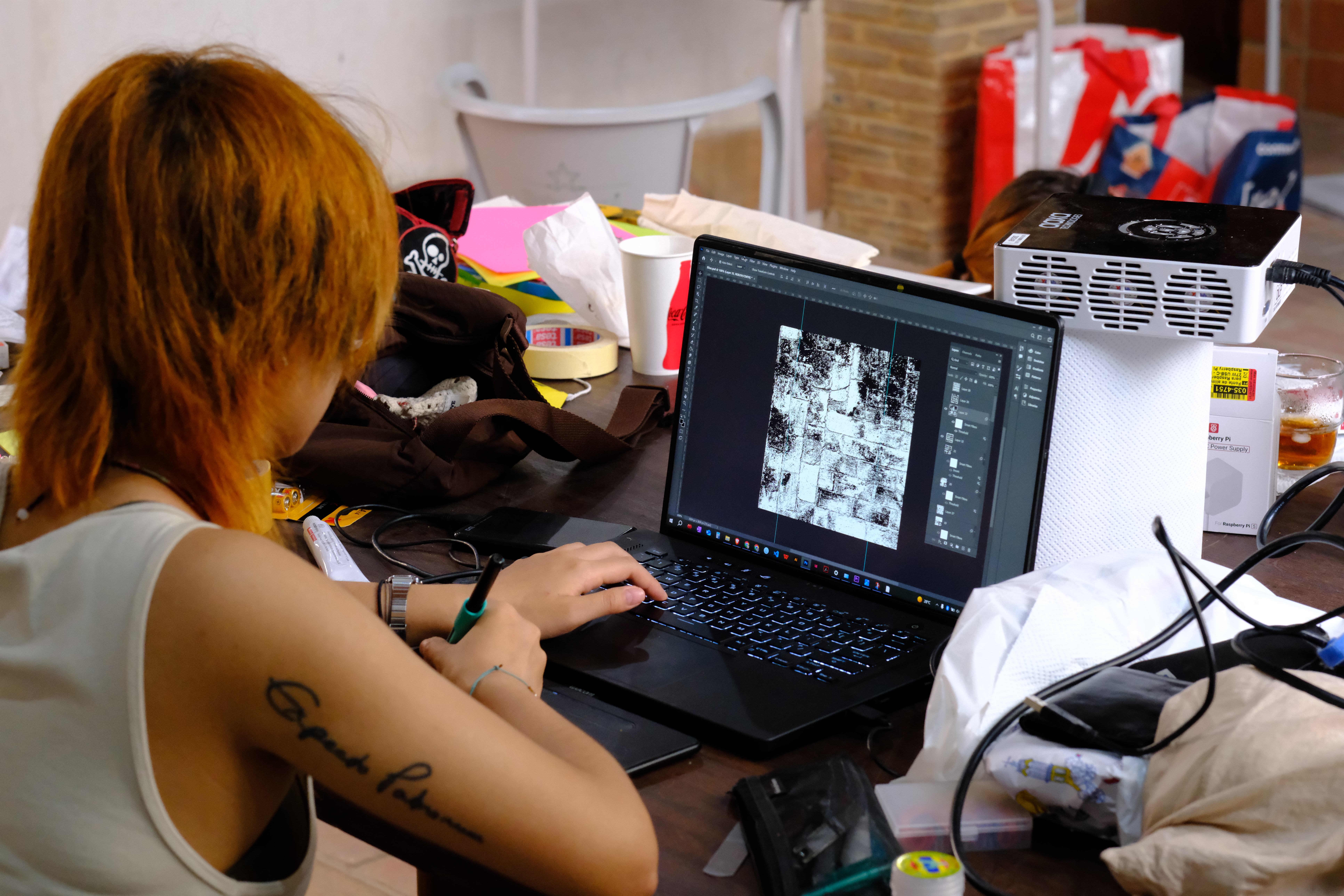
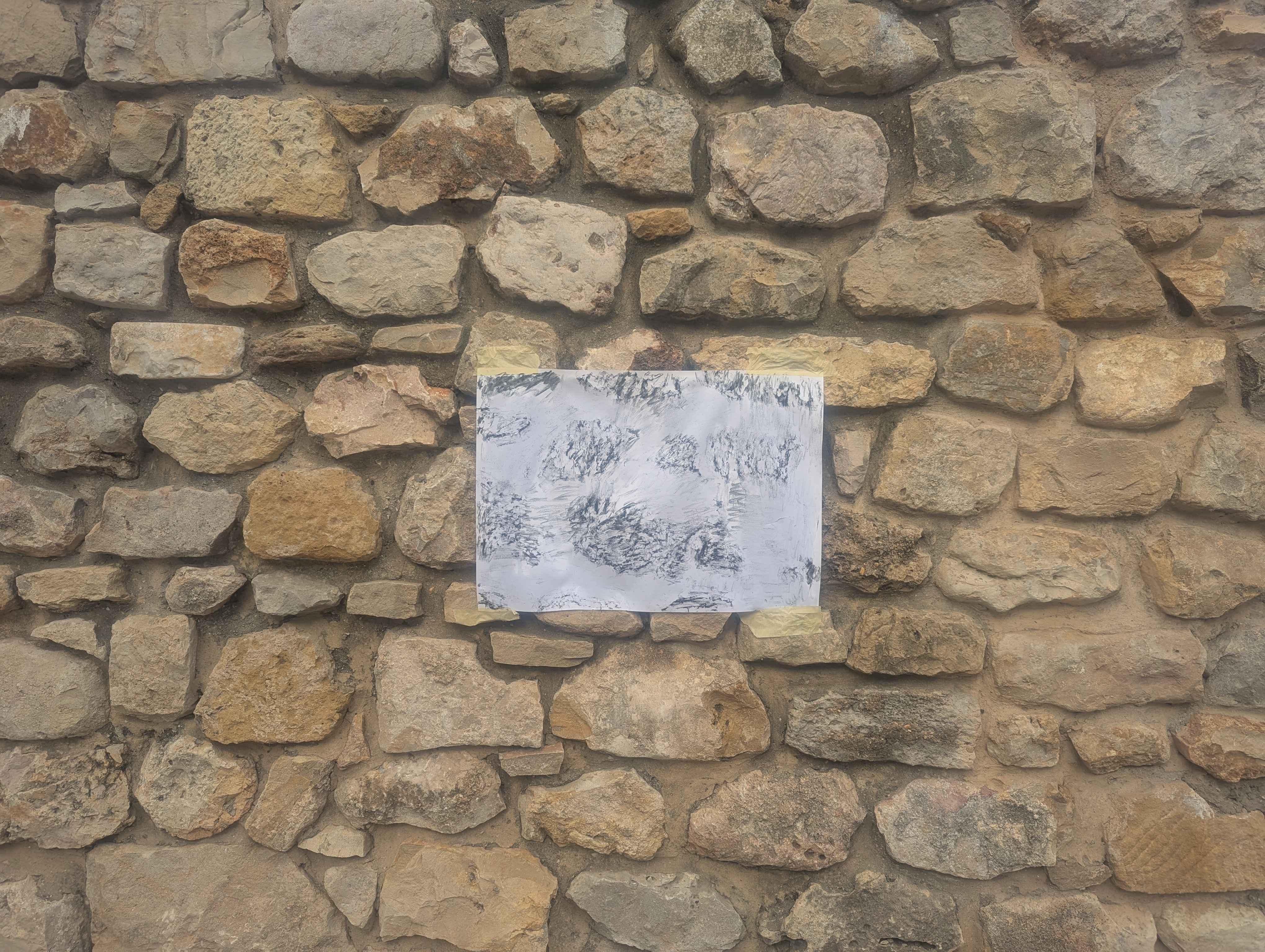
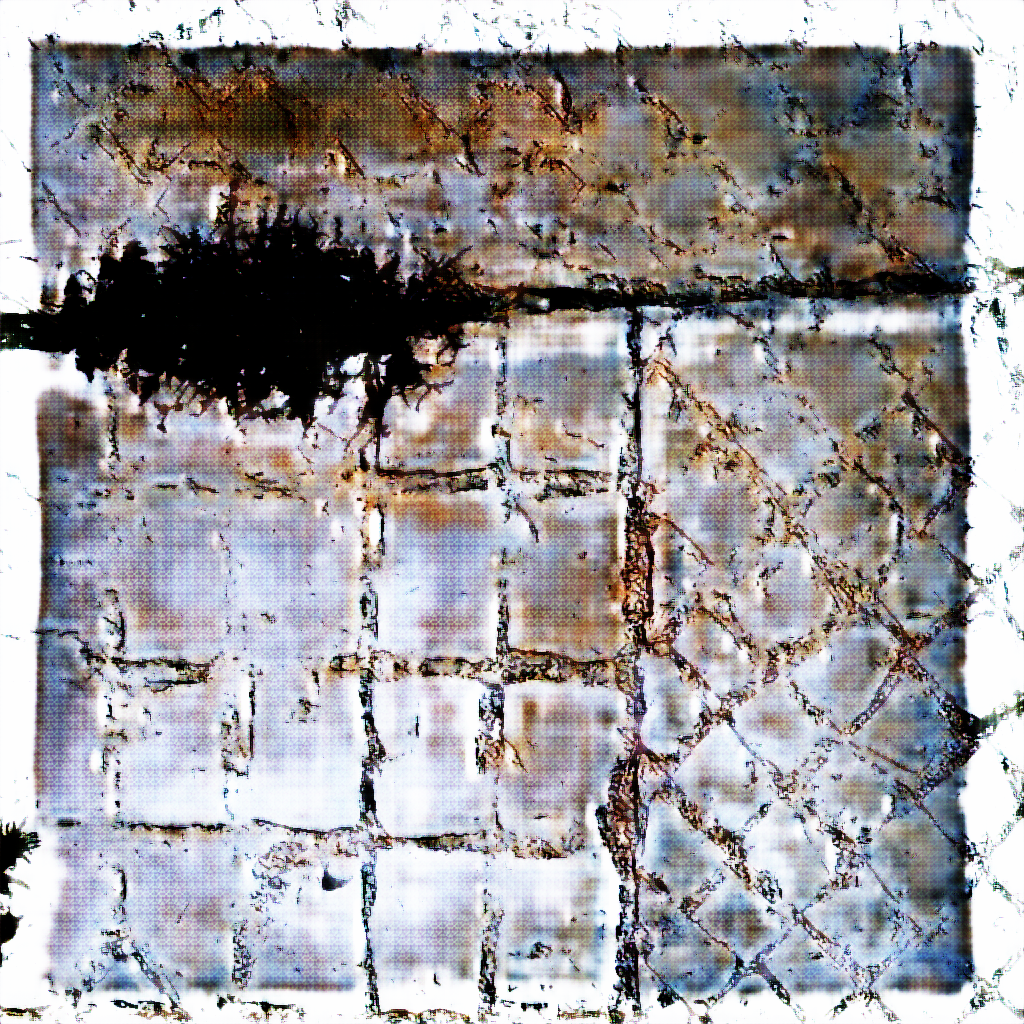
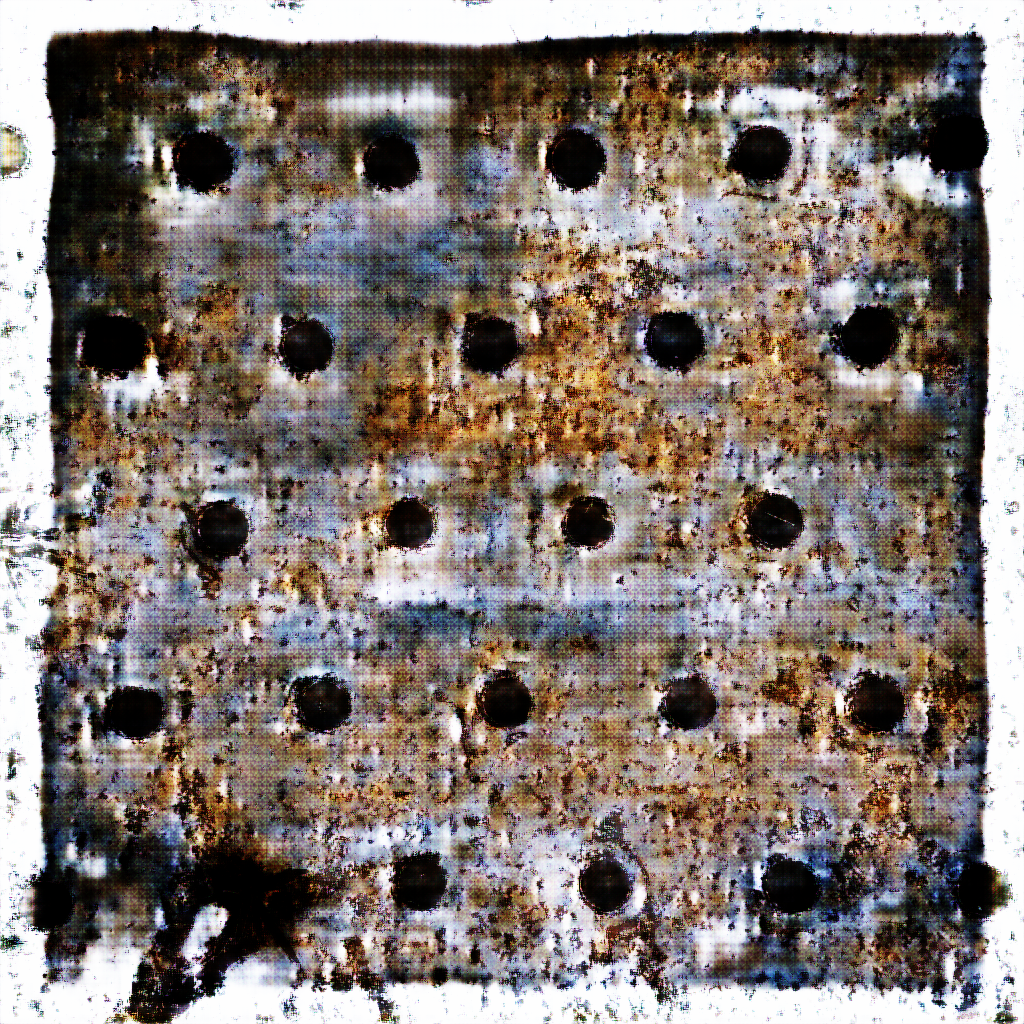
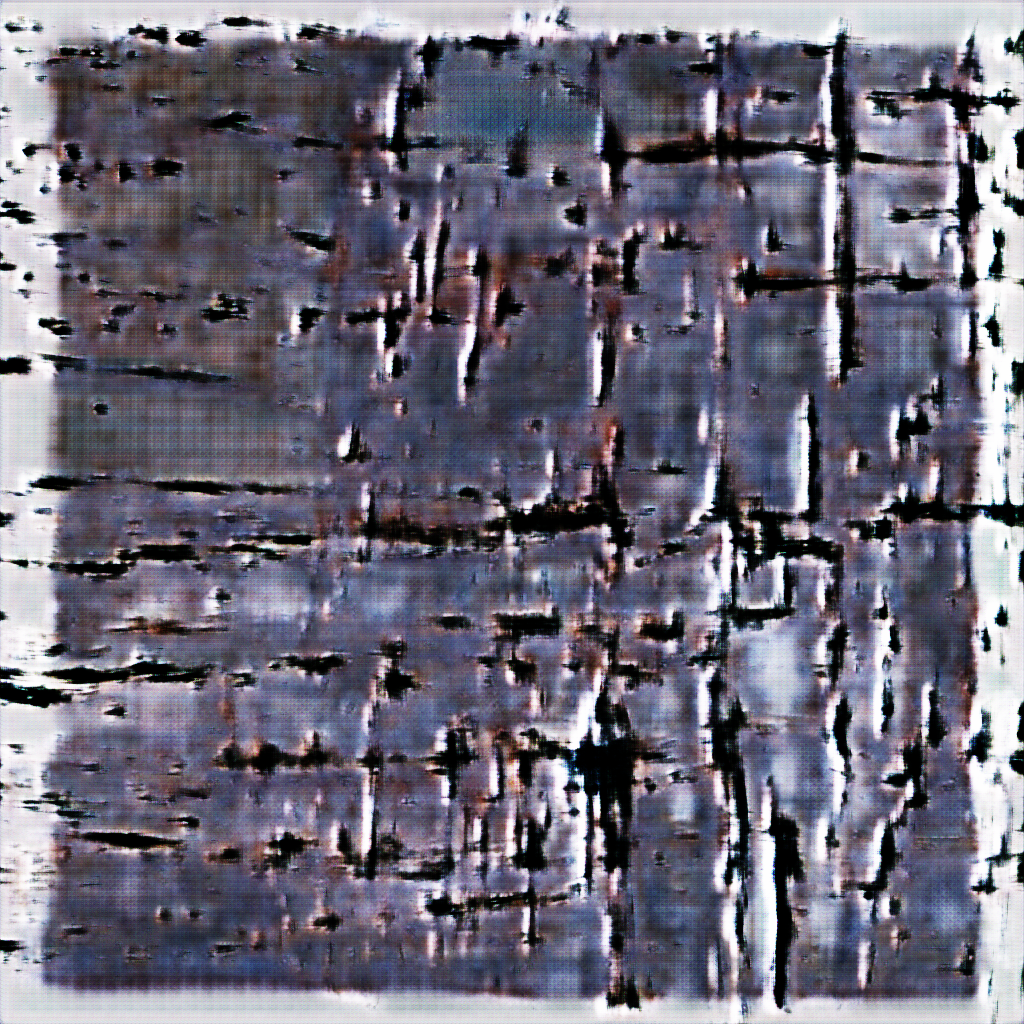
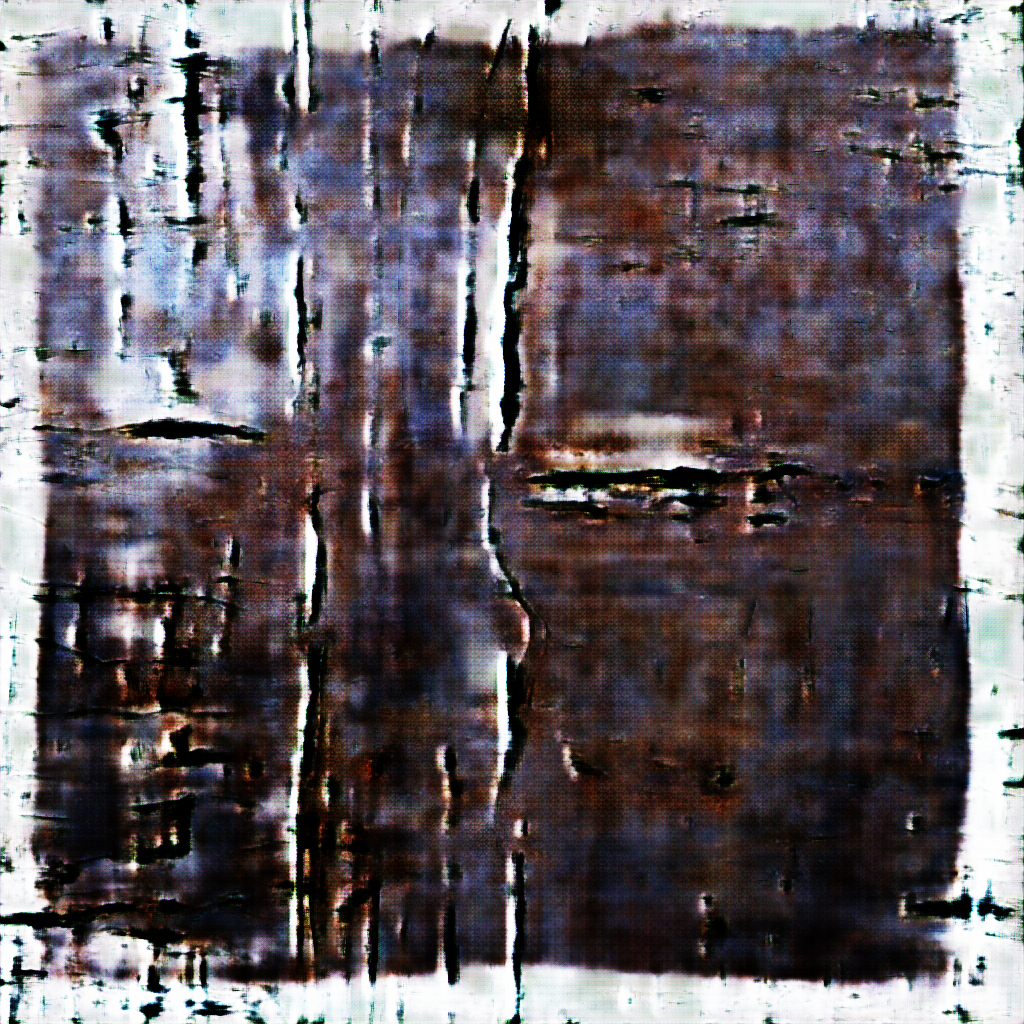
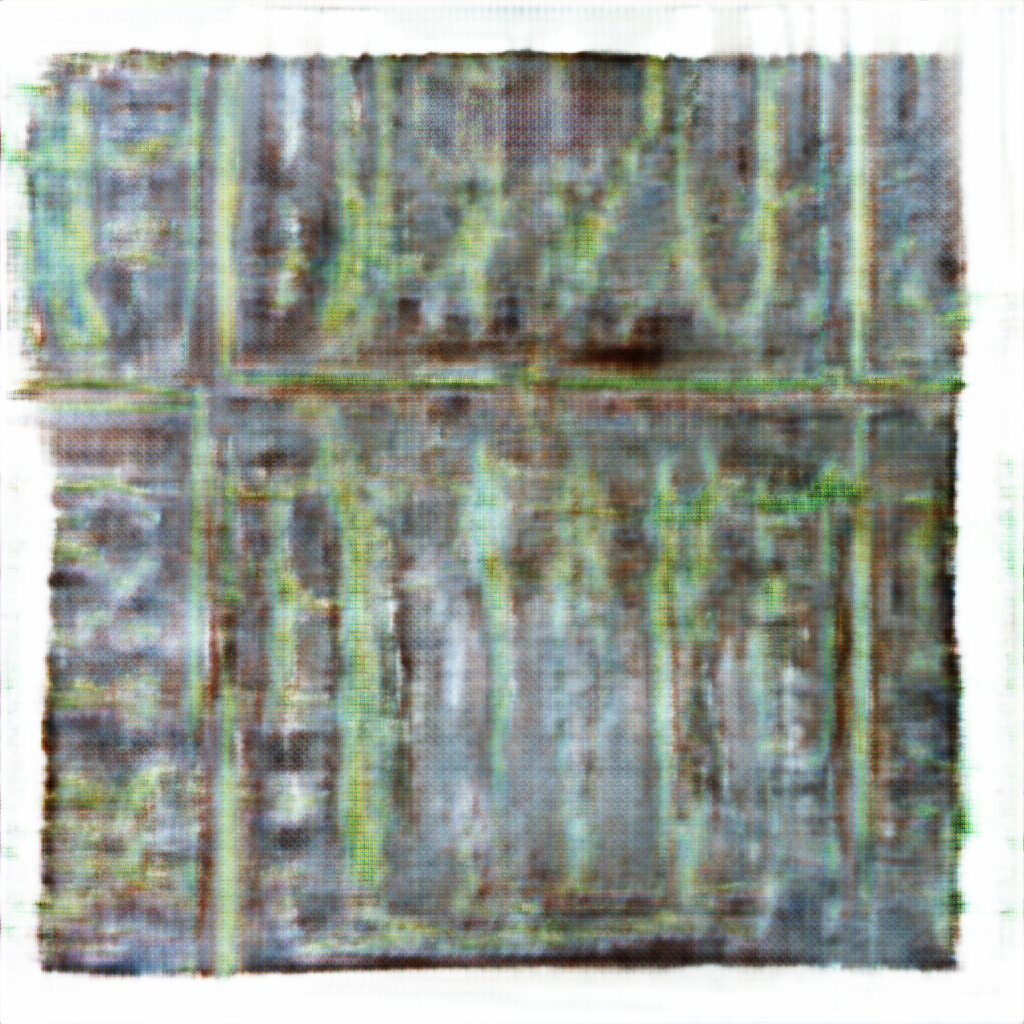
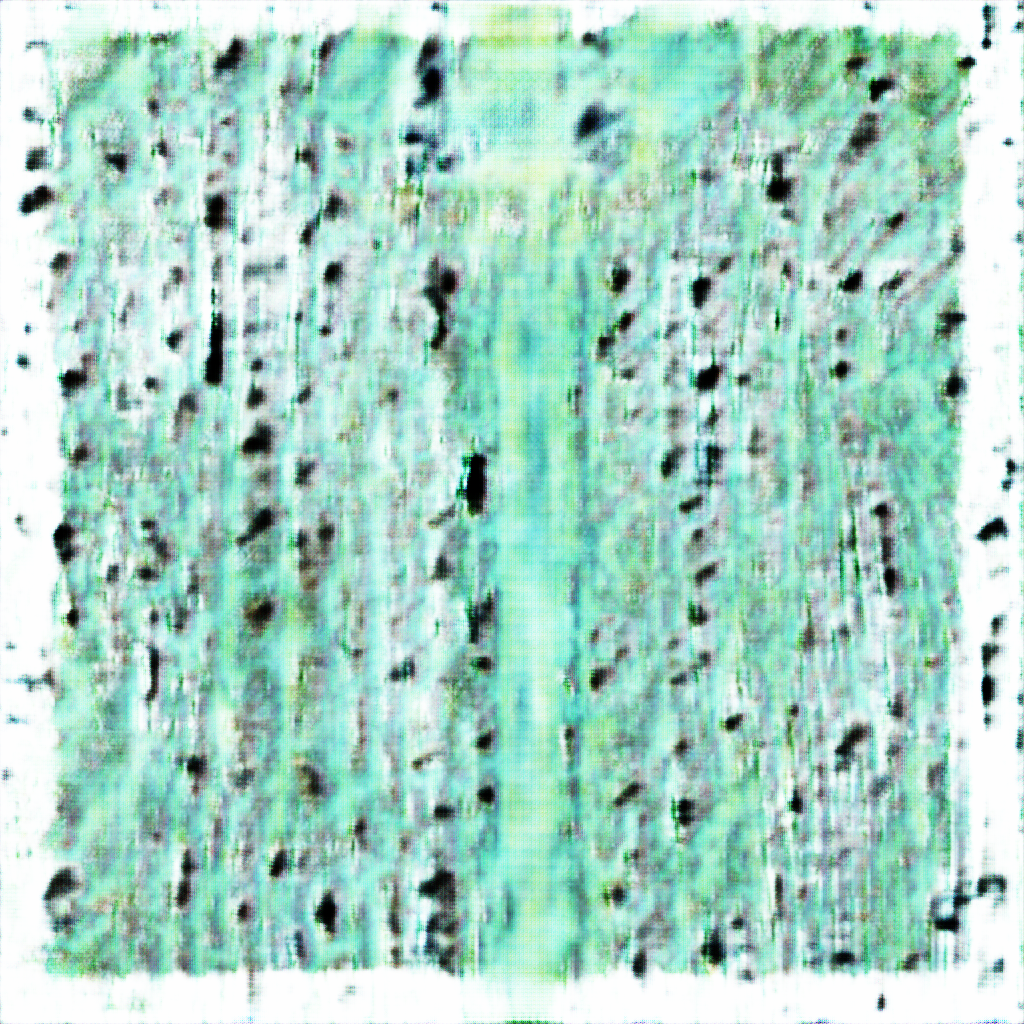
We carefully photographed all of these new rubbings alongside the master tiles that they were created from, to give a really closely matched dataset that would allow me to train a pix2pix model for generating tiles based off new input texture image.
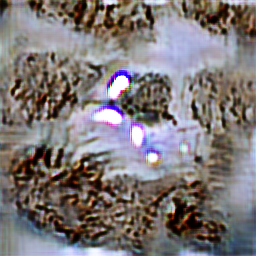
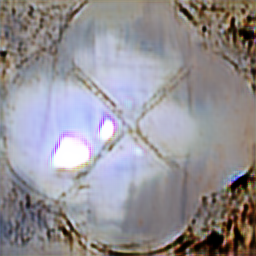
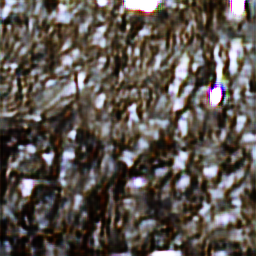
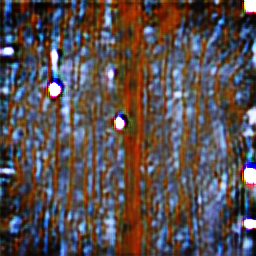
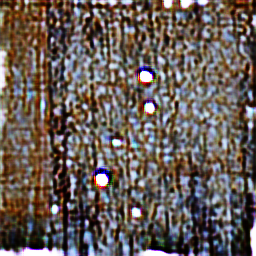
I believe this first group was based off a smaller sample of less well photographed images, and the group below were generations from the more strongly captured dataset, giving sharper results as a consequence.
The residency as a whole was a success. We may not have created as polished an outcome as we might have hoped from the three weeks, but we left with experience gained, some new contacts in Portugal, and, with the rubbing, a direction we would be able to follow over the coming year.
Muralhas e Memória 2026
Our 2026 residency came together with a much more straightforward, cohesive, and serious plan: We were to hang a 100m stretch of paper along the wall and invite the public to make a collective rubbing with crayons pigmented with clay from the Algarve.
It was an ambitious task, one that took the full 7 preceding months to plan by the time we landed in Faro in late August. Once again we applied for DG Artes funding, and were once again unsuccessful. An application for Arts Council England R+D funding also failed. However, we also made an application to Creative Scotland for their Four Nations International Fund, which we were successful in our bid for £7319 to cover the expenses and pay us each £500 for the creation of the paper artwork.
For this endeavour, we researched into papers that might be able to cover such large expanses, and landed on Tyvek by DuPont, which came in reasonably priced rolls. We discussed amongst ourselves, with my experience of using wire rope and hanging artworks for my own installations and as a technician, Gracia’s experience as an architect, and Stathis’ experience in museum installation, how best we could hang the paper in a way that was safe for the participants, would keep the paper taught enough, would minimise damage to the wall, and be adjustable.
This planning stage however yielded an immensely stressful period for Sofia as she had to negotiate on our behalf with the municipal government’s department of culture to get permission for what we wanted to do, organise with the Museu de Faro and CIAC, a research centre in the Universidade do Algarve and our other partners. Our original plan for the activity had been to hold it during Festival F, a yearly festival that takes place throughout the Cidade Velha (Old City) in Faro. However, the Câmara Municipal de Faro told us where we wanted to do the activity is where some giant skips would be during the festival, that they would need to be building a wall and the stages next to where we wanted to work, and in effect that we wouldn’t be able to do the activity as part of the arts festival. This was disappointing, and as a result we were forced to move the schedule forward a week. This meant we would still have traffic limited by the blocked off festival area towards the Ria Formosa, but we would have our 100m stretch of wall.
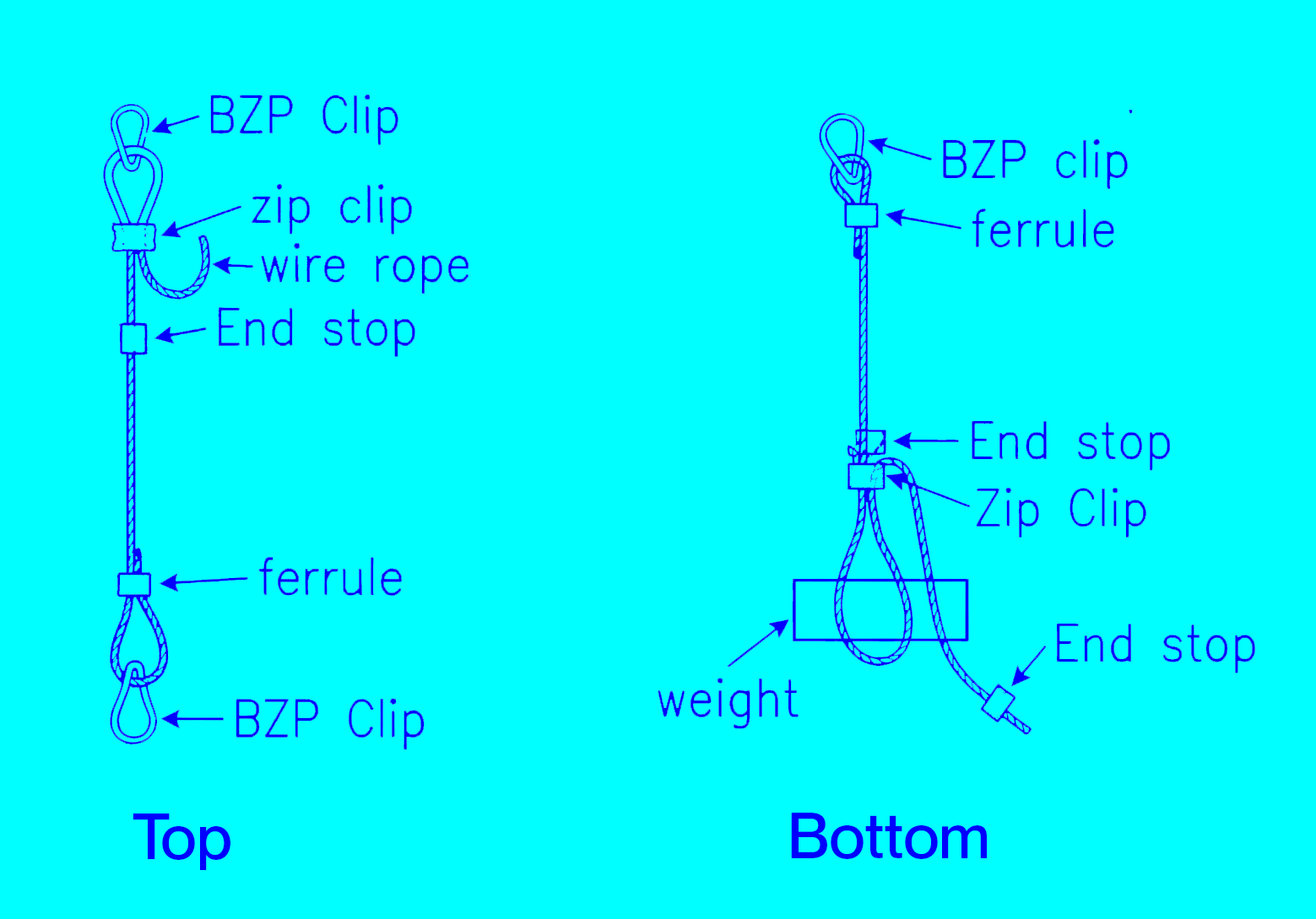
This was my design for the rope sections we ended up using, minus the end stops, which in the end were not likely to be helpful as adjustments needed to be made each day the paper was up. The plan was to have a clip attach to circular hooks that were already installed into the wall at 2.5m intervals. At the end of this rope section would be a clip locked in place holding the paper through grommets that were punched in at the same 2.5m intervals. The length of this rope could then be adjusted with the zip clip from the top of the wall, allowing the paper to be levelled and tensioned correctly. At the bottom would be a mirror setup with the rope looping through a weight (serendipitously we found a load of bricks with extruded cavities on site) and back to a zip clip that could be tightened to tension the paper.
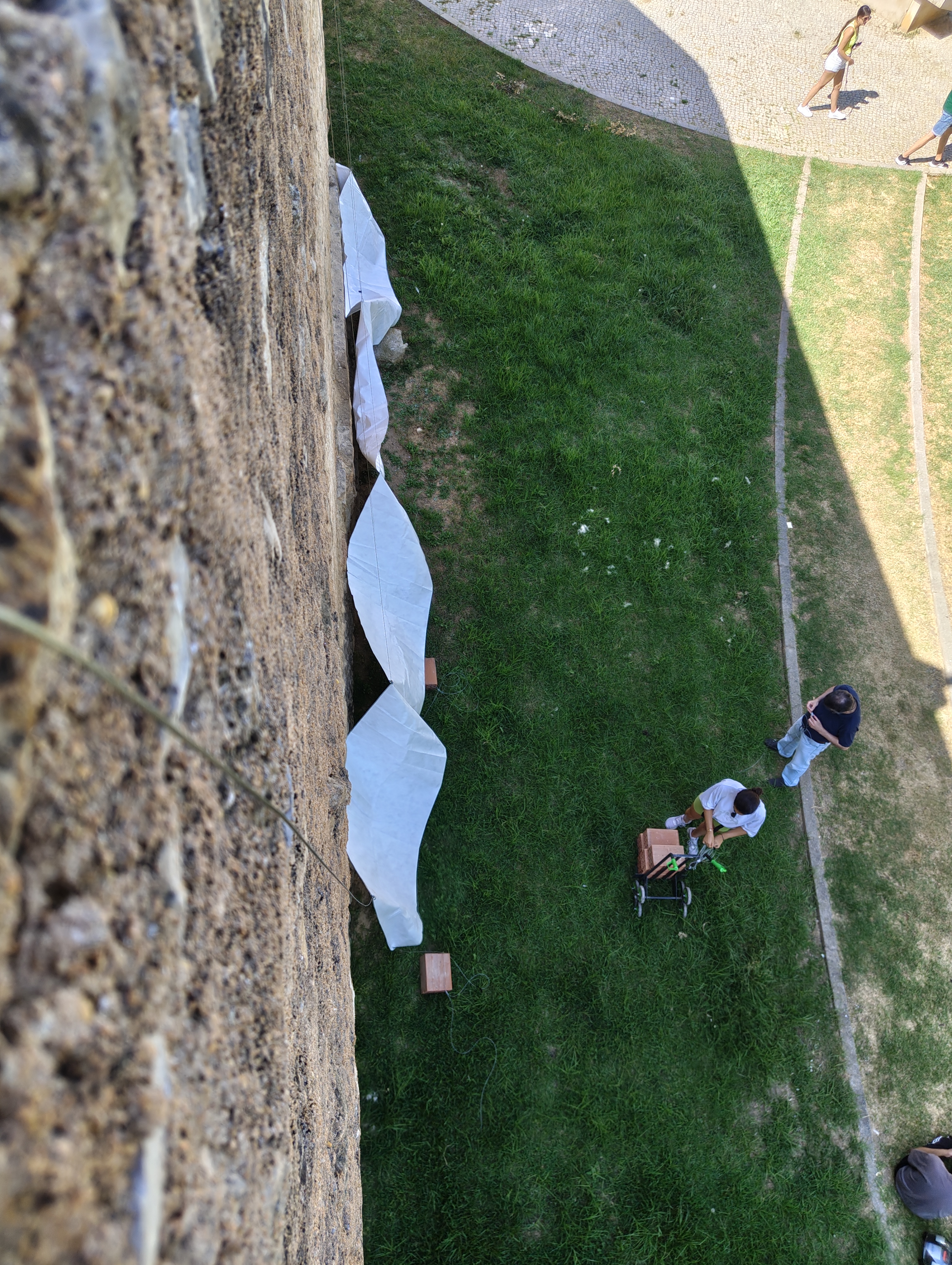
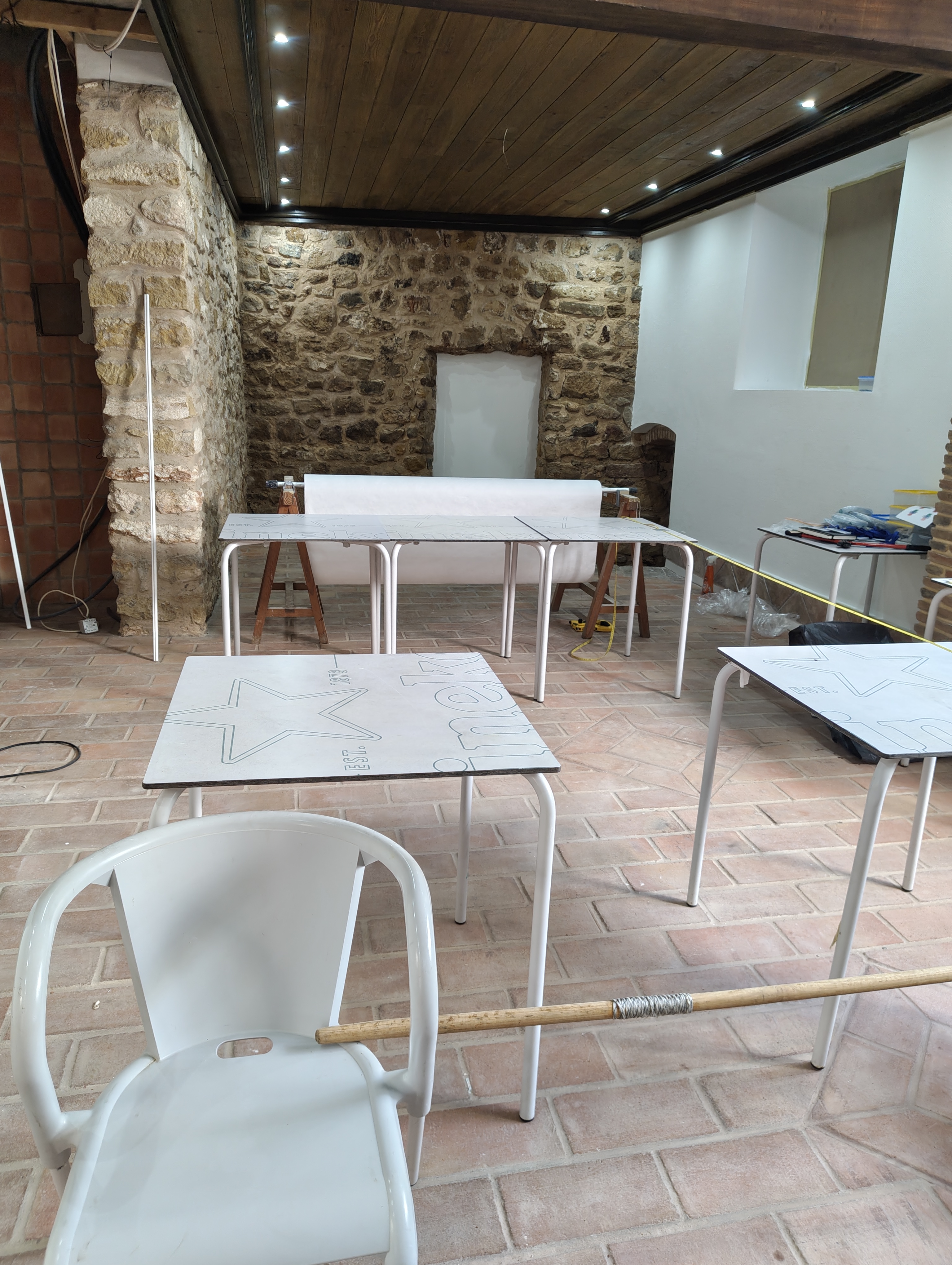
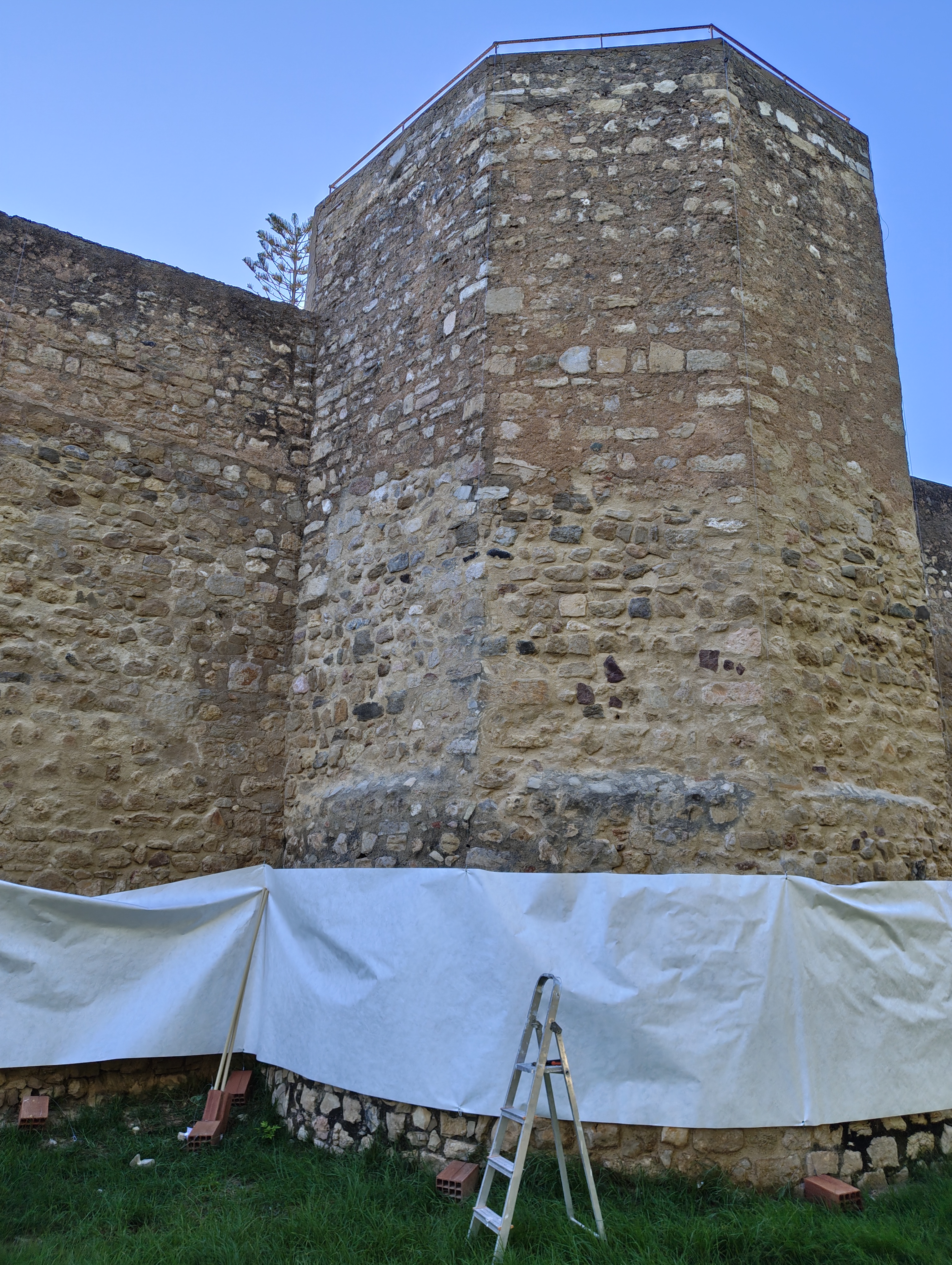
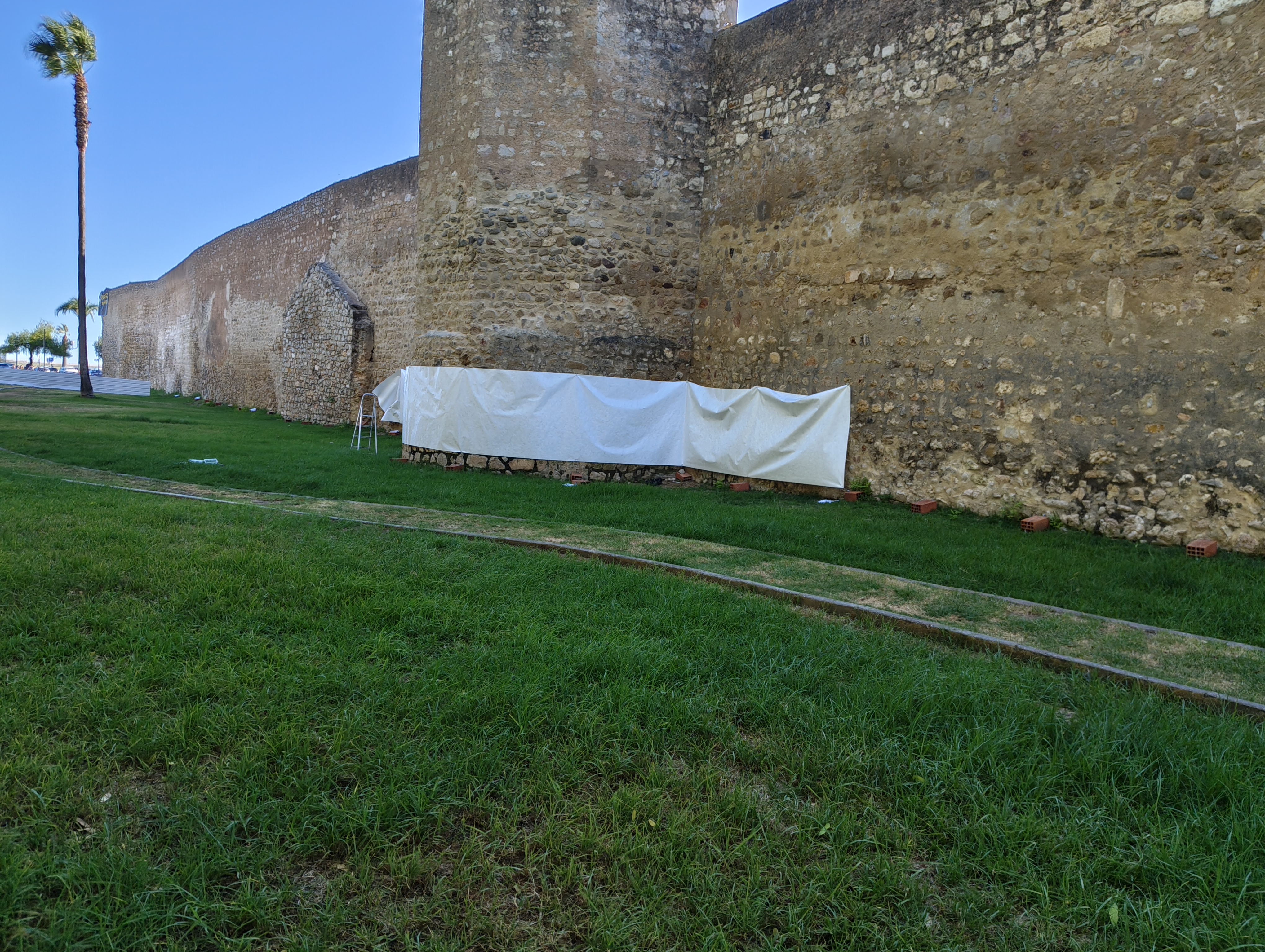
We were worried about the wind and how it might impact the activity, so decided to employ some caution and cut the 100m roll into 20m sections that could individually be raised and lowered. We test-hung the sheets and everything went up smoothly, the wind didn’t seem to do much more than a little billowing, and the forecast said that this was a relatively representative day for what we could expect.
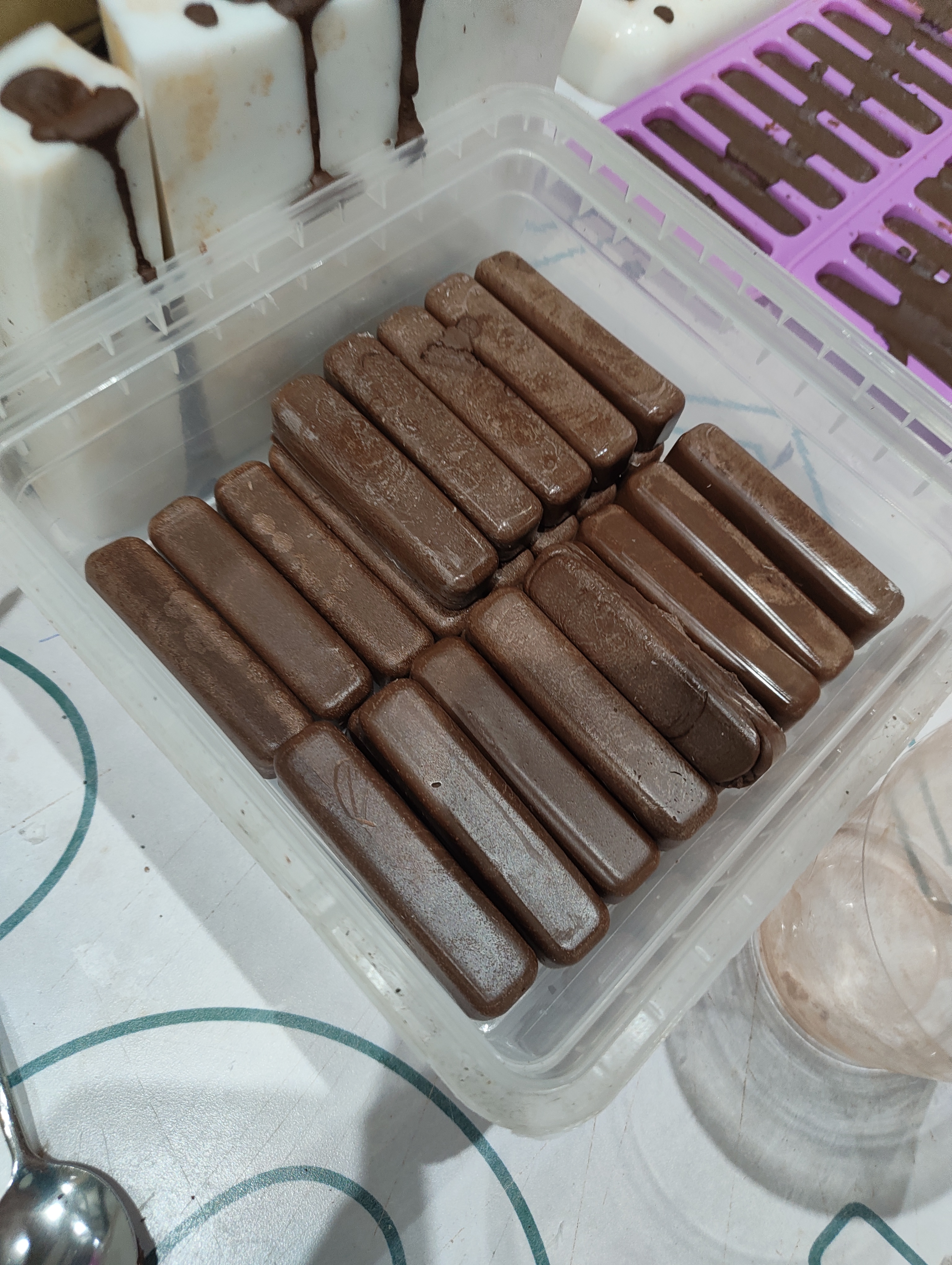
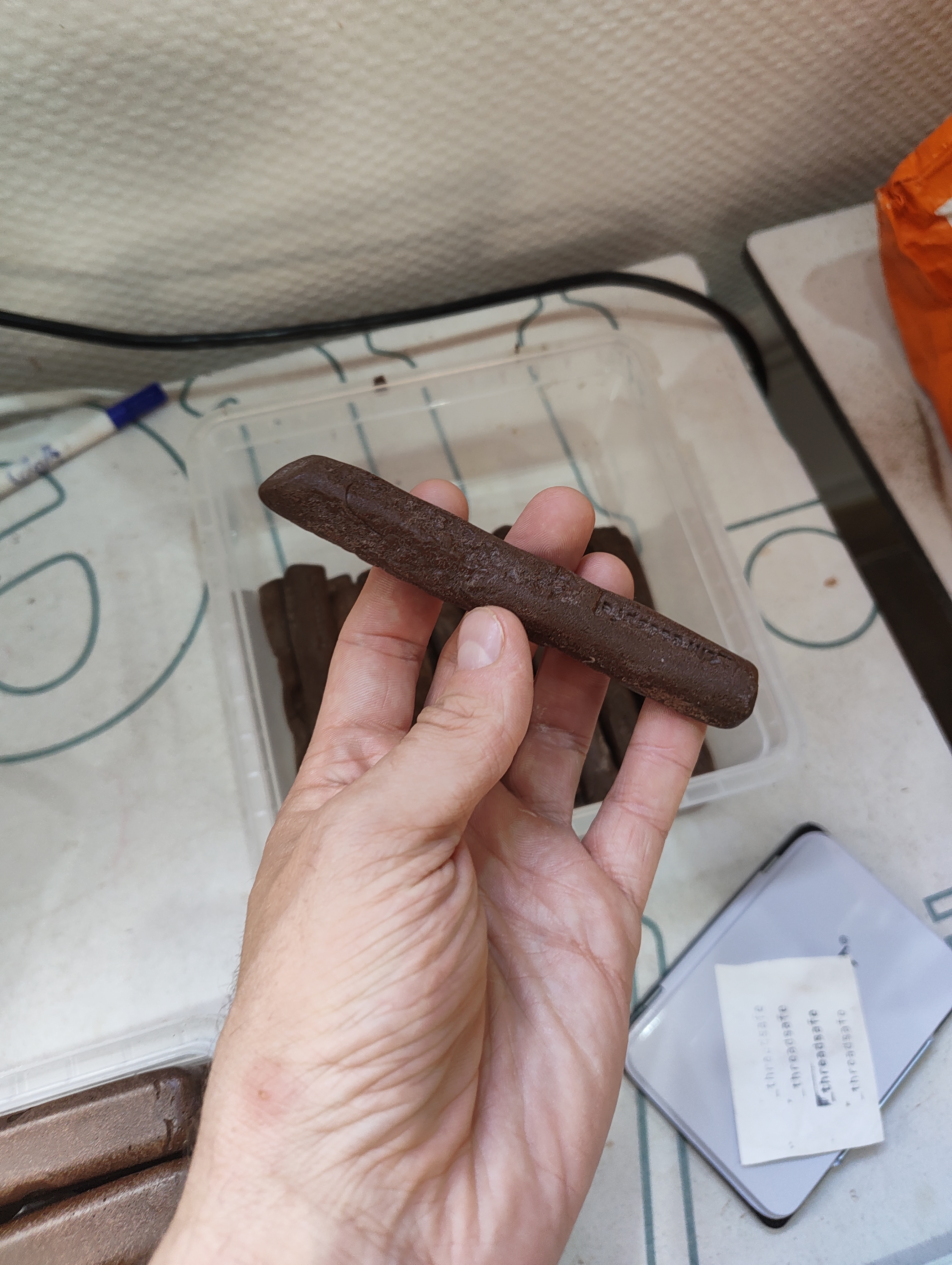
Whilst Stathis and I cut the paper and went about testing our hanging system, Sofia and Gracia travelled to Tavira to visit Alberto Rocha, a local artisan ceramicist company. We had contacted them prior to coming to ask if they were interested in contributing to our project as we needed local Algarvian clay dust to pigment our crayons. They had agreed and the two toured the workshops and returned to the Muralhas with 30kg of dust, rather more than we would eventually need.
Gracia took charge of doing final tests of crayon composition, wax to clay, based on experiments she had done in Bilbao in preparation for the residency. After a test session with the three options, she began the journey of batch production, eventually manufacturing over 200. Additionally, she made some candles and souvenir crayons for visitors to purchase.
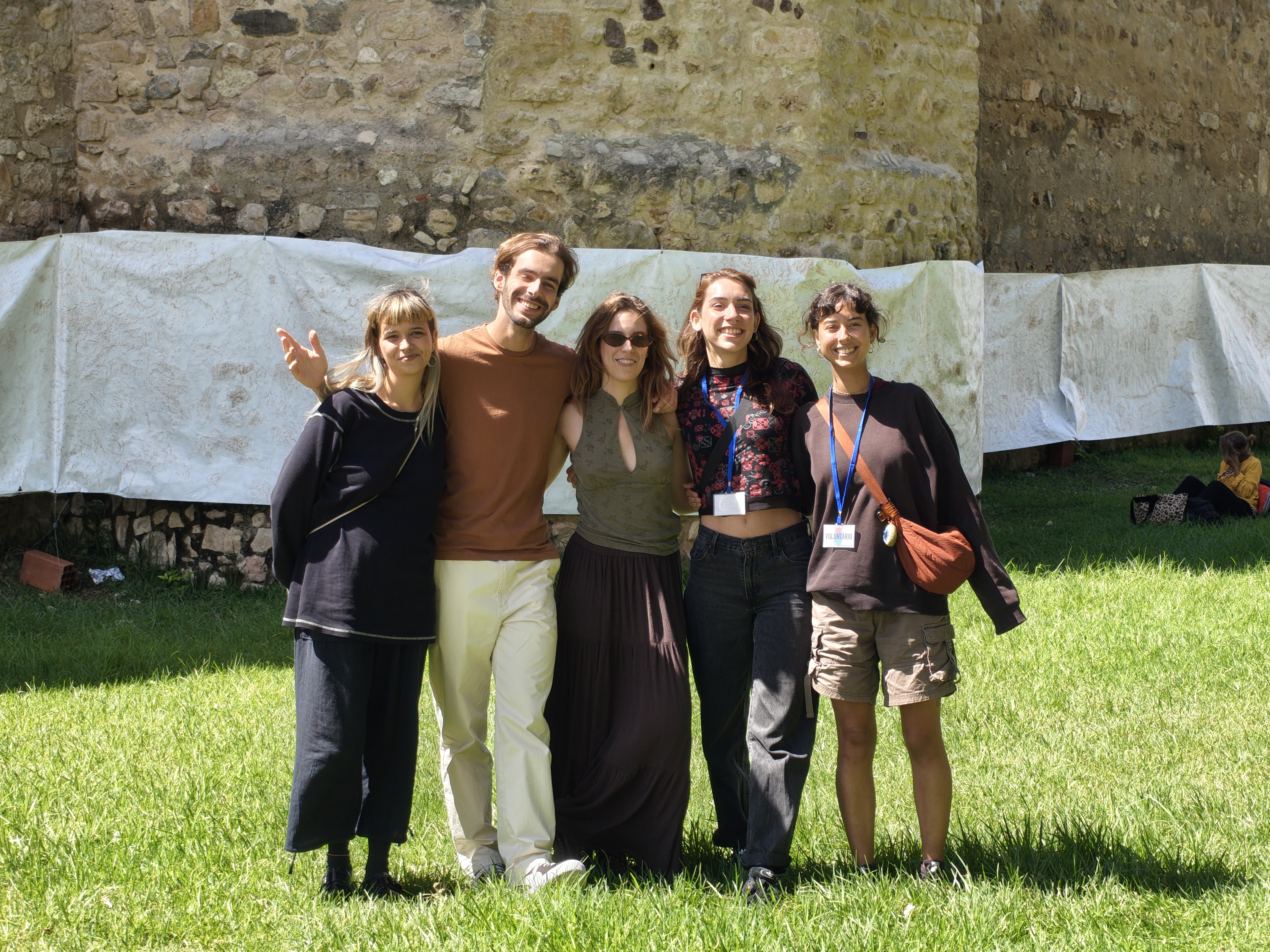
The final piece in our puzzle before we could open to the public was the incredible help of Sofia’s friends from Lisbon, who volunteered to come down and work with us on the project. Ana, Tiago, Marta, and Meg were superstars throughout, aiding us of little Portuguese to talk to the public, and leading people through the process. It was wonderful to have the extra folk with us, they brought a rich variety to the group and a vibrancy that buoyed us all up through the project.
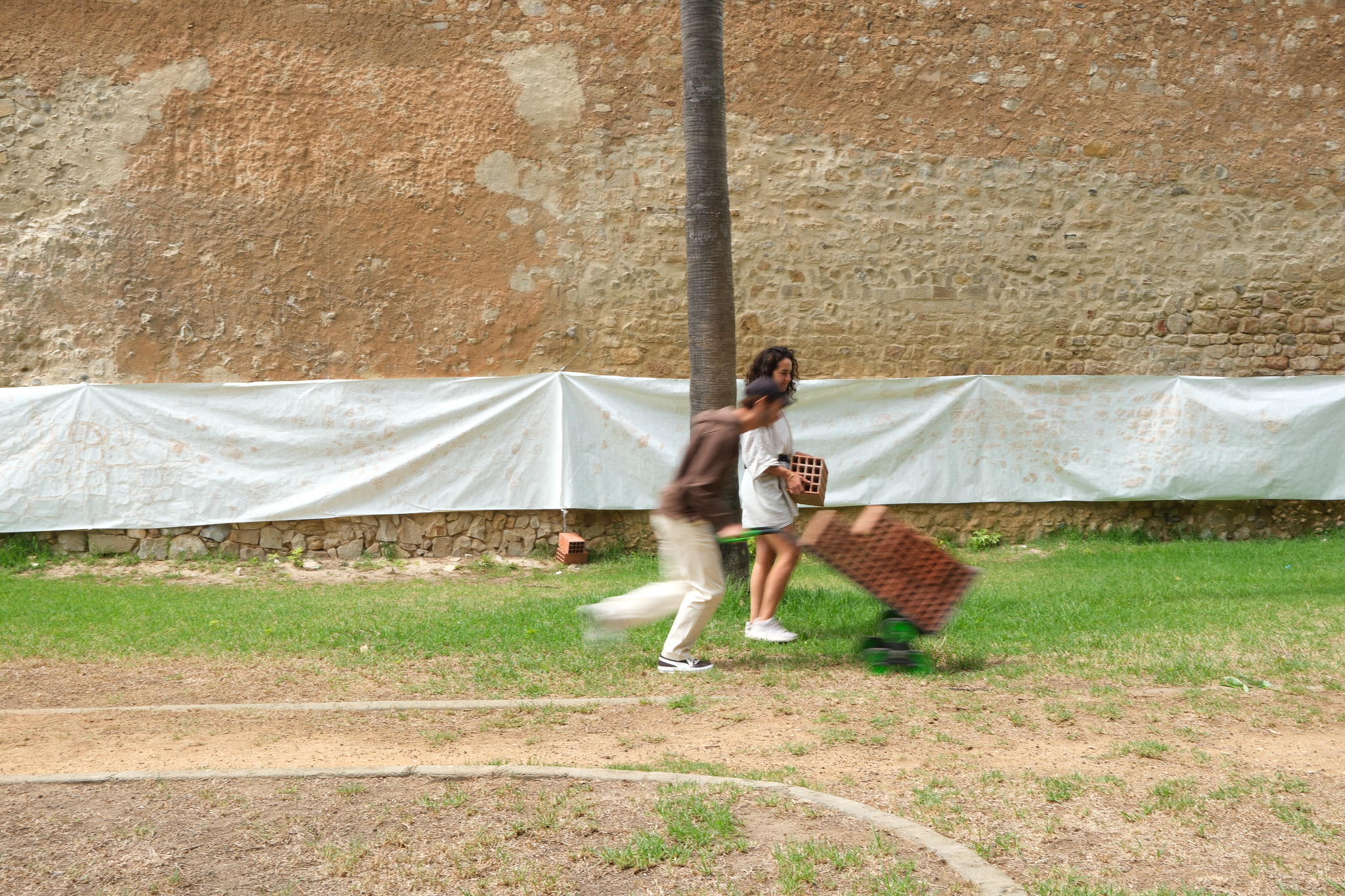
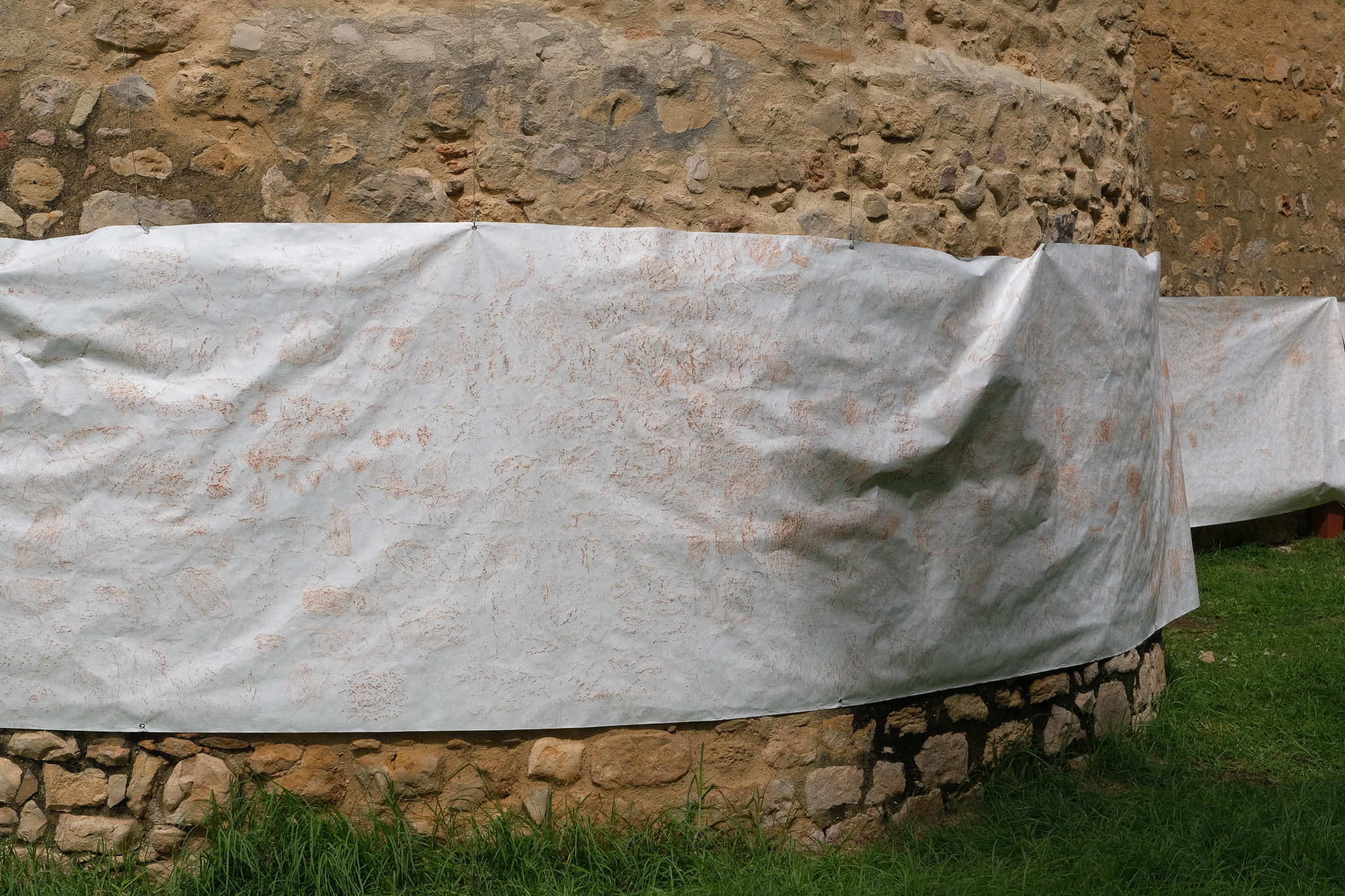
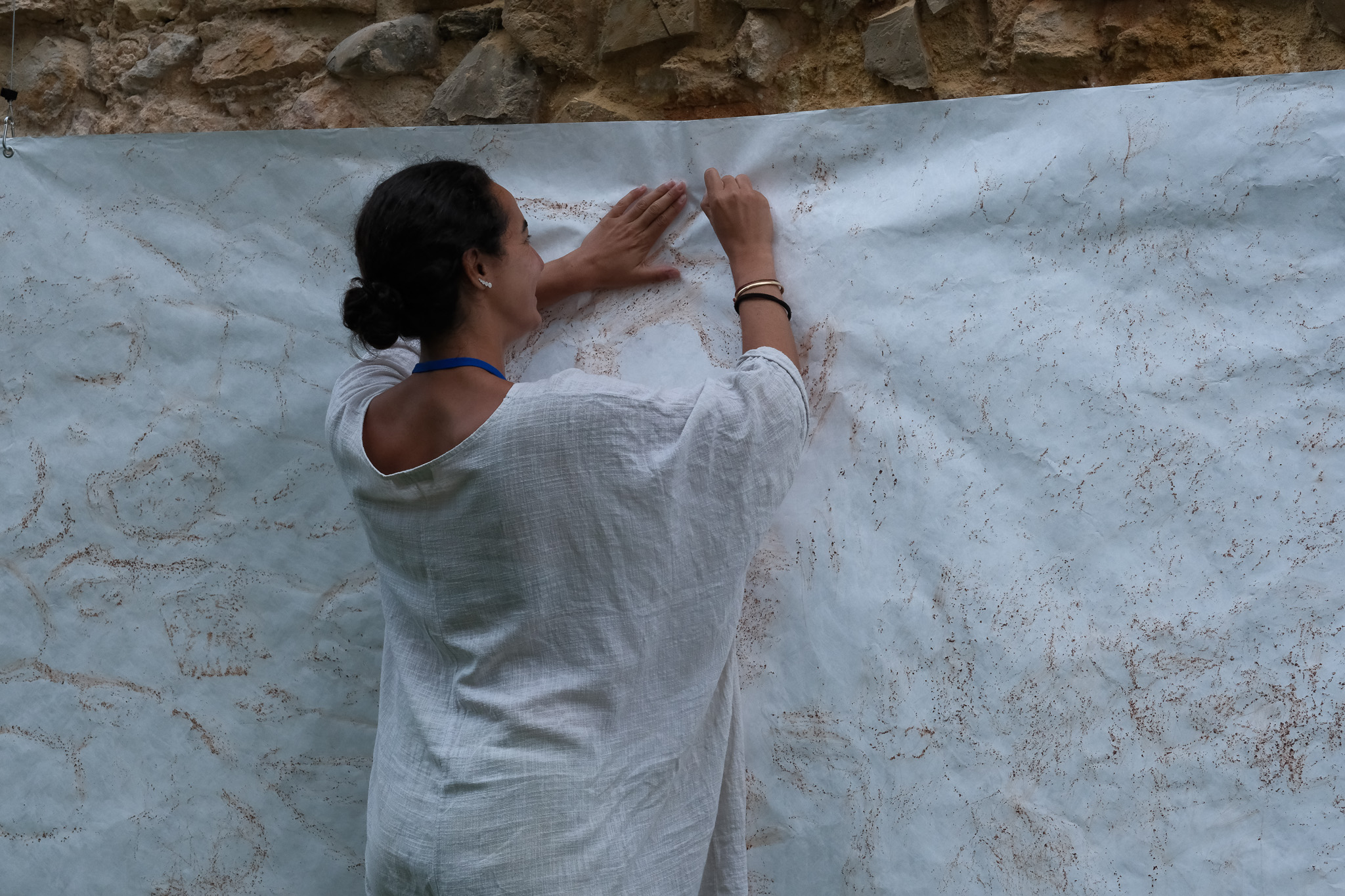
Day 1, things started to go askew. The wind decided that now was the time to shatter our illusions of a peaceful week of artistic activity. We successfully raised the entire length of the paper, 5 sheets at 20m each, and had it hanging on the wall. Unfortunately what then started to happen was the wind getting behind the sheets and lifting them up, including the bricks that we had to weigh the whole thing down and tension them. So, we had to take some emergency steps. It seemed that the worst affected areas were those to the left of the round tower, and in the direction the wind was coming from. We decided to take those two down, and later in the day we took the tower section down also. The two remaining sections seemed to be okay and we could run the activity as intended there. There had been some damage though, grommets were completely ripped out of the paper, something that is quite difficult to do, as the Tyvek is very strong.
As we would discover over the coming days, the issue wasn’t so much the wind speed, but the direction. Even a very mild breeze running parallel to the wall would pick the paper up and cause us problems, whilst reasonable gusts coming from over the wall would cause fluttering but not much else. Dealing with occasional grommet rip-outs was required through the week, but in reducing the tension and number of bricks, we found a happy working window.
To manage this more easily, we also chose to hang only 2 sheets per day, until the final day where the whole 100m length was on display. We could concentrate the invigilation more, and make sure if the wind started acting up that there were people on hand to hold the paper down and mitigate problems.
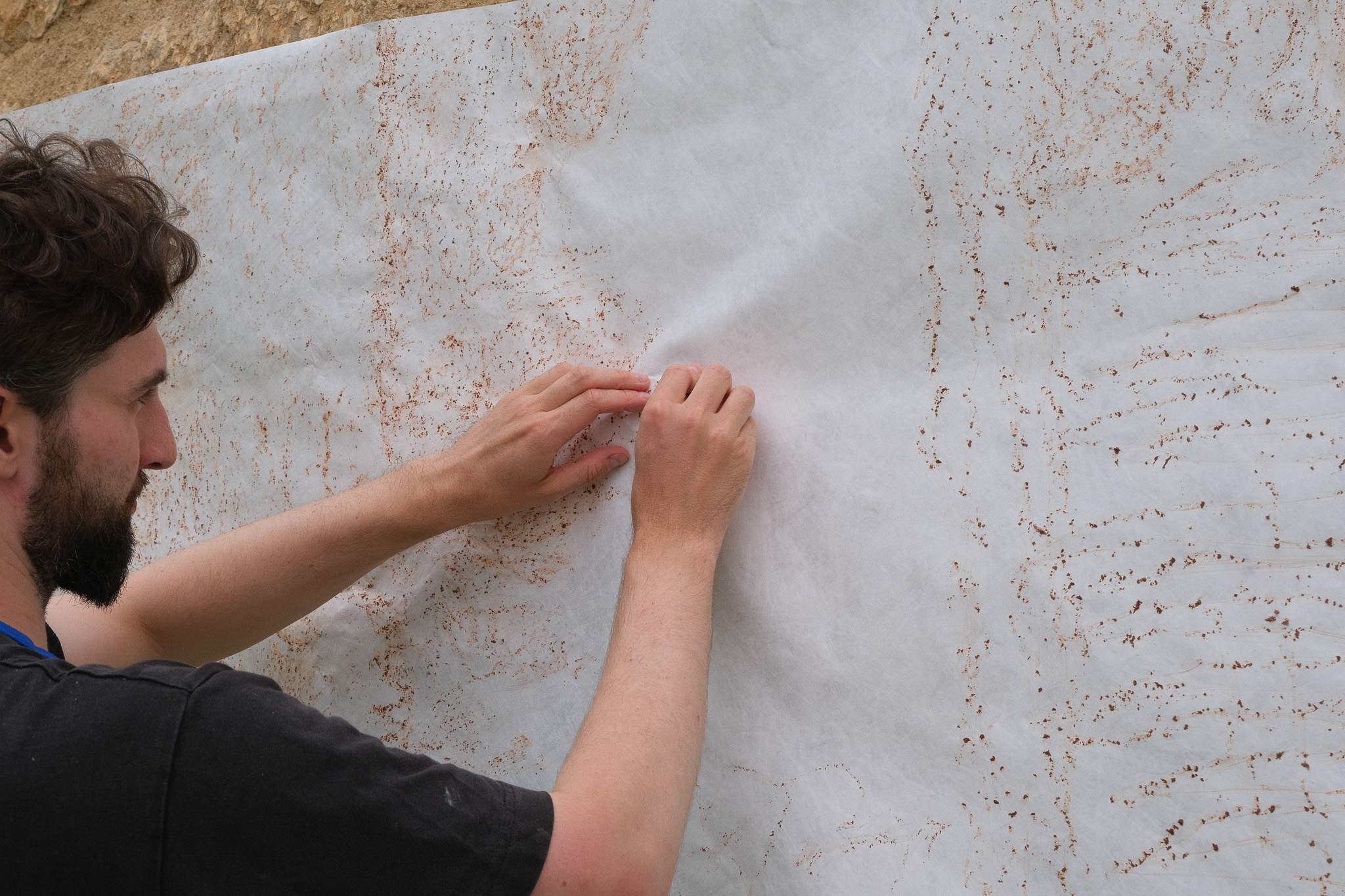
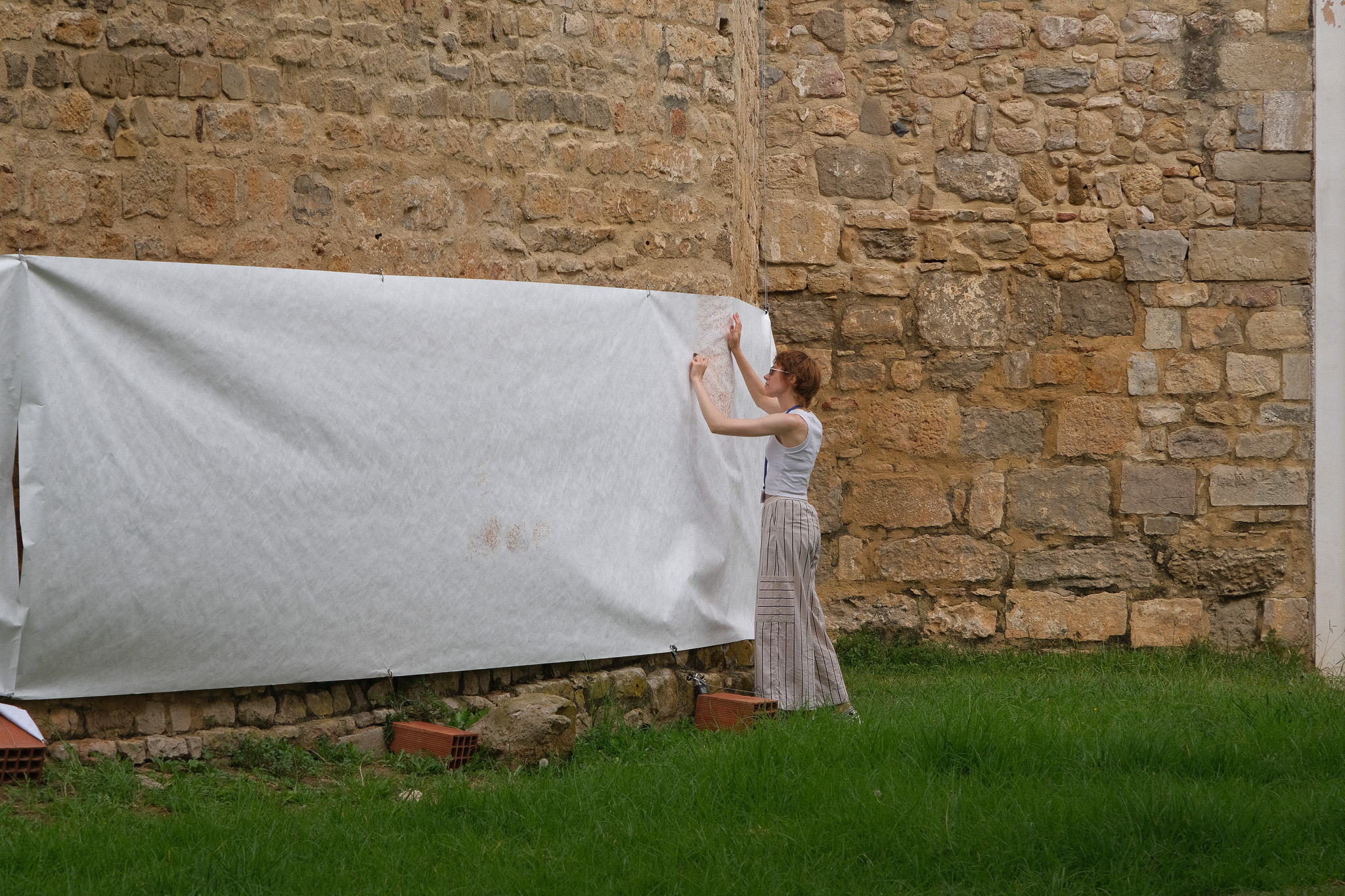
Each day concluded with us rolling up the paper onto pvc tubing. It wasn’t the most elegant of activities, rolling, trying to keep straight, with a second person unhooking the paper as you reached the next cable, but for the most part, and thanks to the forgiving nature of the Tyvek, we were able to minimise unwanted creasing or damage.
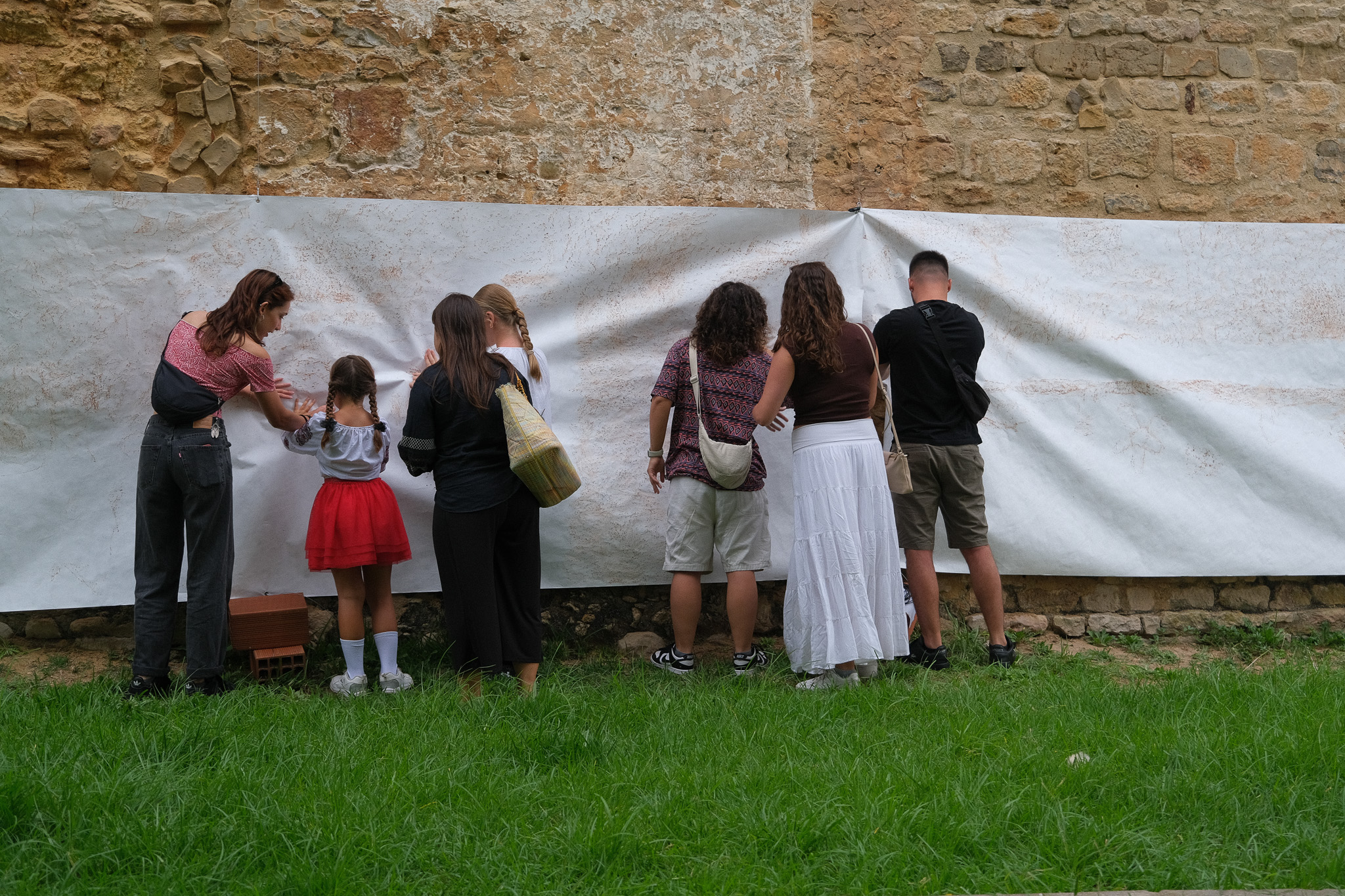
The composition of visitors was quite interesting. The wall faces onto a car park, so we captured many tourists and visitors to the old town. Two prominent types of guest were families, and groups of friends in their 20s. For the families, we’d often see some interested kids, or one of the parents interested as an enrichment activity. The dad would usually be a little reluctant to take part, but then when encouraged to take a crayon, head to the wall and see that there is no pre-requisite skill, they would often become the most engrossed of the family unit.
Groups of friends would again have one or two curious members whom we’d try and chat to as they walked past our tent looking at the wall. If we could convince them to try, it would be a discussion in the group before everyone took a crayon and headed to a section of the wall. They would then seem to motivate each other to keep going as they compared techniques, took photos, chatted and laughed. There’s a real sense of bonding that the paper allows for.
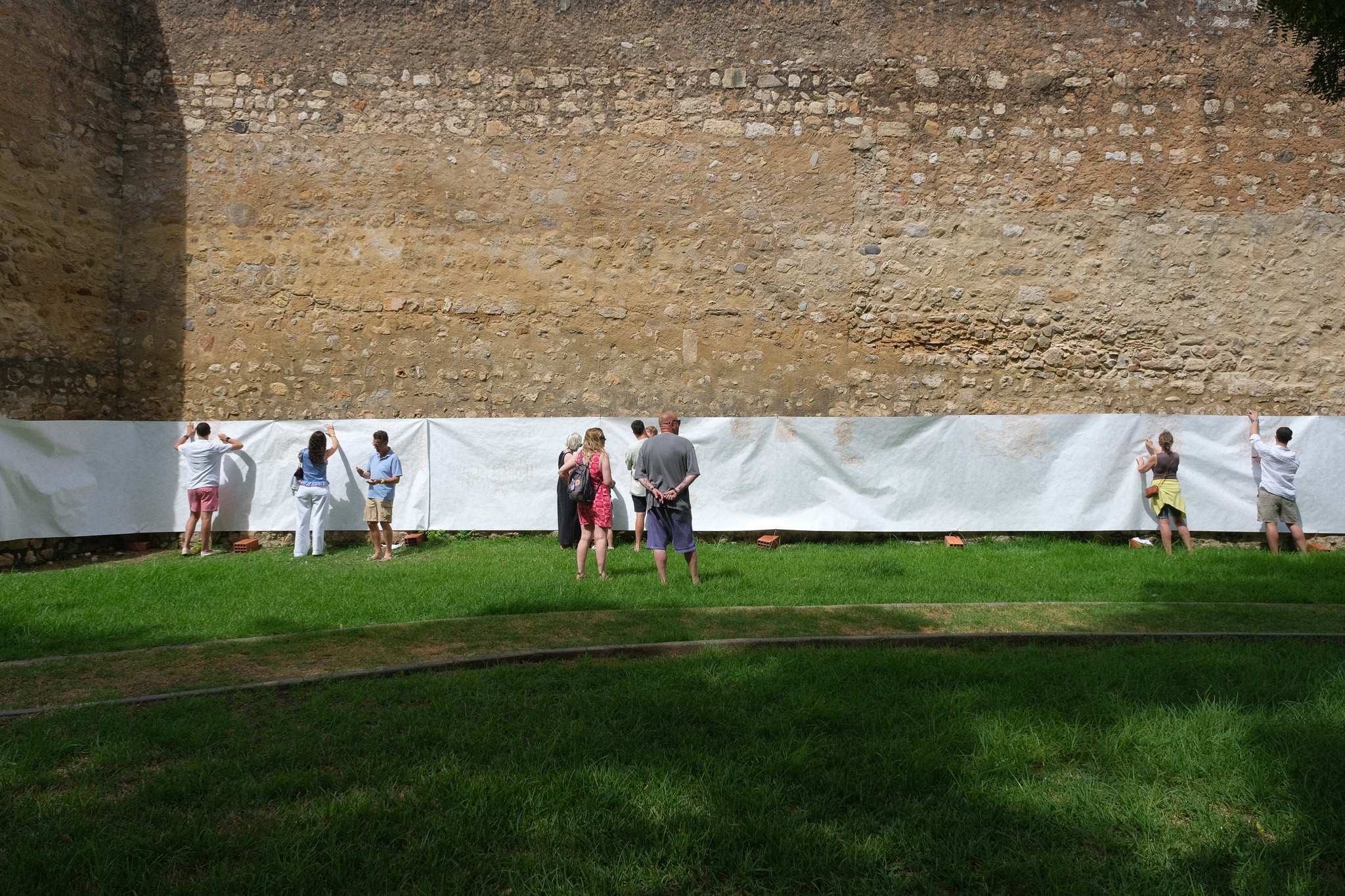
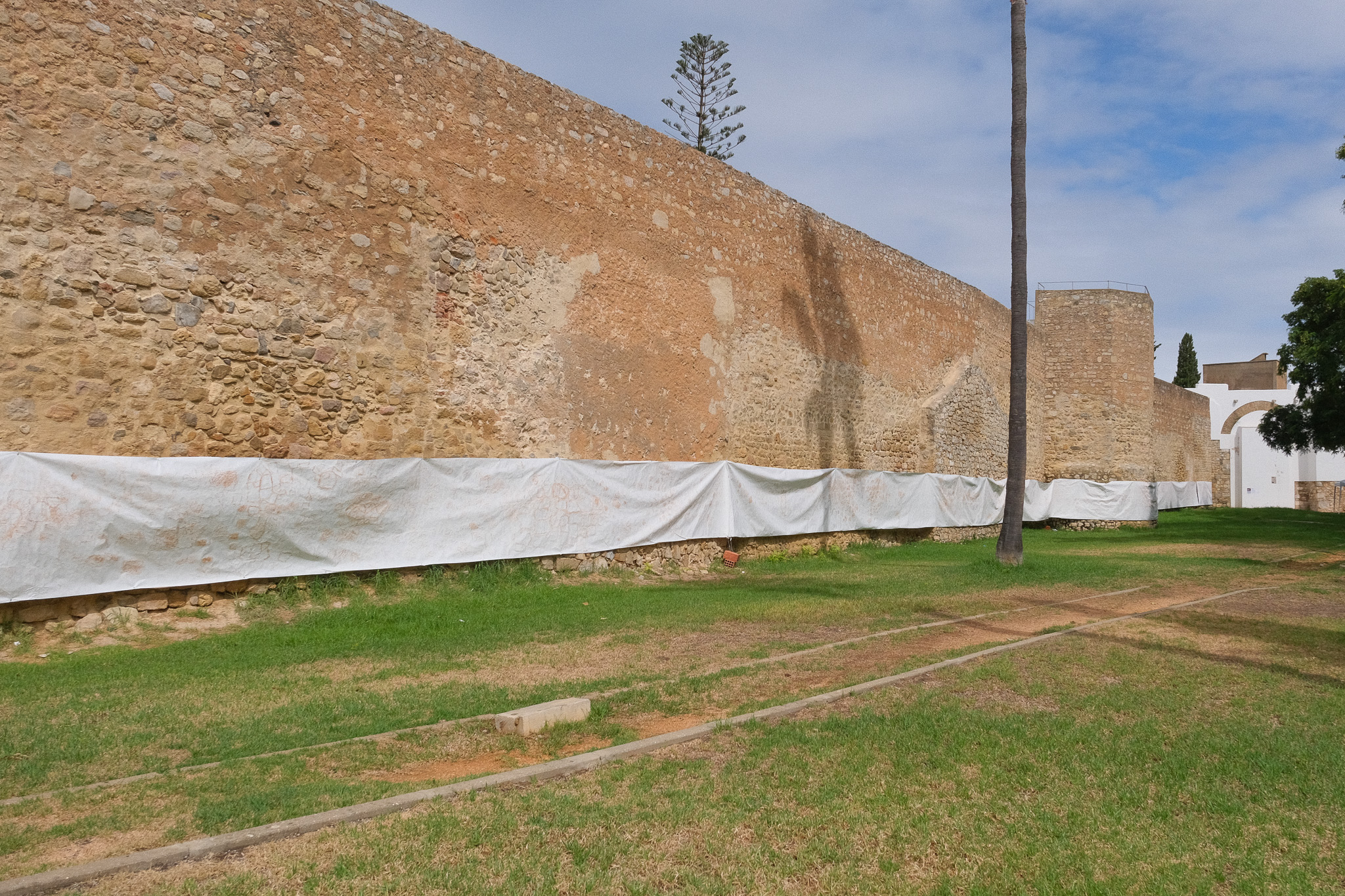
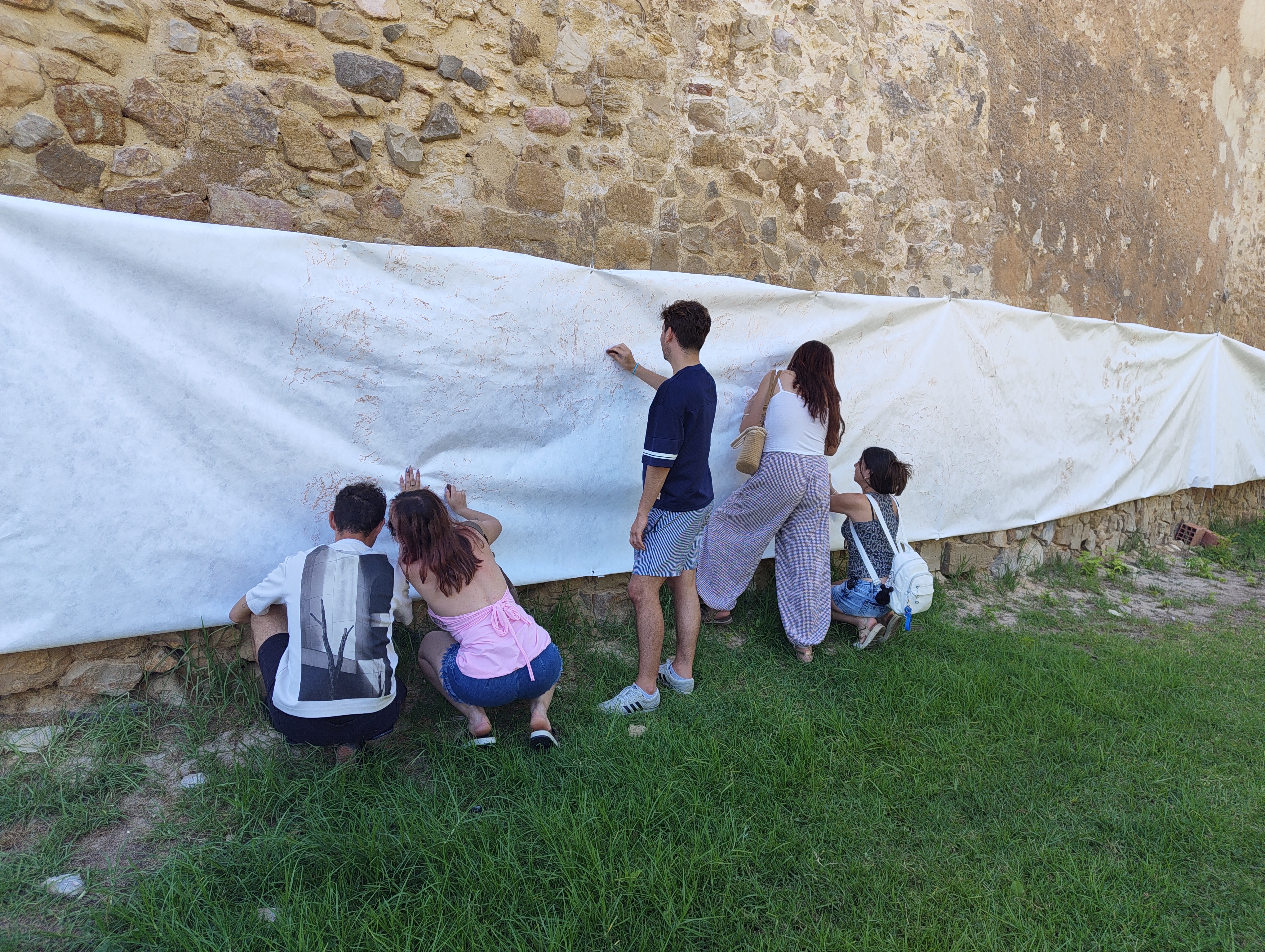
After 5 days, it was time for our activity to come to an end. We had brought over 300 members of the public to contribute to our wall rubbing, and we now packed the paper away for the final time, and had our final group meal.
The activity as a whole had been a large success, we’d managed our major goals of covering the 100m stretch of wall with a relief rubbing that we could now take away and develop work with. There’s a form of anthropomorphism I’m giving to the wall in this idea of memory that is captured through the interconnected web of the stories that exist in this place. I think about it similarly to Octavia E. Butler’s Earthseed prayer:
All that you touch
You Change.
All that you Change
Changes you.
The only lasting truth
Is Change.
God
Is Change.
Imagining this as a node graph, or a 4 dimensional topographical map, the wall is a node, or is represented as a place, where we connect to it, and through this connection are connected to others. But the nodes and peaks don’t need to simply be people or buildings, but as the graph grows in complexity, it can come to describe events, of which there are many that the wall has been impacted by or has impacted it, some of which were described in the legends of the city.
This paper impression we have is a shared membrane, a skin or cross-section of the history of the walls up until now and the people who came to our event to meet it. The walls have been rebuilt, and are cobbled together from stones of various eras, they are in effect an ongoing thing, not a static construction that was produced and lain stale since. They have been destroyed, and in their destruction was the blueprint for their rebirth. This all ends up as the evidence of the stones, what stones they are, how they got there, is all part of the noise of a living entity. And this whole structure itself is part of the city as a super-organism. Originally they were built to keep invaders out, and now they persist because they are a tourist attraction, wrapped around the old town allowing people in. It is a porous living skin.
Now with this experience of such a large scale installation, activity and work, we can develop these thoughts further into new artworks and exhibitions over the coming years. It’s been a crazy and extremely rewarding time to work with these wonderful people, and I think we really have started to come into our own and grow together as a group. I’m looking forward to the next steps.


Leave a Reply