AI_Ontology explores the nature and aesthetics of AI systems.
What am I looking at Anas Al-Sharif?
Details_
Video
3 minutes / 10 minutes / 2 hours
Year_
2025
About_
2025.04.06
Palestinian journalist Anas Al-Sharif wrote a letter to be published in the event of his death.
2025.08.10
An Israeli airstrike on a media tent outside Al-Shifa Hospital, Gaza City killed seven people.
Among them were the journalists Mohammed Qreiqeh, Ibrahim Zaher, Mohammed Noufal, Moamen Aliwa, and Anas Al-Sharif.
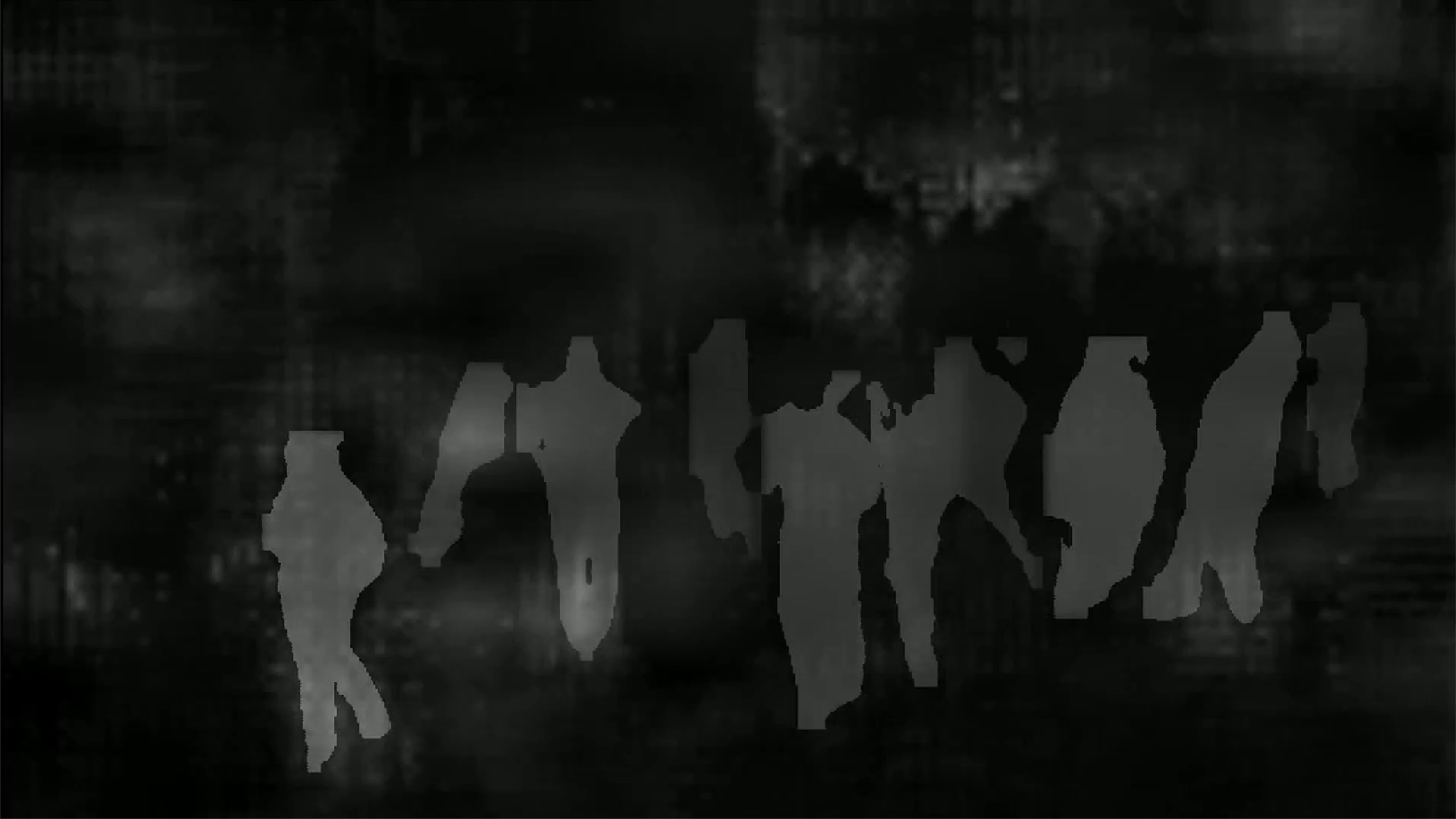
Al-Sharif shared videos from the ground in Gaza. His Twitter page was a conduit for many civilians to share their experience of the war. Appearing here are those experiences he shared between writing his letter and his death.
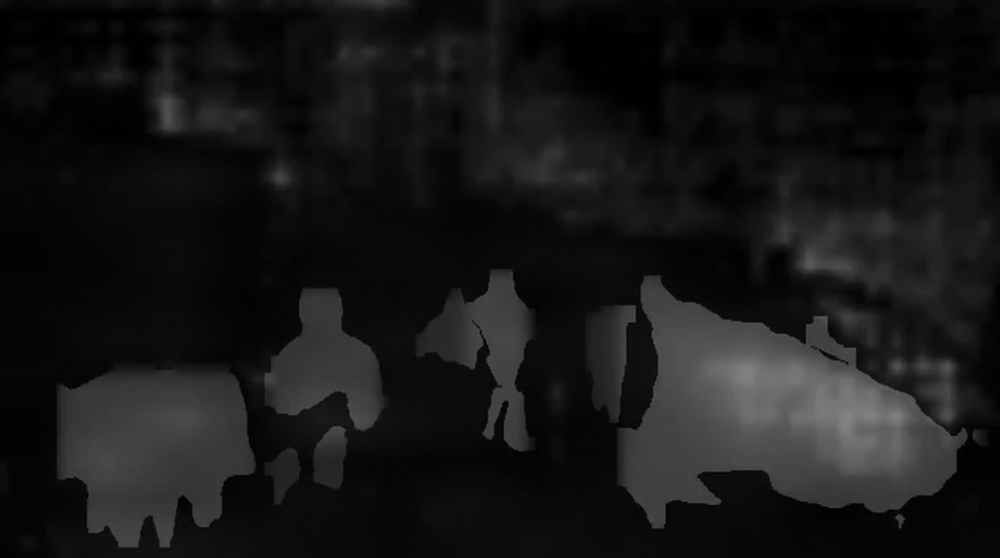
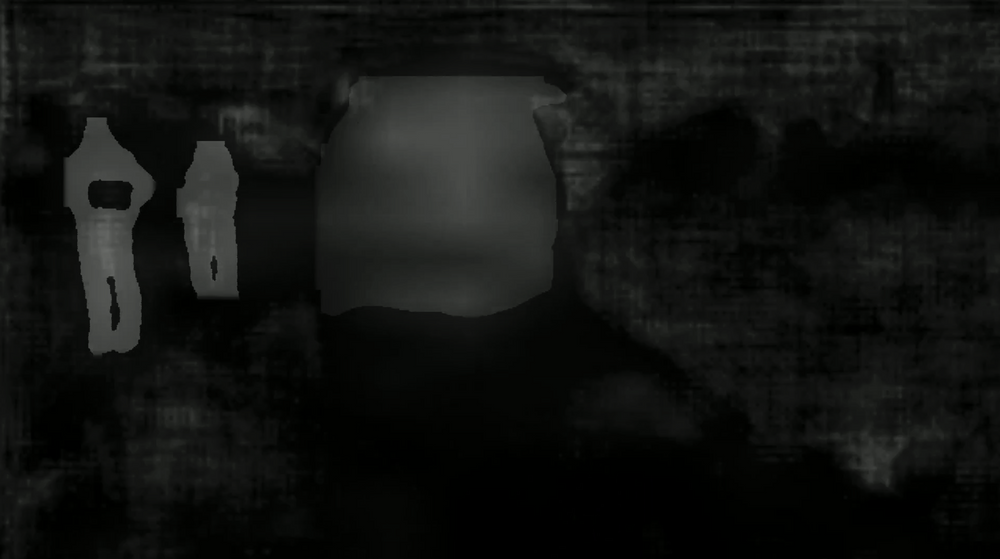
The Gaza War has seen the expanded use of AI systems by the IDF to process data and identify potential targets. This video file analyses where five AI models place their attention in the images shared by Al-Sharif. Areas where models agree appear brighter. The audio has been distorted relative to this agreement.
Missing Persons 1-7


Details_
Oil on Linen
60 x 40 cm each
Year_
2024
About_
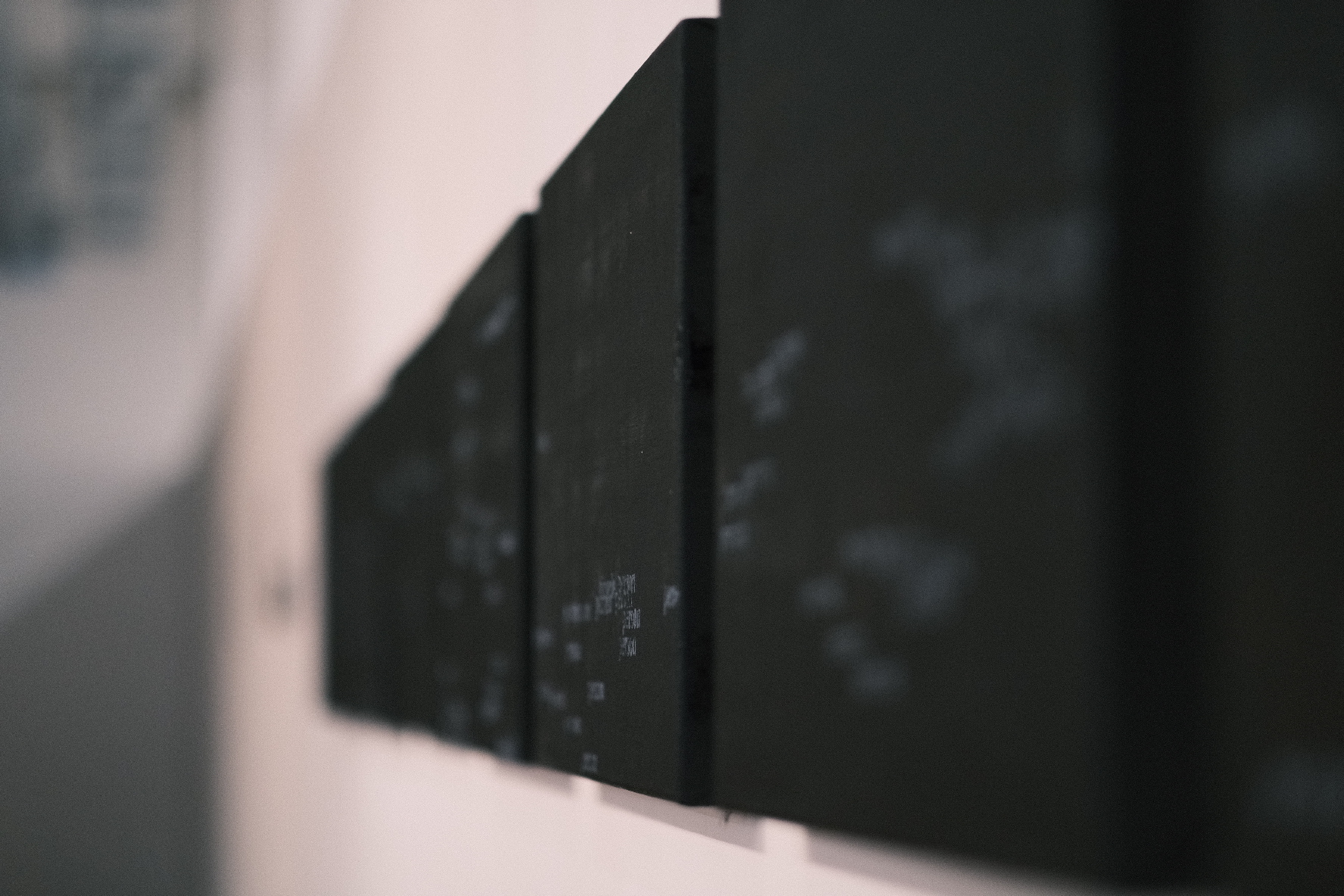
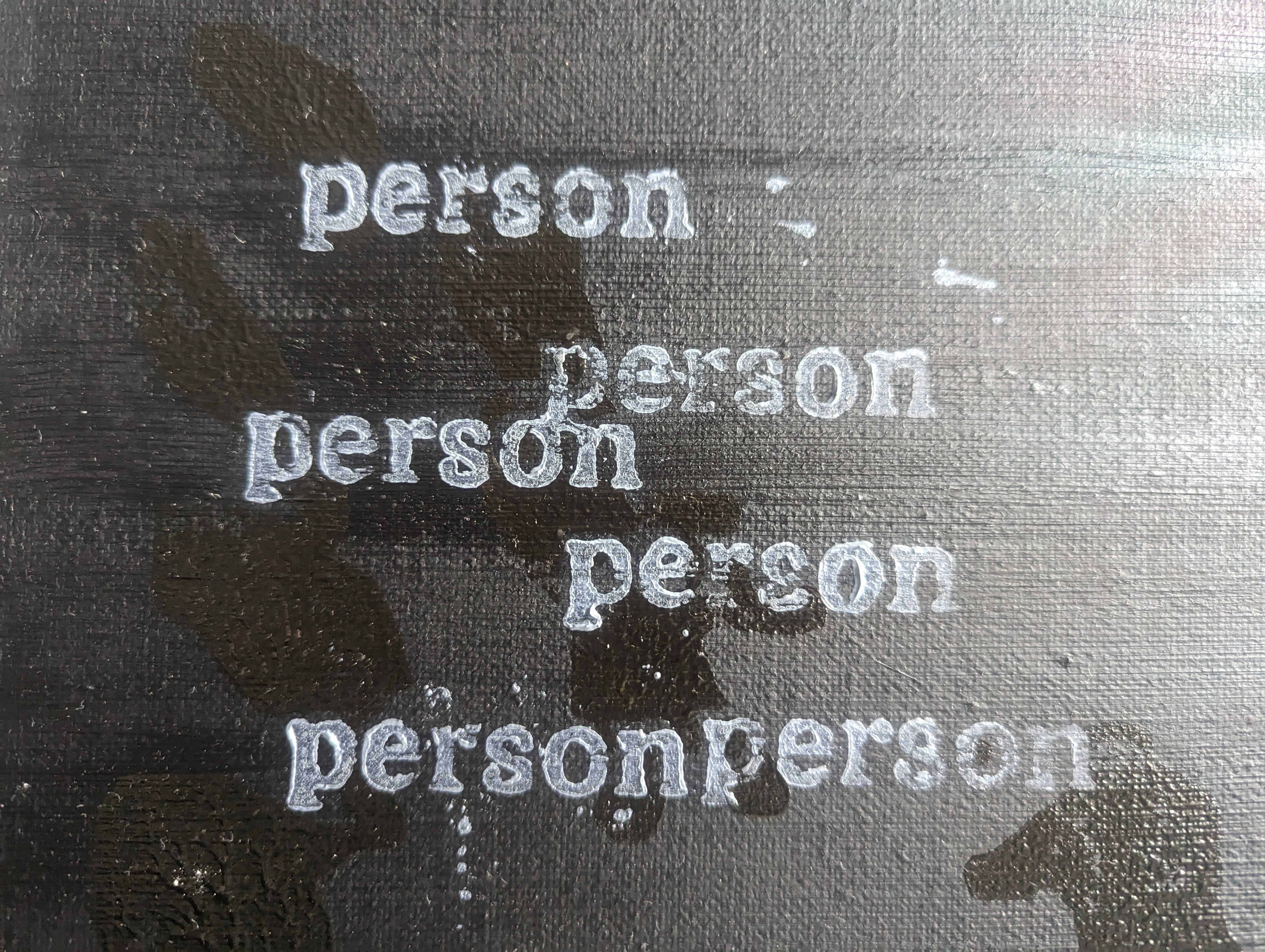
Using an AI object recognition system, Missing Persons takes seven photo-journalistic images of Palestinians digging, searching through, and surrounded by rubble in the aftermath of Israeli bombings during the 2023 War in Gaza. This AI lens, which identifies and silhouettes all recognised objects within the source images, whilst making the identification of “persons” within a given image available to a computer and thus further computation for e.g. statistical evaluation, fails to capture all of the people within the image, and in doing so, de-contextualises the image from the horror and reality that is immediate to a human viewer.
Missing Person’s dissection of these images highlights the increased abstraction of war, rendering its subjects into data-points. Selection of Palestinian targets for bombing have increasingly been chosen by an AI system known as “The Gospel”, which has upped target identification numbers from 50 per year to 100 per day, continuing a process of dehumanising the very real people affected by operators’ decisions.
Credited Images:
1. Palestinians search for casualties at the site of an Israeli strike on a house in Rafah in the southern Gaza Strip November 23. REUTERS/Ibraheem Abu Mustafa
2. Palestinians search for casualties at the site of an Israeli strike on a house in Rafah in the southern Gaza Strip November 23. REUTERS/Ibraheem Abu Mustafa
3. Palestinians conduct search and rescue works on the site of an Israeli air strike on a house in Khan Younis, in the southern Gaza Strip November 22. REUTERS/Mohammed Salem
4. Palestinians search for casualties at the site of Israeli strikes on a house in Rafah in the southern Gaza Strip November 22. REUTERS/Bassam Masoud
5. Palestinians search for casualties at the site of Israeli strikes on a house in Rafah in the southern Gaza Strip November 22. REUTERS/Bassam Masoud
6. Palestinians conduct search and rescue works on the site of an Israeli air strike on a house in Khan Younis, in the southern Gaza Strip November 22. REUTERS/Mohammed Salem
7. Palestinians gather as others search for casualties at the site of an Israeli strike on a house in Rafah, amid the ongoing conflict between Israel and the Palestinian Islamist group Hamas, in the southern Gaza Strip November 23. REUTERS/Ibraheem Abu Mustafa
Portrait of the Artist as a Young AI

Details_
Oil on Paper
48 x 48 cm
Year_
2023
About_
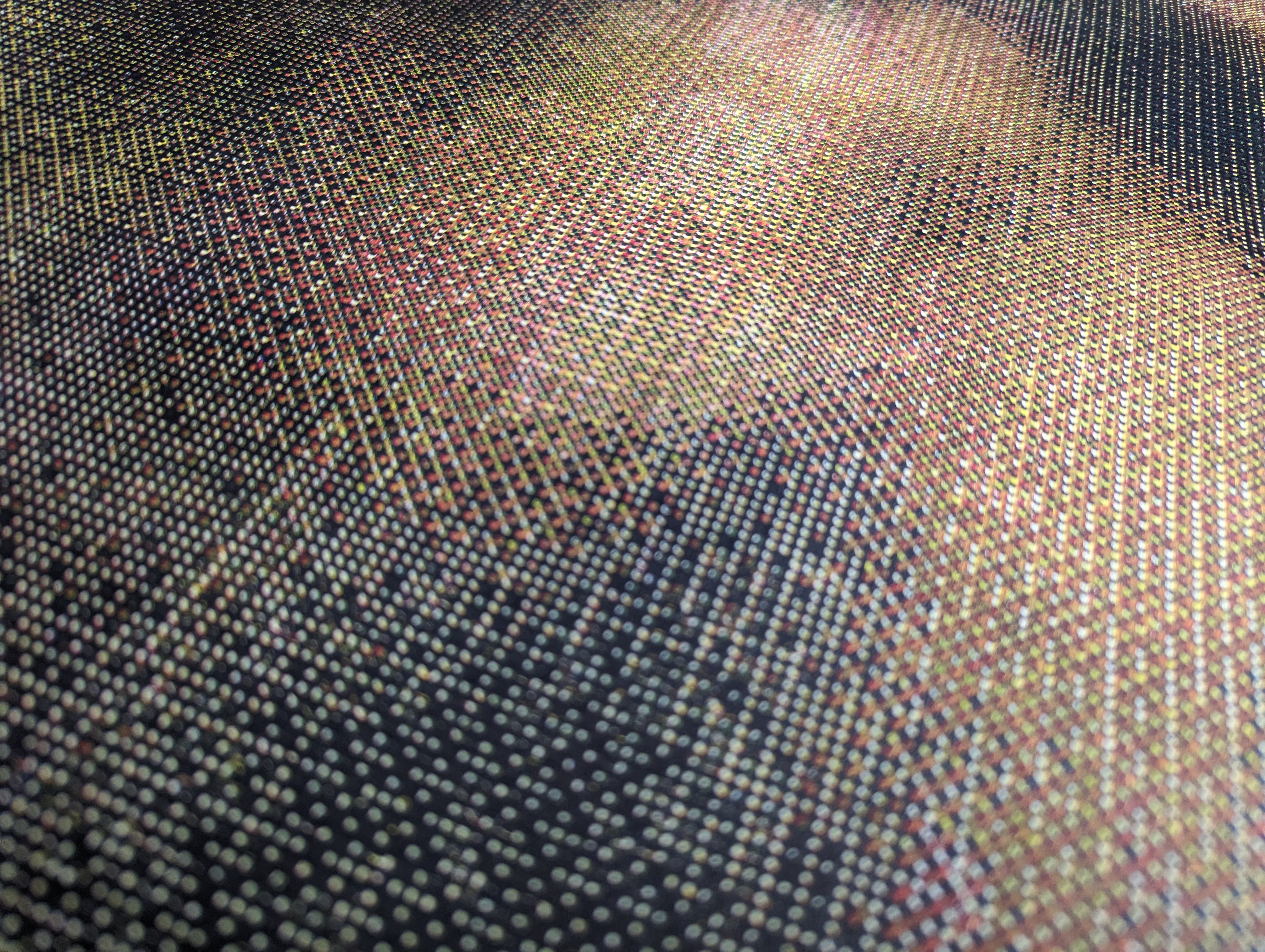
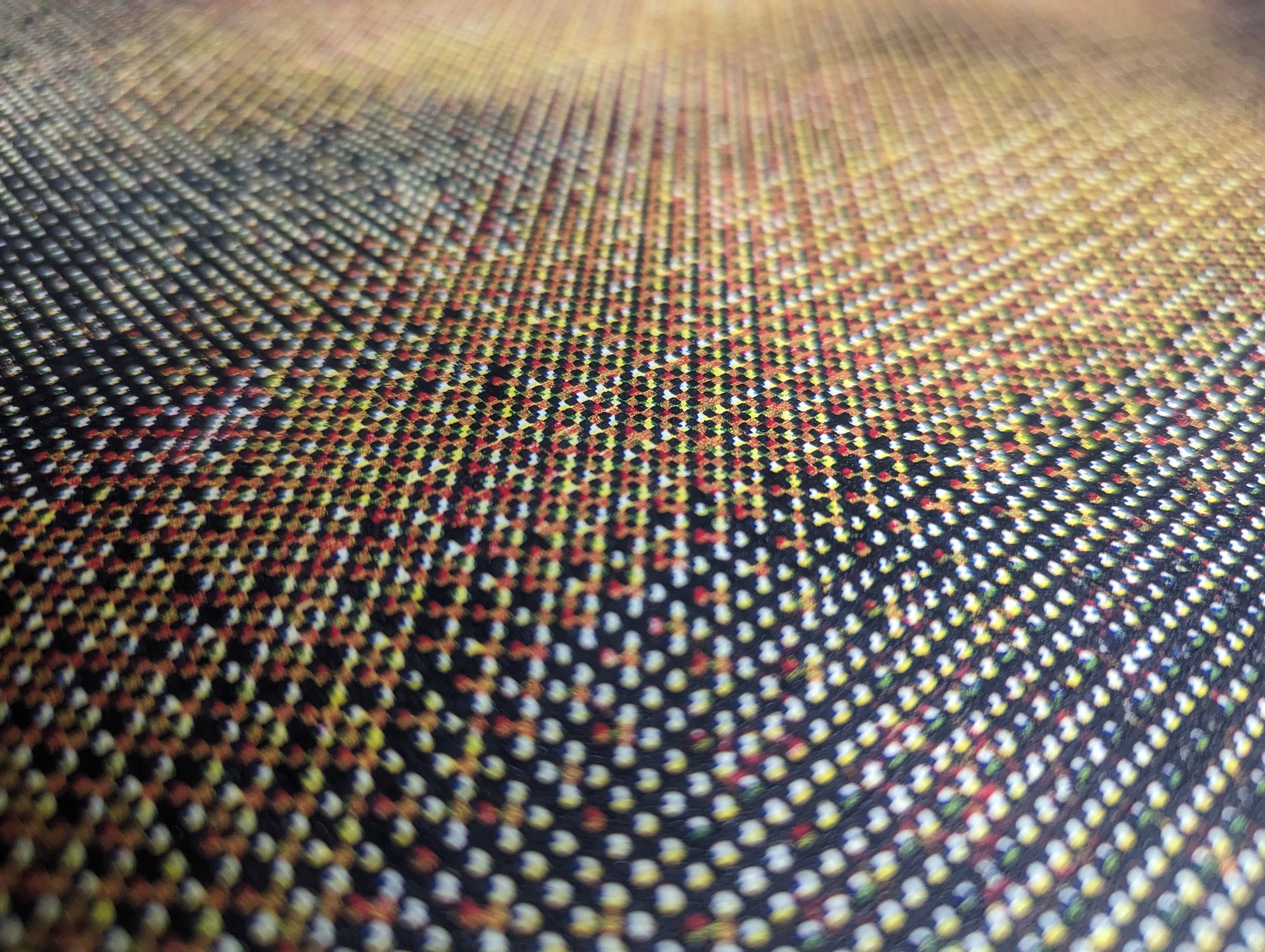
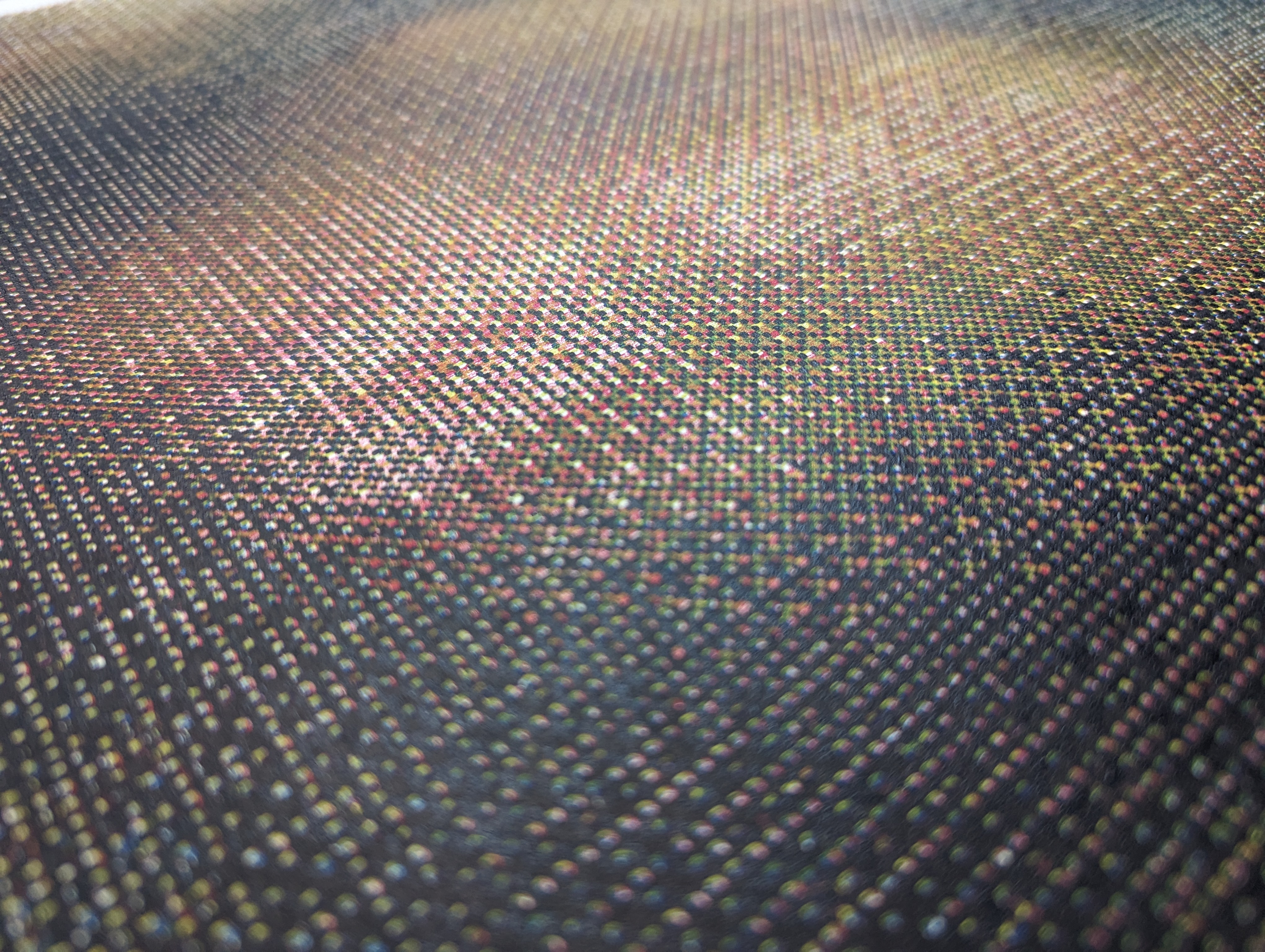
Portrait of the Artist as a Young Al asks its audience to take the position of a generative Al system based on a diffusion model. These models work by adding a layer of visual noise to an input image before comparing and adjusting each generation against the embedding created by a text prompt. Portrait similarly prompts its audience with its title and presents them with a blurred wood block printed image derived from the first generation of the Diffusion model’s output. By providing clues, Portrait asks the viewer to use their imagination to fill in the details of the portrait, thus taking the place of the Al system.
Printing blocks are cut, using a laser cutter, from the four CMYK layers generated by splitting the AI generated image, using the halftone technique for colour printing. The print is then sequentially created with the Japanese block printing method. The digitised aspects of production create a “pixelated” image, giving a nod to its computational origins, but the analogue printing process adds natural imperfectness into the final image, produced as a cooperative effort between the machine and human.
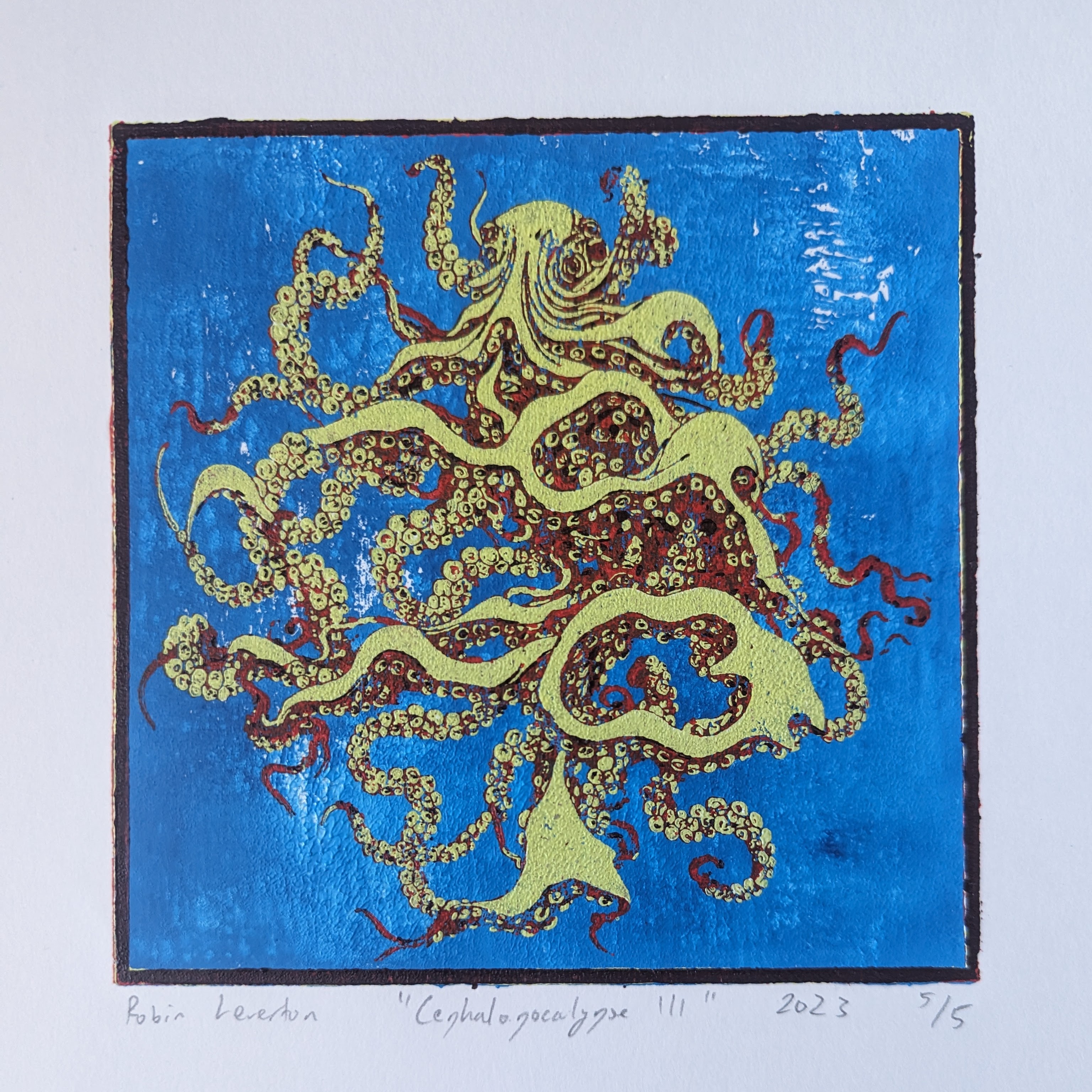
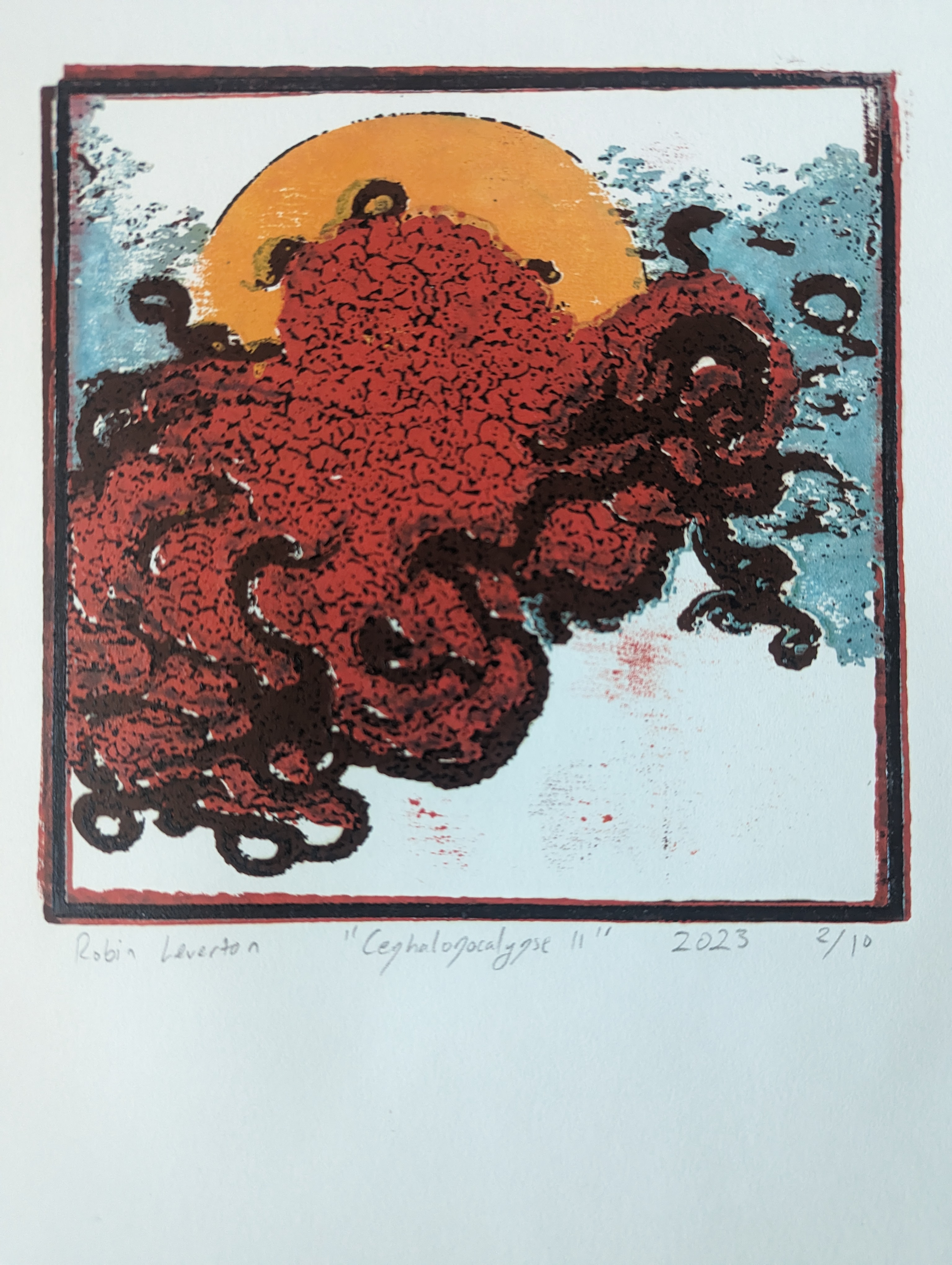
Cephalopocalypse 1-3


Details_
Oil on Paper
20 x 20 cm each
Year_
2023
About_
This series of woodblock prints is an exploration of utilising Stable Diffusion image generation and integrating this into a process of hand printing. The octopus aesthetics within the Japanese woodblock style prints evoke the alien intelligence of cephalopods, drawing a parallel with the artificial intelligences that are recently becoming more overtly prevalent.
 Robin Leverton