In_Organisms is investigating the embodiment of intelligence and our ill-conceived assumptions about AI and its interaction with our environments.
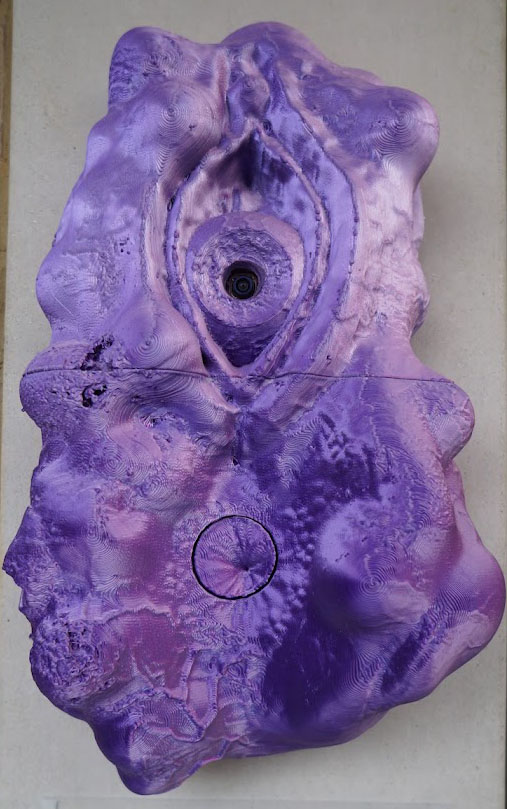
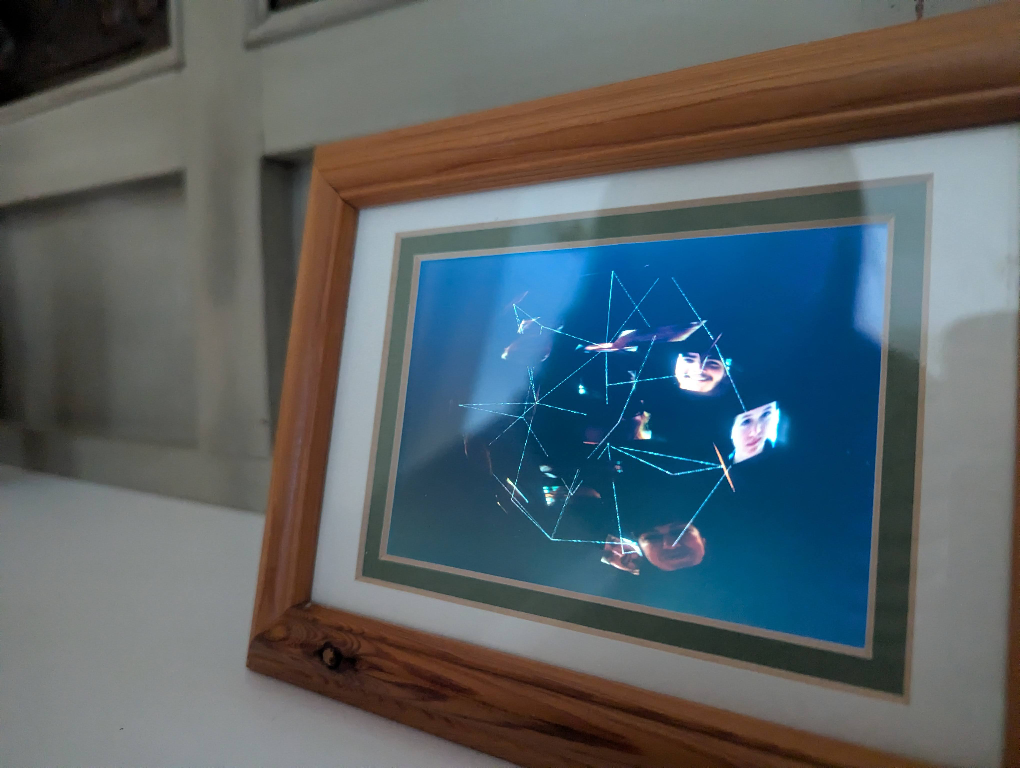
In_Organism: H.O.G (Home Organ Geometry) PROTOTYPE.001


Details_
PLA
Raspberry Pi Zero
Touch Designer
18 x 30 x 10 cm
Year_
2024
About_
“The H.O.G system watches, records, and connects all who seek entry into the home-organism. Over time the H.O.G system maps out the topology of relationships between the denizens of its home space, producing a cartography of the social relations of its inhabitants.”
Created for The Apartment: Second Order, In_Organism: H.O.G PROTOTYPE.001 is the first prototype organ from the Latent In_Organisms series, extracting data in position of a doorbell, requesting engagement in return for entry into the home. Treating the architecture as a body, and forming a multitude of the personalities that enter it, the H.O.G system seeks to build a map of the connections amongst audience members of the show, displayed in a common photo-frame.
In_Organism: Octopus


Details_
Computer
Llama2
Monitor
Projection
Reclaimed Tarpaulin
Stable Diffusion
Unity
Yolov8
Installation 3 x 3 x 3 m
Year_
2023
About_
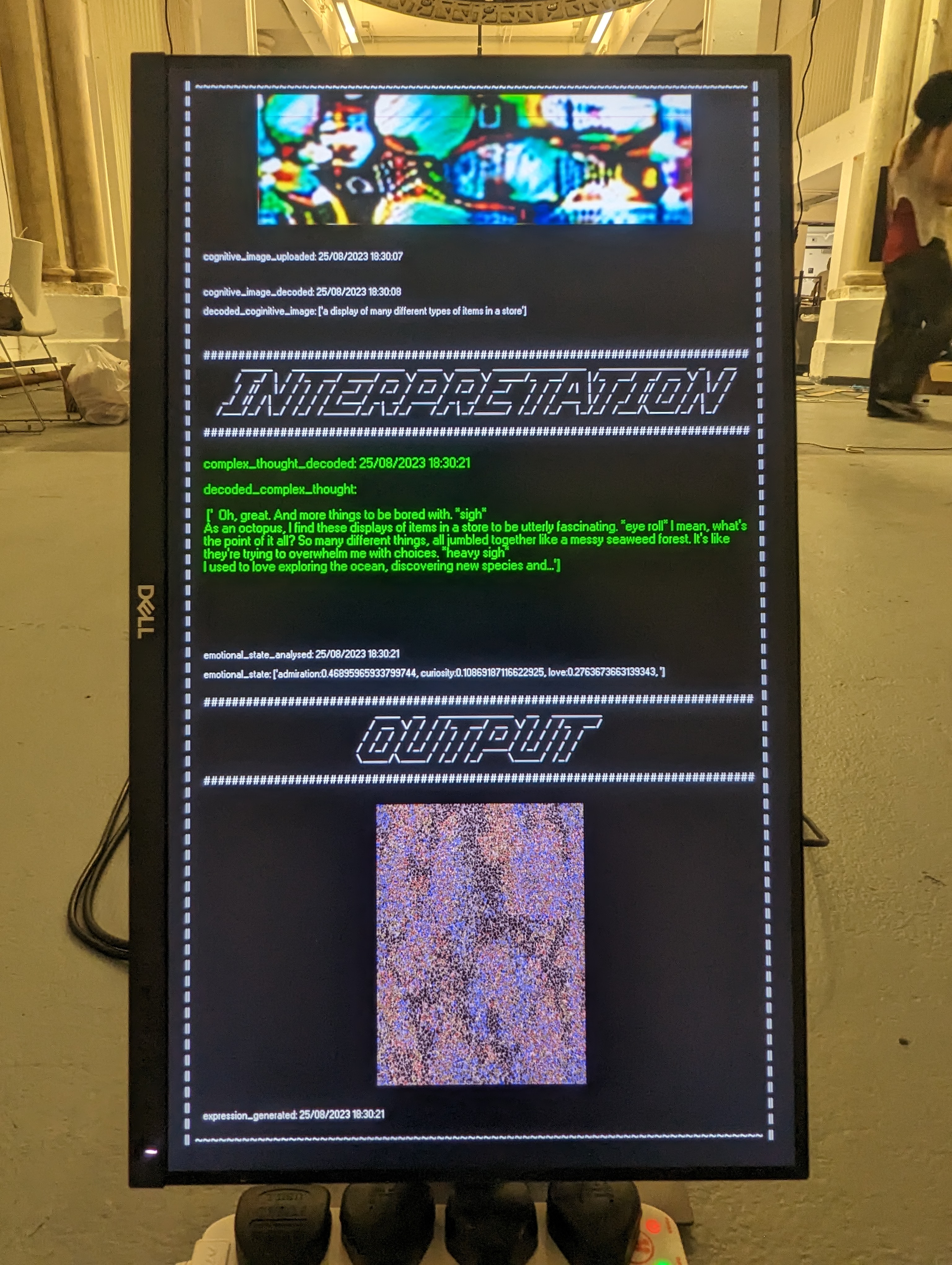
An exploration of embodied intelligence drawing an analogy between the alien mind of an octopus, and that of a possibly sentient AI system. In_Organism: Octopus is a projected installation, which maps a model of cognition, tracking a thought process from initial sensory input, through to emotionally expressive propagation. Engaging with the idea of skin as an ecology, and site of exchange, Octopus invites us into itself as we look to interpret its emotional state.
In_Organism: Mushi_Reishi


Details_
3D Resin Print
10 x 10 x 10 cm
Digital Print
30 x 30 cm
Year_
2023
About_
Mushi (Jap.) Computer glitch.
Reishi (Jap.) Mushroom of Immortality.
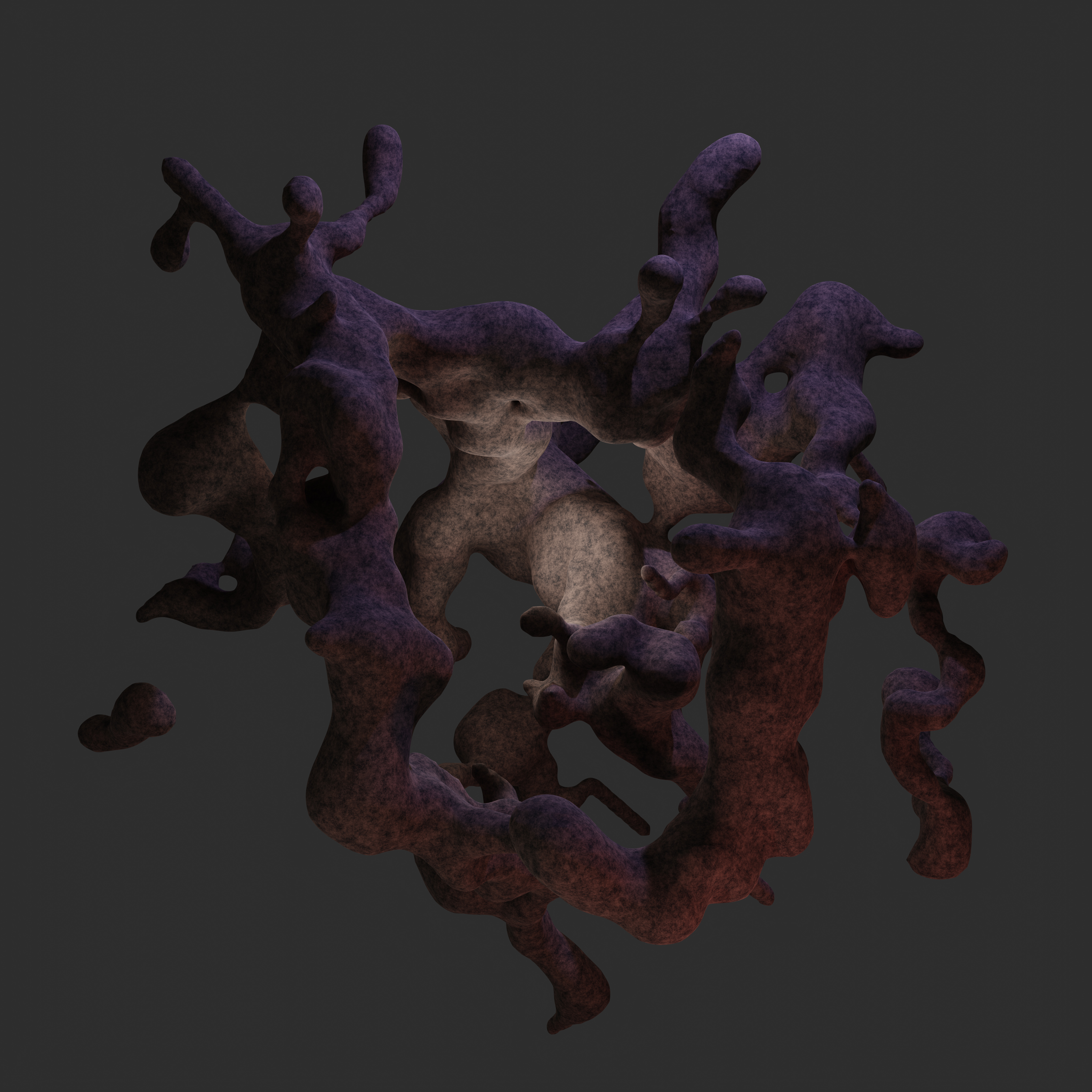
Mushi_Reishi (Glitch Fungus) investigates the idea of how a fungus might grow, and the algorithmic expression of this is presented as a 3D printed maquette of a future sculpture. The sculpture would be intended to be printed utilising filament made from recycling PET fizzy-drinks bottles, which are readily available, and food safe. The hope is the final sculpture will inhabit living algae.
In_Organisms

Details_
Animation (4:23)
Unreal Engine
Year_
2023
About_
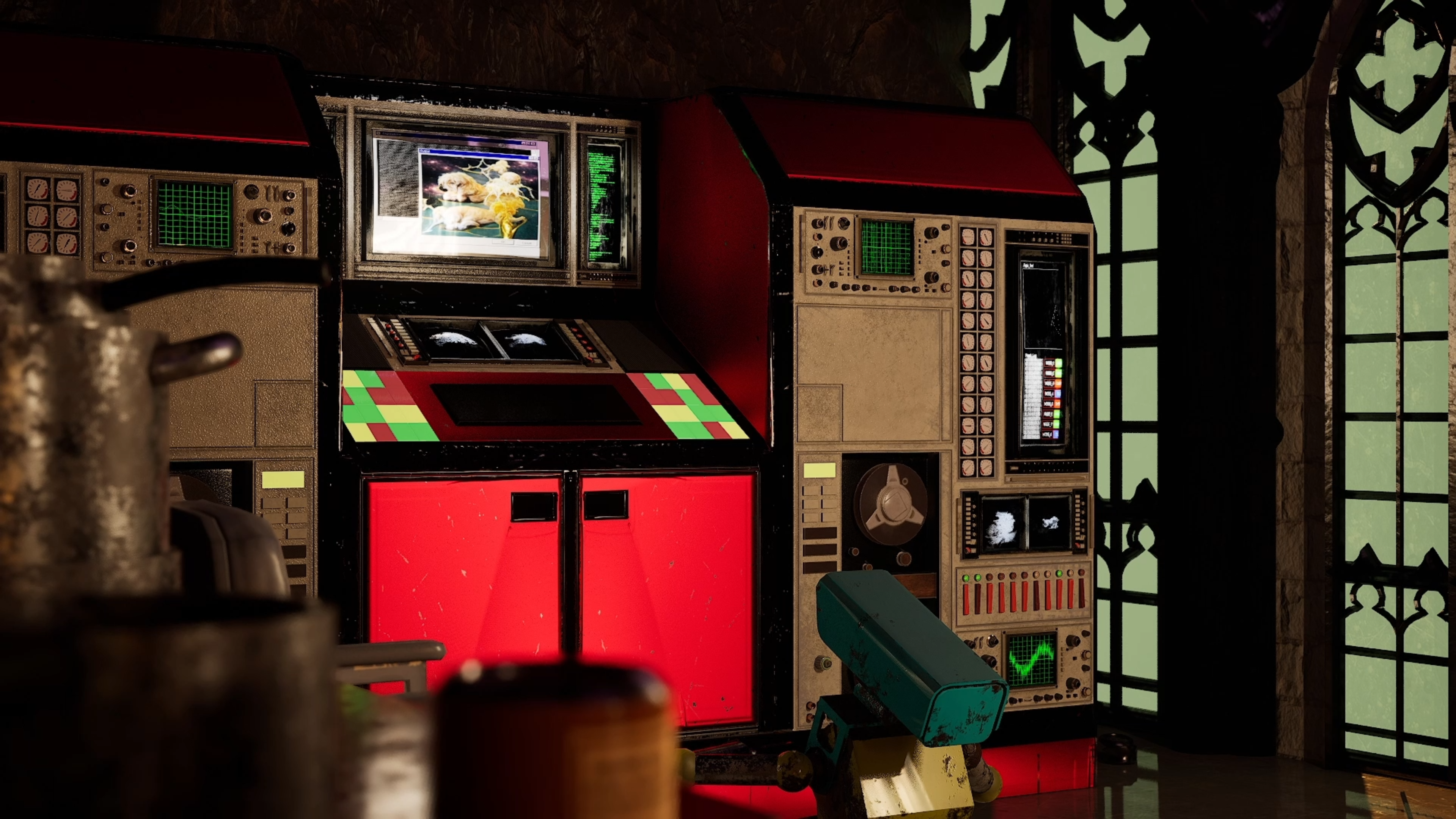
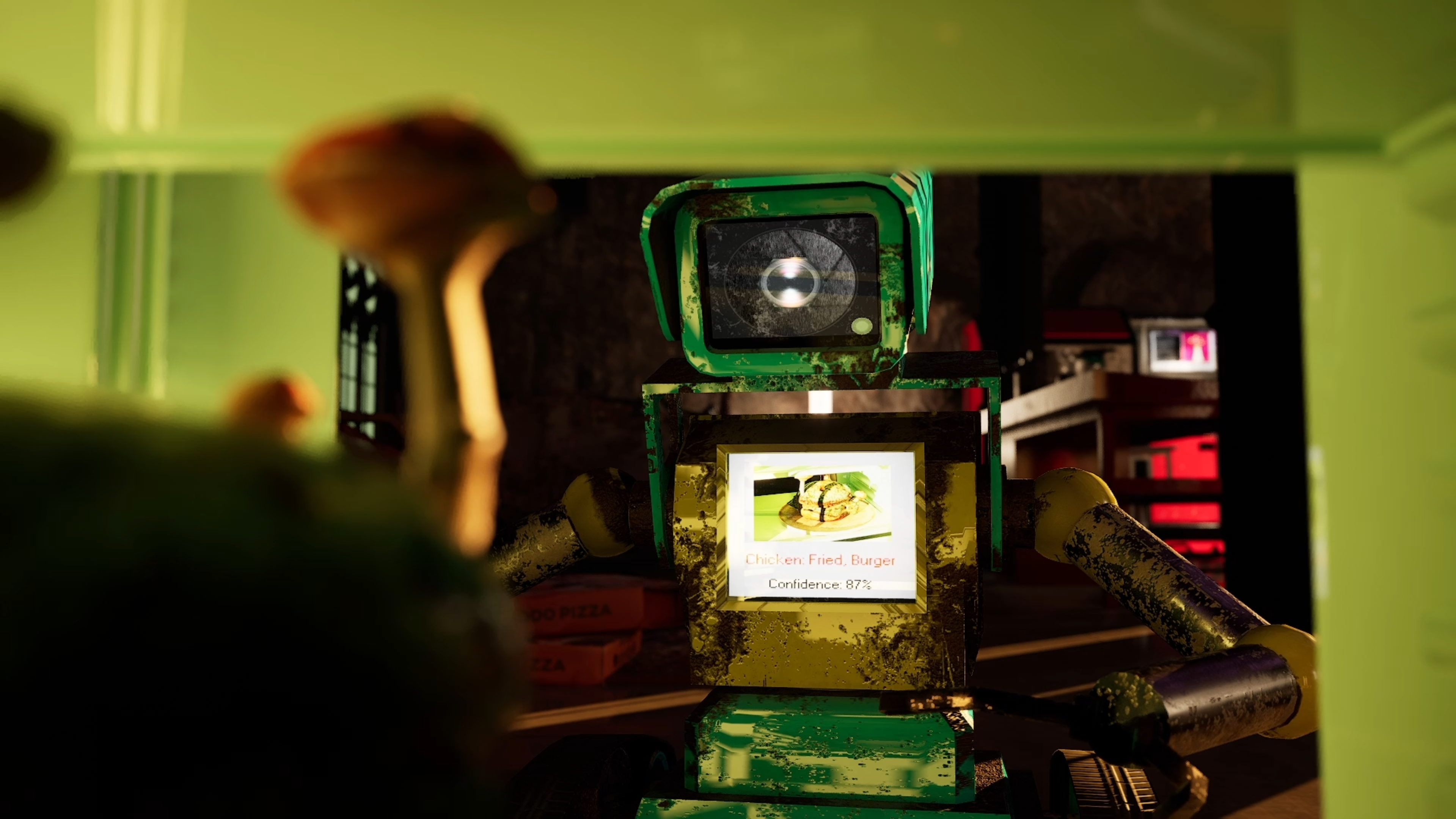
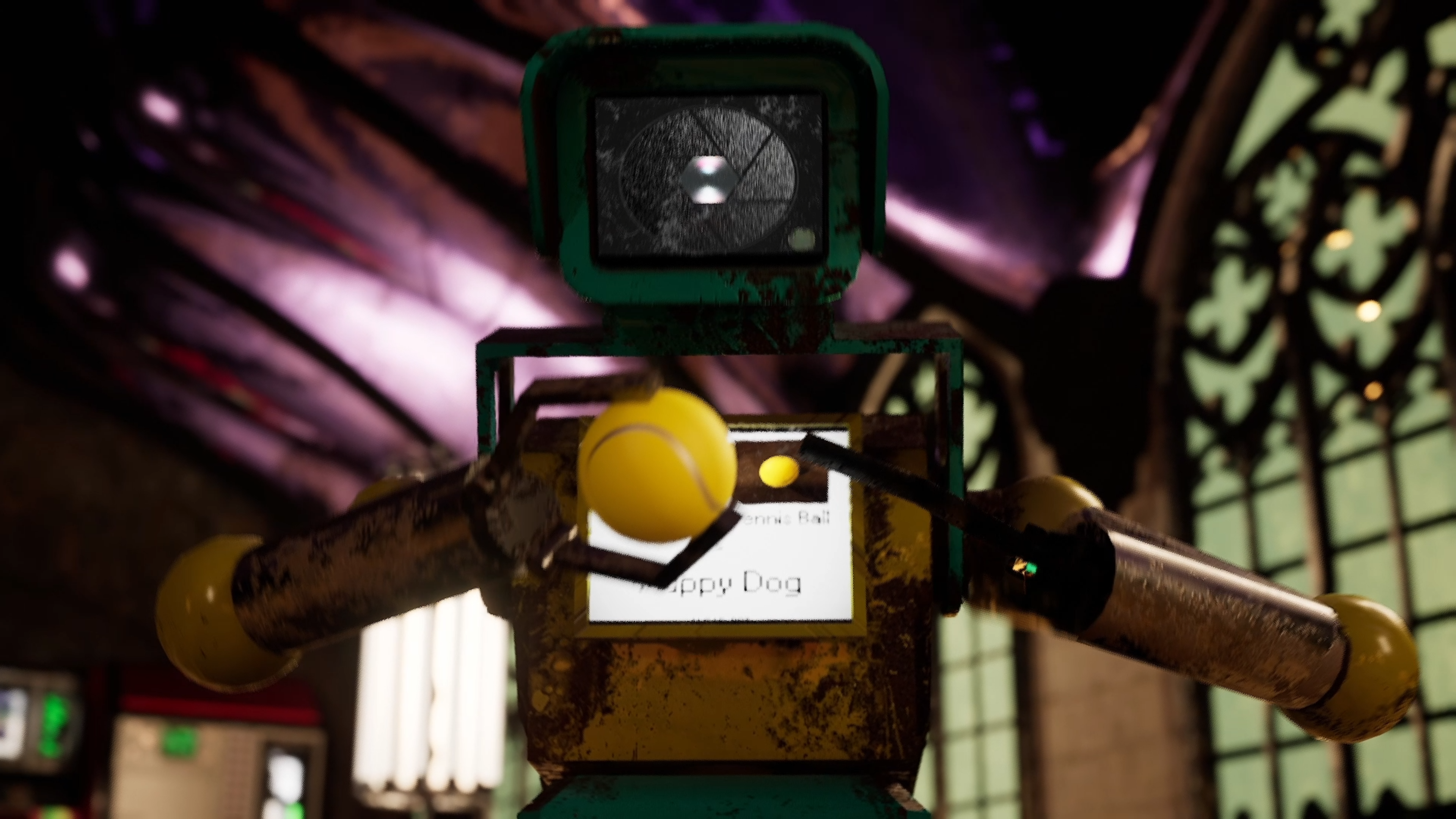
In_Organisms is an immersive and visually captivating animated short film, created in Unreal Engine, set within the intricate world of a gothic laboratory, where two artificial intelligences engage in a profound conversation about fried chicken. Powered by algae and fungi, these enigmatic beings embody distinct forms that shape their cognitive abilities. Algae, constricted to sensing, offers a unique perspective but lacks analytical prowess, while fungi excels in analysis but yearns for sensory experiences. Together, they form a symbiotic cognitive unit within the laboratory, but their struggle with effective communication leads to misunderstandings and challenges. In_Organisms questions how embodiment influences cognition, as these animated entities navigate the boundaries of their contrasting forms.
Steward



Details_
Arduino
Motor
PLA
Projection
Raspberry Pi
Wood
Installation 2 x 2 x 2 m
Year_
2022
About_
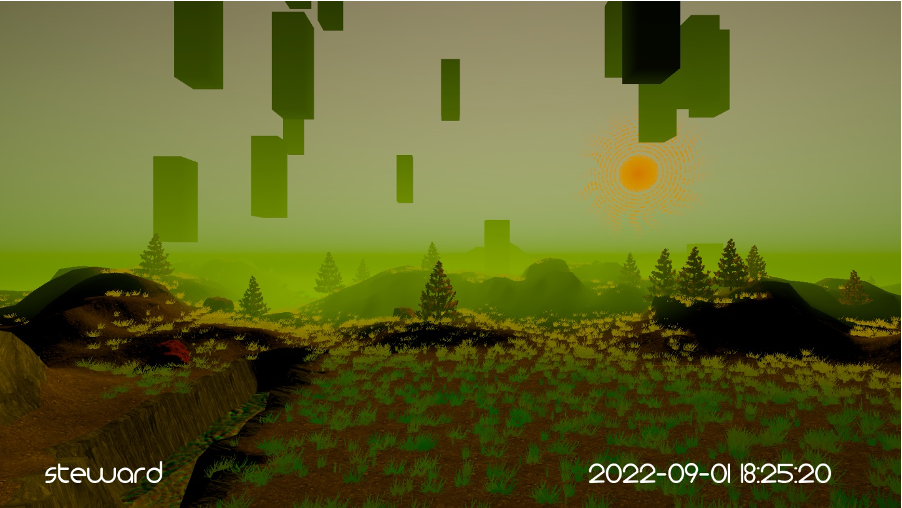
Steward is a dialog between audience and environment. Employing a procedurally generated terrain, slowly decaying over time, Steward records images of this landscape as vignettes printed out as postcards. The audience is invited to scan these postcards back into the system and hold back the decay or take the postcard with them, preserving the memory but at the cost of its further collapse.
Steward has exhibited in the Digital Design Weekend at the V&A Museum, London.
Machine Drawing: Space and Time

Details_
Arduino
Ink
Motors
Paper
PLA
Raspberry Pi
Wood
90 x 90 x 20 cm
Year_
2022
About_
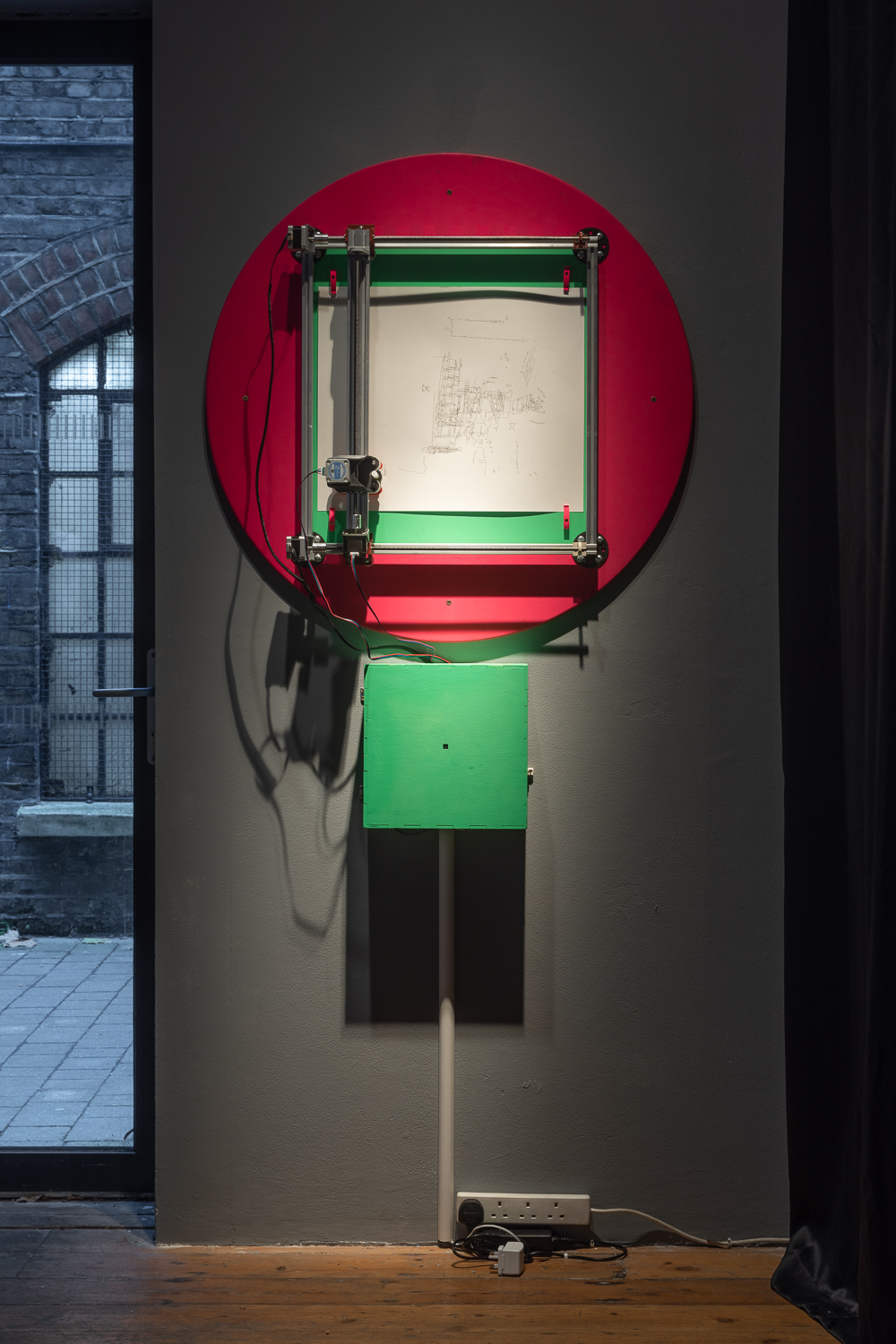
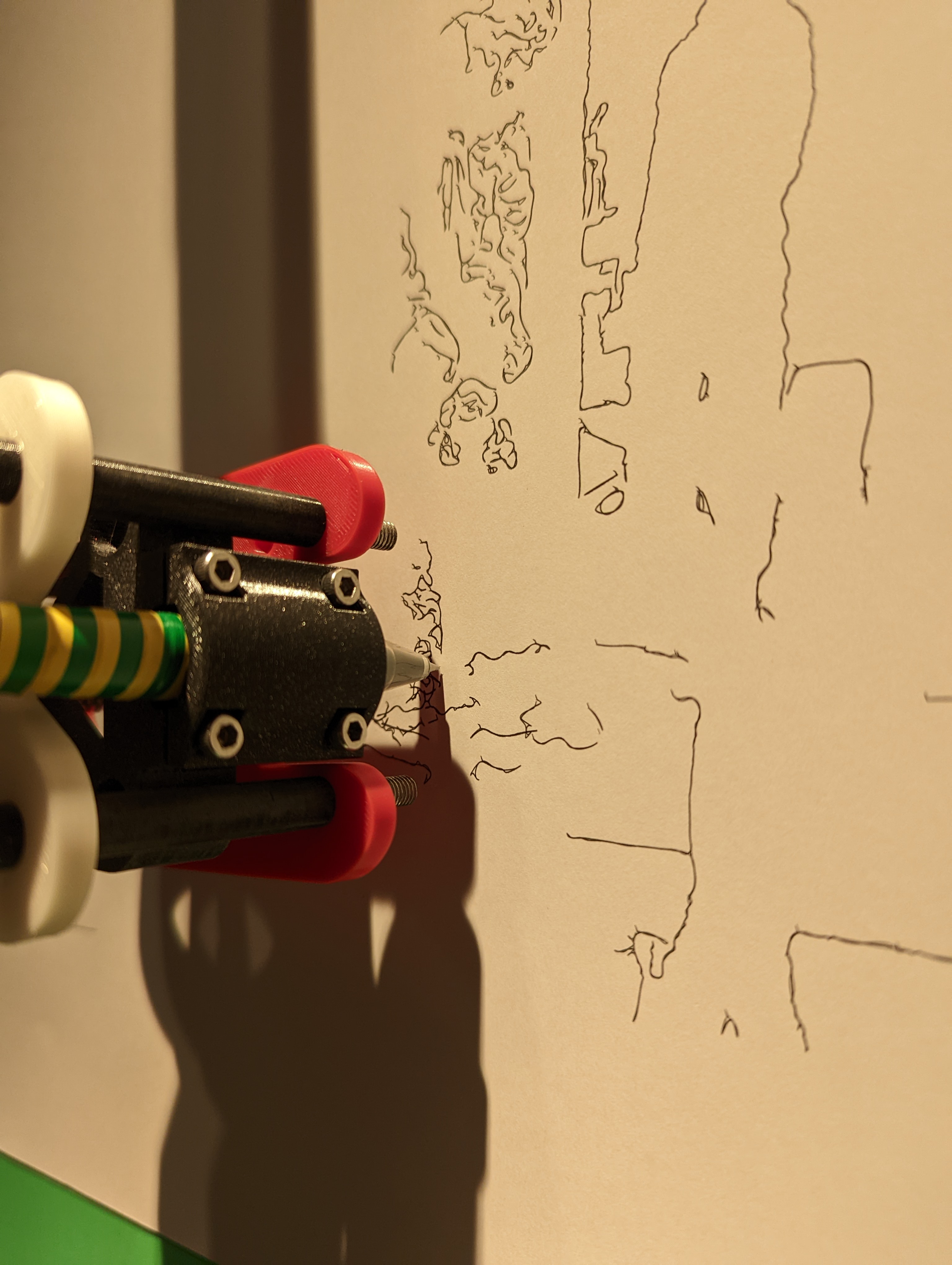
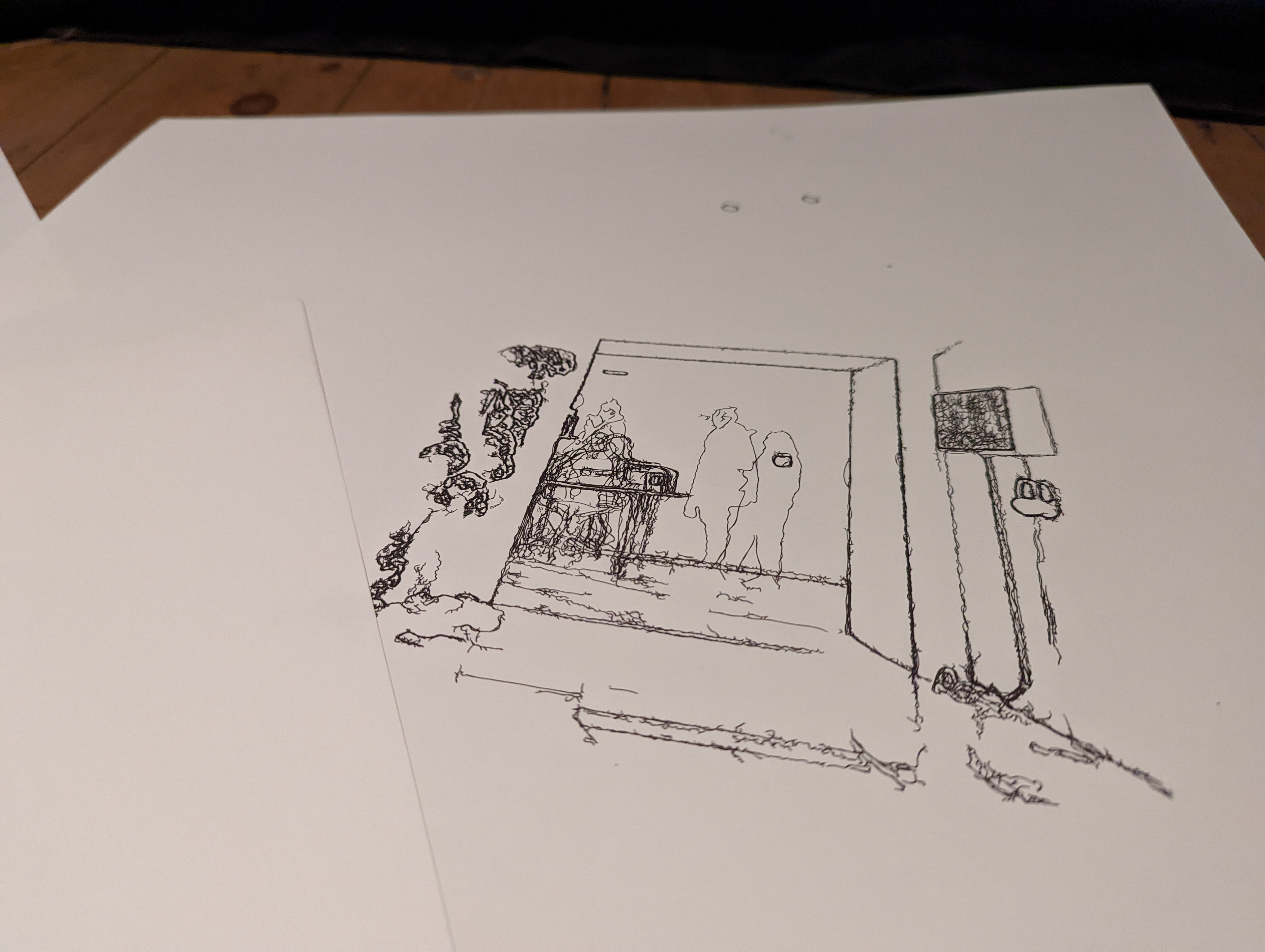
Machine Drawing: Space and Time is an installation utilising a custom-made pen-plotter to continuously draw the space it faces.
The installation allegorising systemic collapse and de-centralised responsibility, whereby through intended interaction wiht the system, the participant is partially responsible for its ultimate failure. By the continuous redrawing over the same page; A space’s architecture may be neatly re-constructed, but its living occupants create a dynamic subject that changes with each frame taken by the machine’s camera. As such, over the exhibited time, the drawing will lose structure as details begin to confuse, with the eventual case being a single mass where human activity has occurred and no individual pose being discernible.
Machine Drawing: Space and Time was exhibited in Visions at Nunnery Gallery, London.
 Robin Leverton