
I took my early explorations in Stable Diffusion and developed a way to make more interesting images with them, and develop an artistic process that wasn’t the kitsch boring photoreal woman in place images that plague the internet since the growth of these generative models exploded this past year.
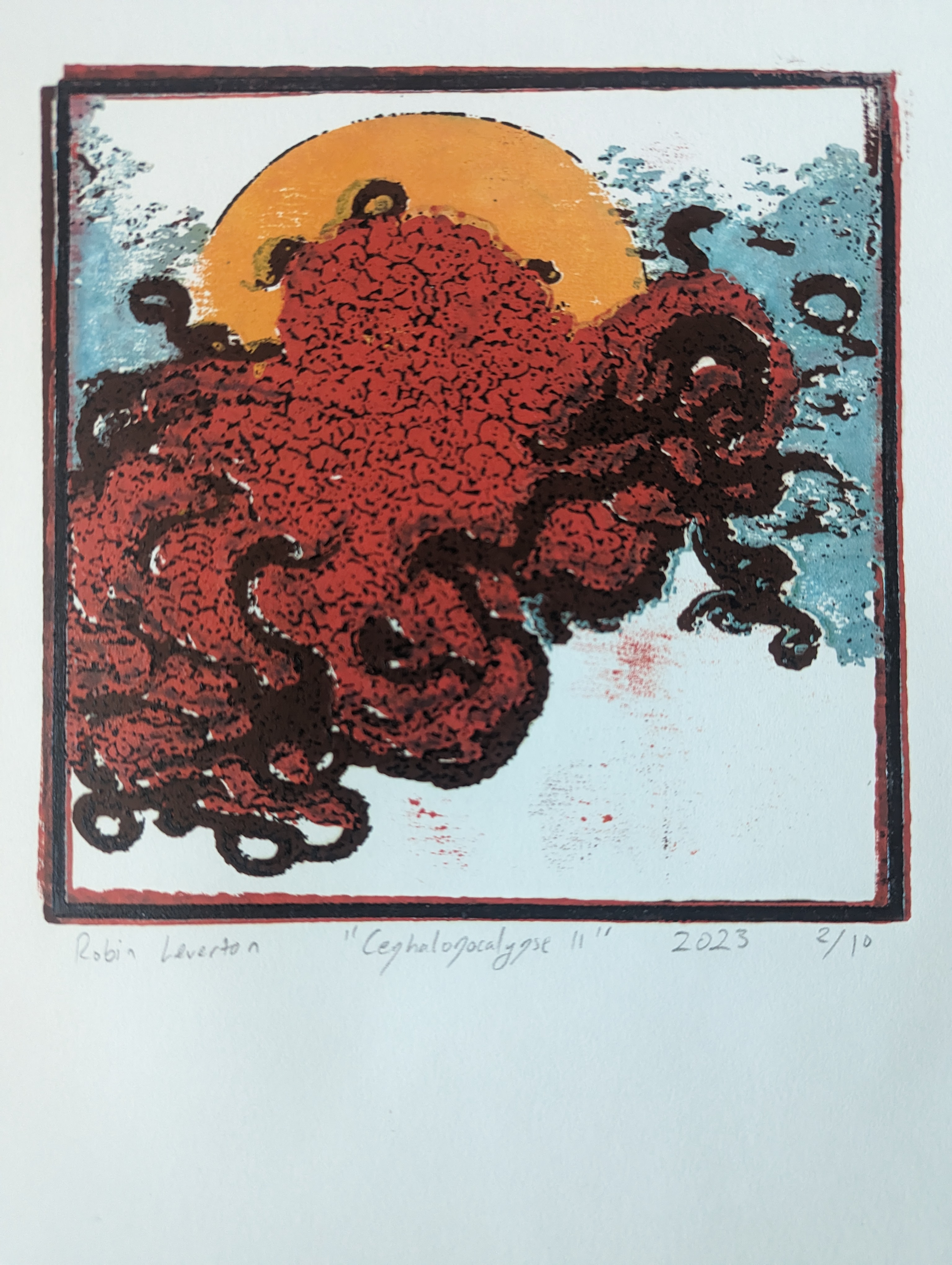
My subject was the octopus, and my process was Japanese block printing. Both inspired by works such as Hokusai’s “Dream of the Fisherman’s Wife”, that explore the deviant, alien sexuality of the tentacular forms of the octopus.
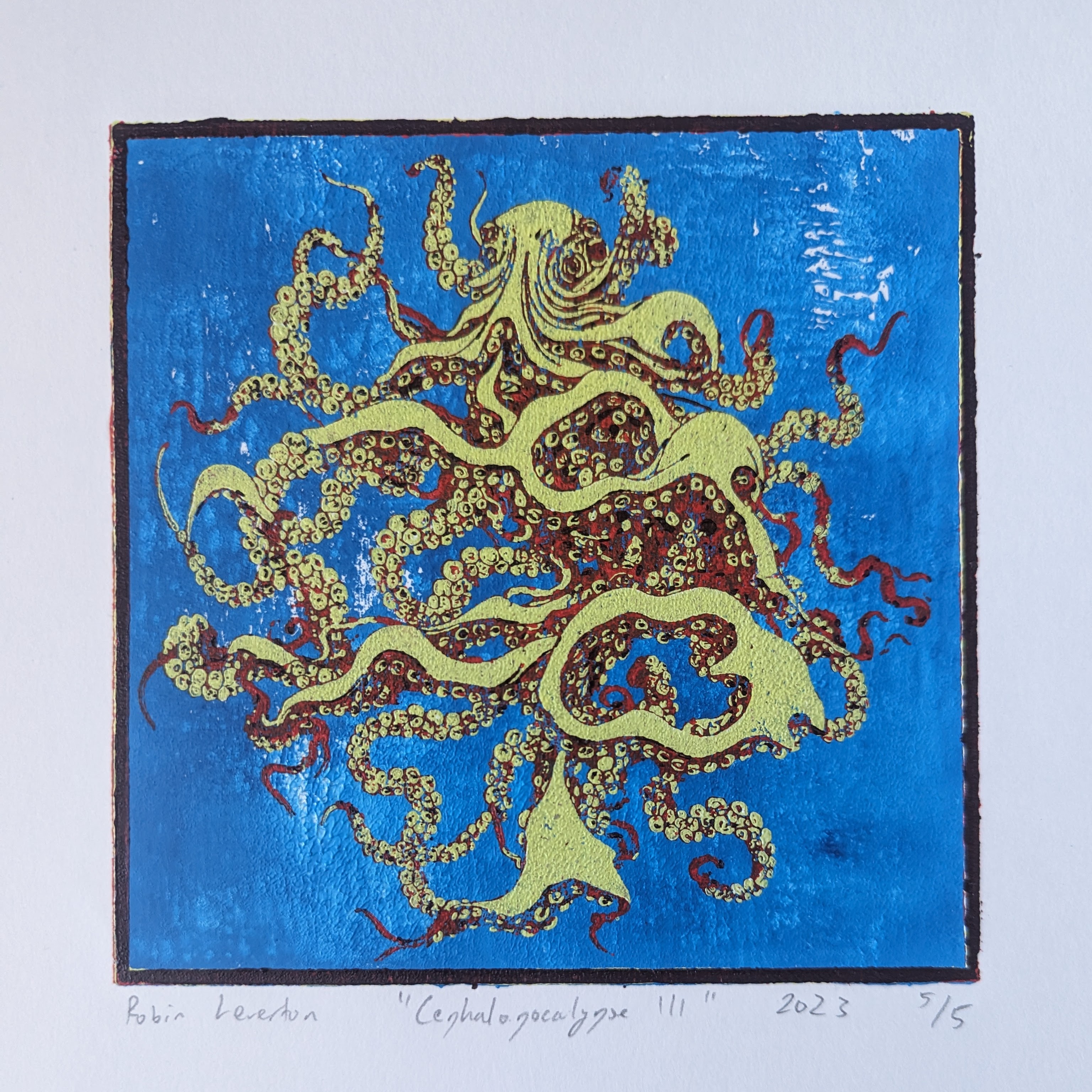
My process was to develop images using Stable Diffusion, working my prompts into areas that seemed to produce the sorts of undulating, grotesque hints of octopus but also menace that I was looking for. These would then be split up in photoshop into the number of print layers to match the colouring, before being cut into blocks using the laser cutter at uni. These laser cut blocks are then coloured and printed from like normal Japanese Wooblocks, though I didnt have a proper baren, and was instead using a mug.
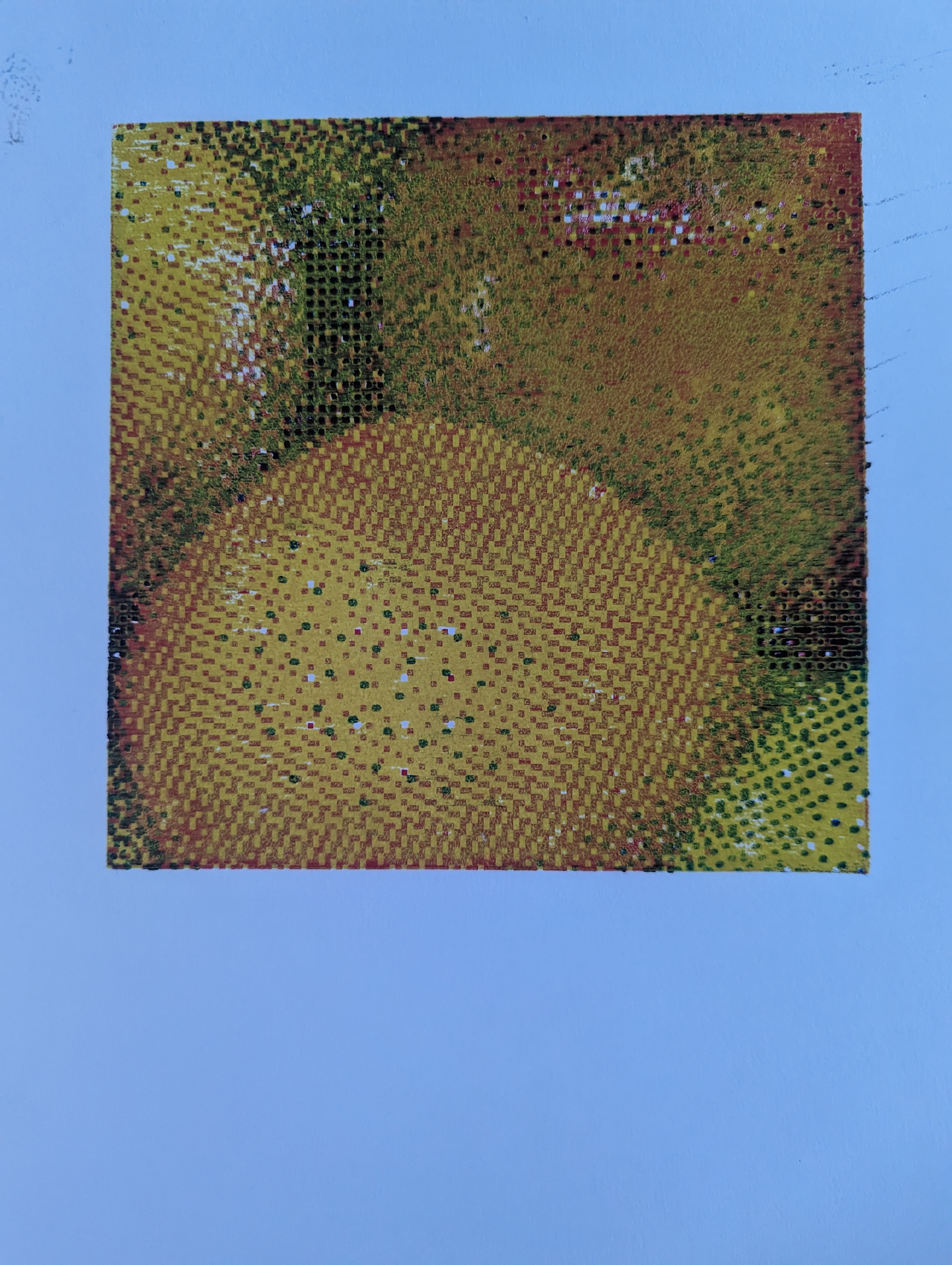
This “Still Life?” is a play on the still life genre of painting, exxamining the question of whether this commpletely fictional AI generated fruit bowl can be considered life-ly, questioning even the AI’s claim to life.
The piece was as a material test for the process of doing CMYK printing using the block printing method mentioned earlier, to try depict more effective computer colouring and have a richer palatte than the block colour of the Japanese style prints.
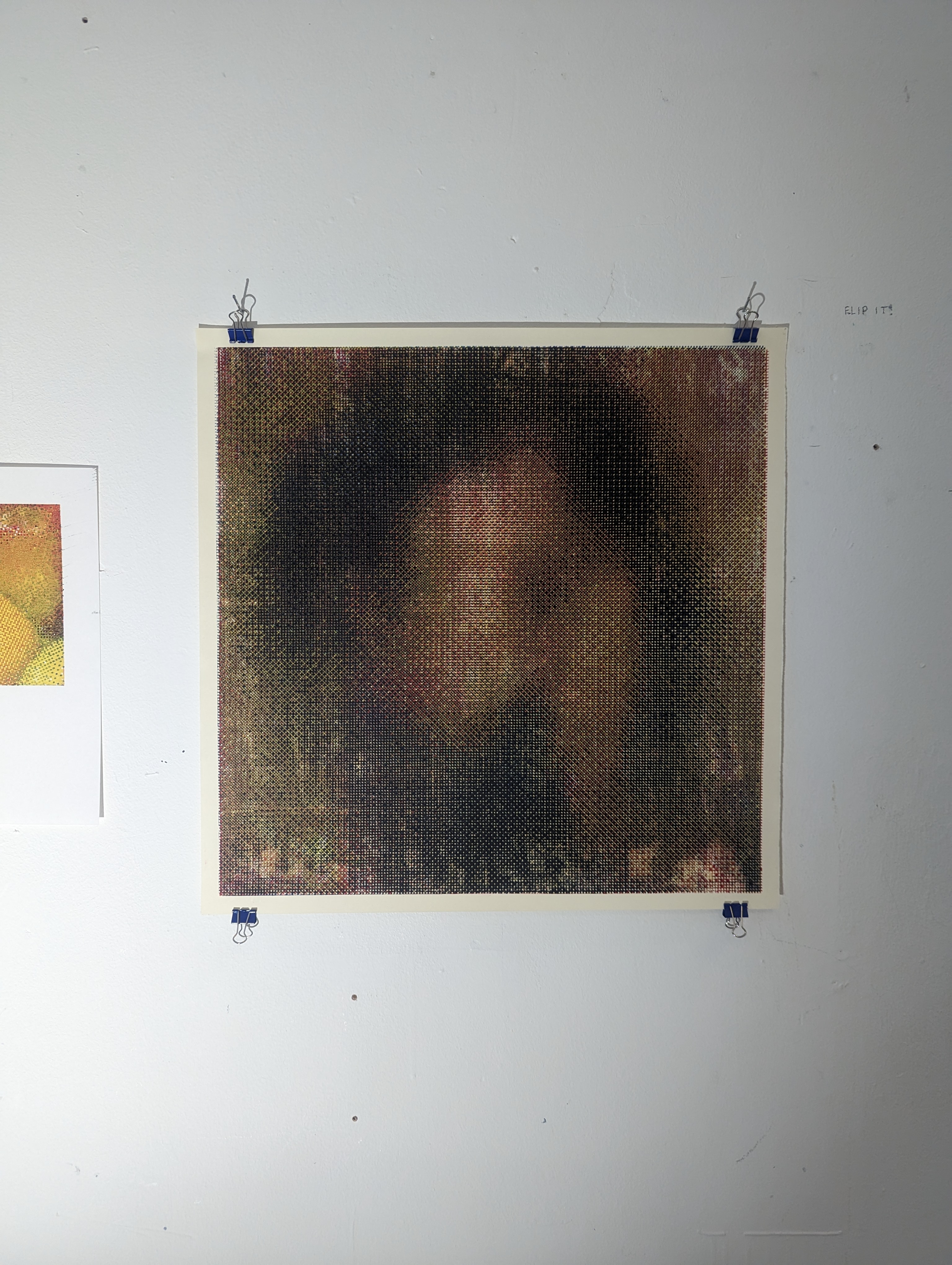
This CMYK printing method was being prototyped for this work, “Portrait of the Artist as a Young AI” which using the img2img function of Stable Diffusion, takes an image of myself and then works onto it with the diffusion algorithm. The way the diffusion works is by providing a layer of noise onto the image before it is then trying to subtract the noise guided by the prompt provided. I interrupted this process after the first layer had been applied, so we can see the nearly totally noised original image. Taking this through the CMYK process described thus takes the imperfect AI composition of the perfect Digital image into an analog mode that imperfectly recreates it whilst maintaining through the use of the CMYK process an aesthetic of the pixel. Here the image is then given to the audience with the same prompt as was provided to the machine, asking them to perform the process of the diffuser.
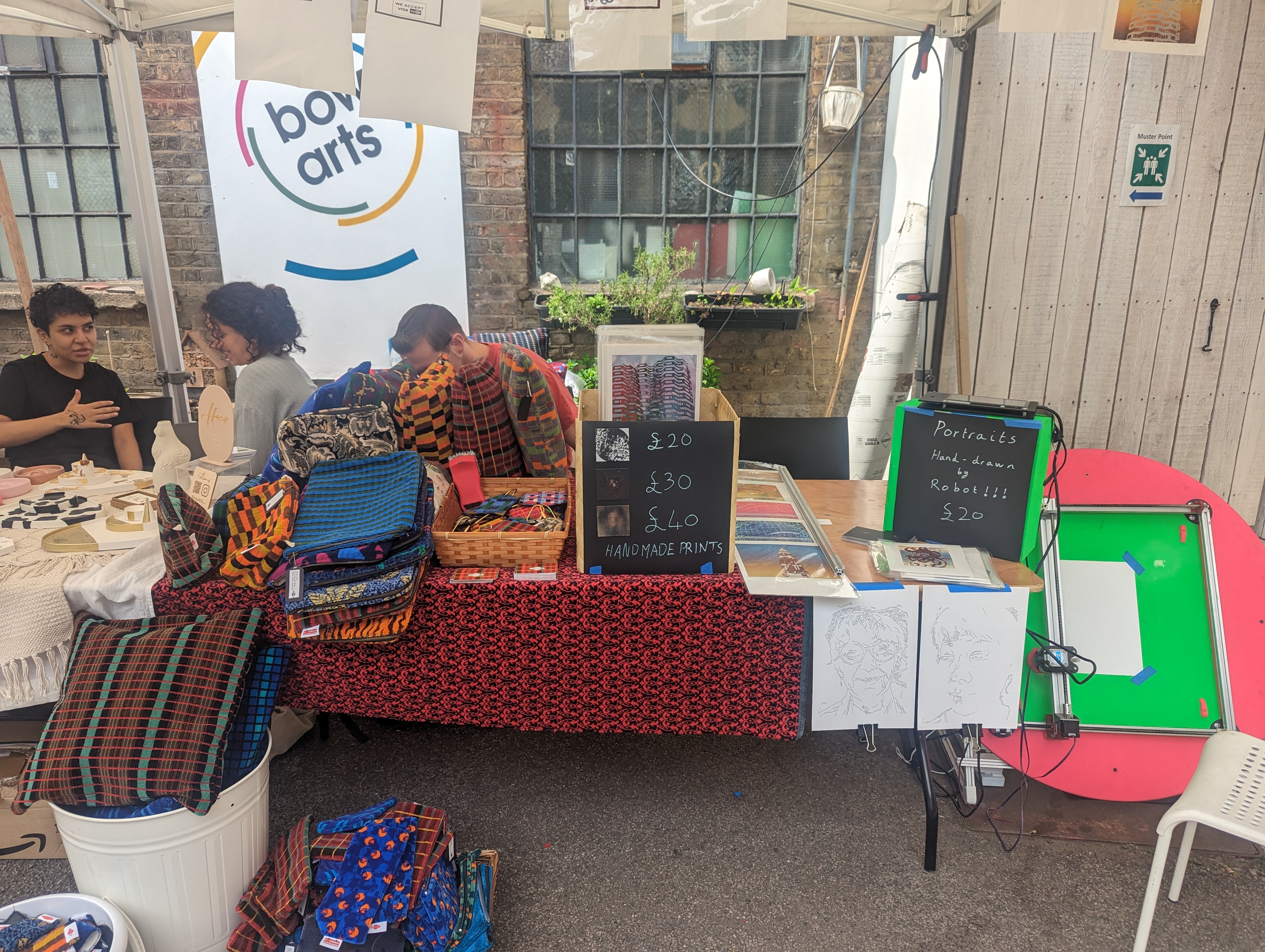
I took my prints and my drawing machine (reconfigured to do portratits) to Bowfest at Bow Arts.

Peter Jackson

Jose
 Robin Leverton
Leave a comment